
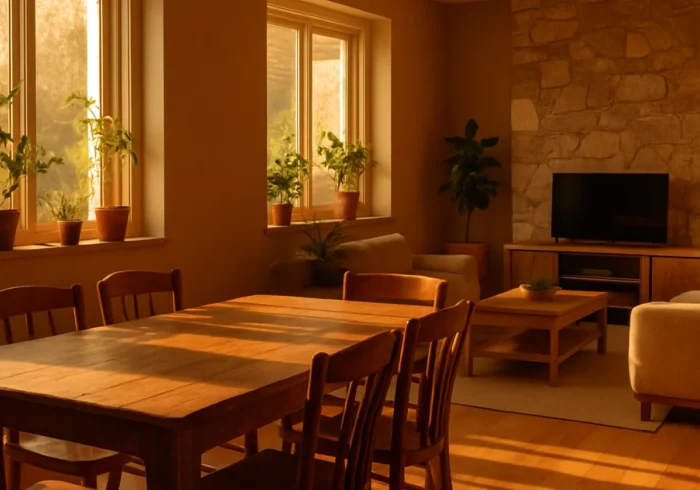
Designers create warmer spaces by layering natural materials like timber, stone, wool and bamboo across surfaces, furniture and finishes. Each layer brings its own texture, so a room reads soft instead of flat.
Most homes, though, stack painted plasterboard, laminate and glass, and those surfaces throw light and sound straight back at you. The room looks tidy, yet it still feels cold.
Today, we’ll talk about how grain, natural light and soft fibres change the feel of a room, which materials suit each space, and the low-cost moves that bring sustainability home. You’ll also see where wood beats a painted finish. Without further delay, let’s get started.
Natural Materials Design Brings Warmth You Can See and Touch
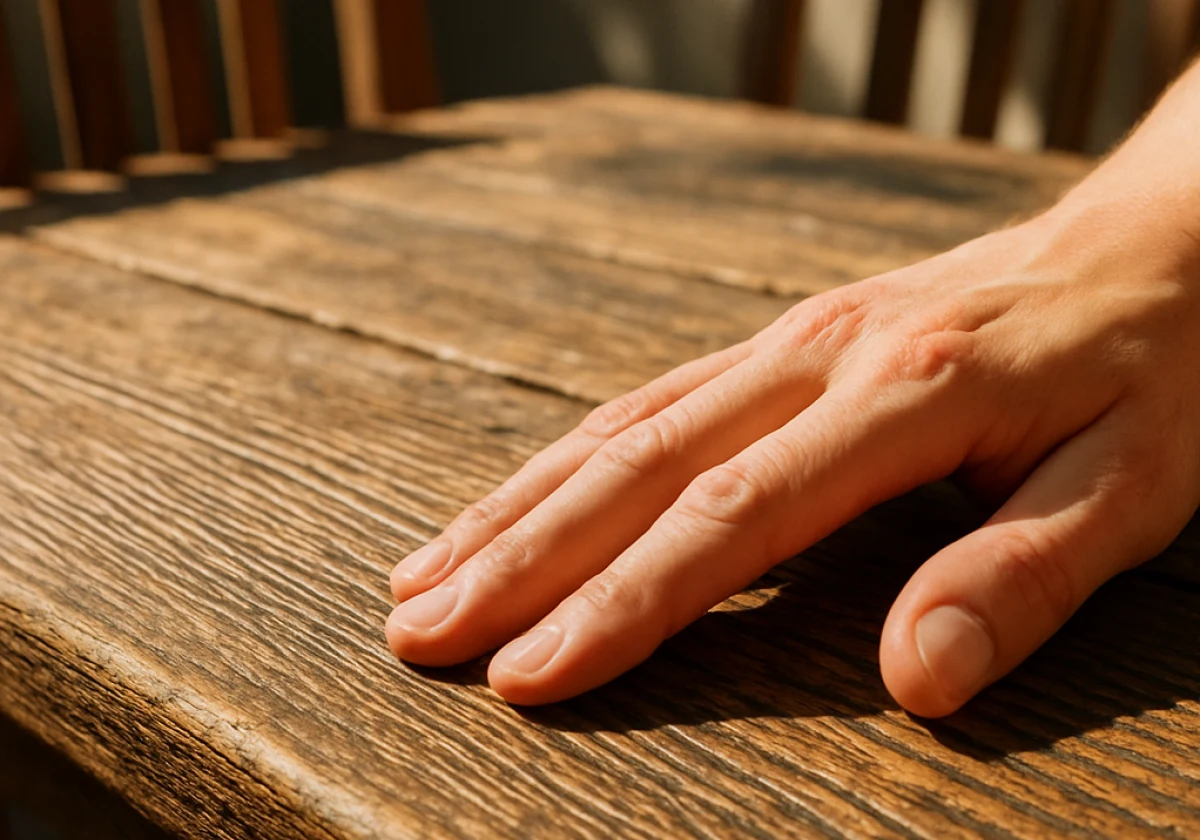
When you walk into a room lined with natural wood, you feel the difference before you can explain it. That quality is what interior designers call warmth. Specifically, natural materials design delivers it through your eyes, hands, and ears all at once.
Three things carry most of that effect, and each one is simple enough to copy at home.
1. Texture and Grain Do the Heavy Lifting
Grain gives a surface something to hold your attention, and oak, blackbutt, and bamboo each carry their own pattern. No two panels read the same, so hard edges soften in a way paint never manages.
You’re not chasing perfection when using natural materials at home. Small knots, tone shifts, and saw marks give a material the character printed laminate can’t copy (the eye finds something new every time it passes).
2. Natural Light Plays Off Timber and Stone
Natural light changes the appearance of both timber and stone surfaces as the hours pass. Timber warms to honey tones by late afternoon, while stone holds a cooler grey throughout.
That said, where you place each surface counts far more than quantity. Position a stone benchtop near a north-facing window, and the flecks across the slab will finally catch the light.
Anyone who has styled a west-facing lounge will recognise this principle straight away. Because light affects perception, a single timber shelf placed on the bright wall carries far more visual weight than three shelves sitting on the shaded side.
3. Pairing Raw Surfaces with Soft Natural Fibres
Raw surfaces need natural fabrics against them. Linen curtains, cotton throws and jute mats take the hardness out of stone, brick and concrete, and fabric traps the echo that bare walls create.
Keep the palette tight. If you’ve ever sat in a tiled living room in winter, you’ll know that two or three tones across wood, wool and clay settle a space fast (three is usually where a scheme stops working).
Why Do Natural Materials Make a Room Feel Warmer?
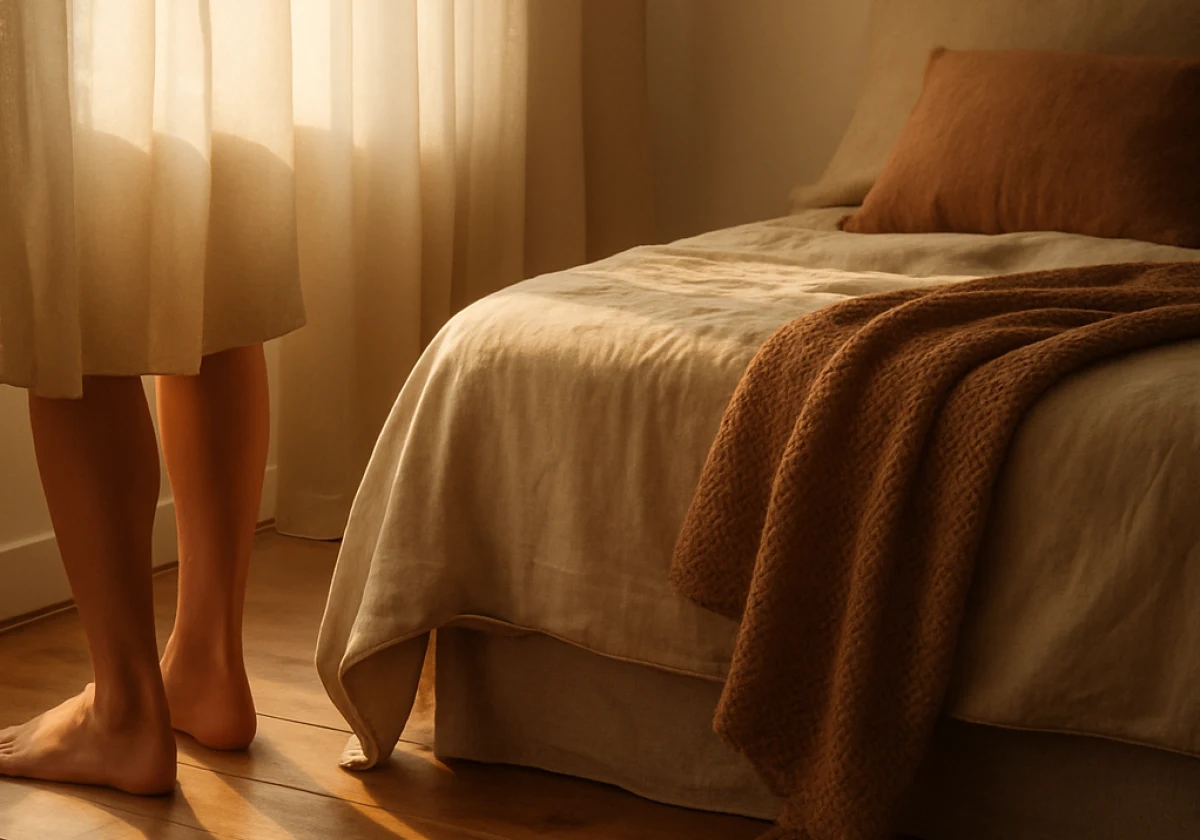
Natural materials make a room feel warmer because their texture, tone and grain connect people to nature. That connection sits at the centre of biophilic design, which creates interiors in harmony with nature.
There’s a physical side as well. Wood and wool conduct heat slowly, so they don’t pull warmth from your skin the way tile or steel does. To feel the difference, step onto a timber floor on a cold Melbourne morning, and you’ll never look at tile the same way again.
Timber and clay also take in moisture when the air turns damp, then release it as the room dries, which holds indoor humidity steadier.
Put together, these effects explain the pull of nature-inspired design. Wood, wool and stone change how spaces sound, hold heat and sit with the environment, and that’s warmth no heater supplies.
Choosing Wood, Stone and Bamboo Interiors for Every Room
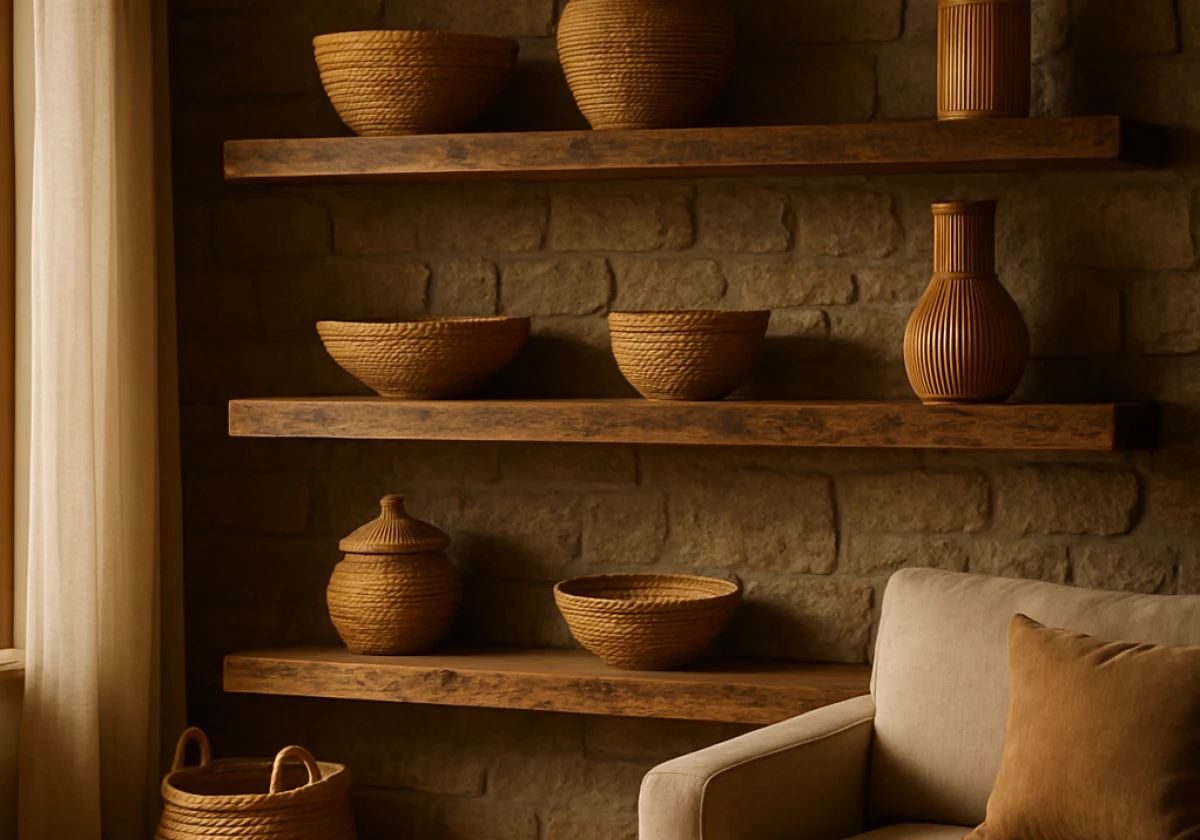
Timber, stone, and bamboo each offer something different to a space. When used together with care, they build warmth and character without requiring a full renovation. In practice, natural materials design works best when each material has a clear role, one that the others simply can’t fulfil.
Use the table below to match each room with its most suitable material.
| Room | Material to choose | Why it works |
|---|---|---|
| Kitchen | Natural stone benchtop | Takes heat and knives, and the veining adds depth |
| Living room | Solid wood flooring | Warm underfoot, and it hides daily wear |
| Bedroom | Wool and linen textiles | Soften sound and hold a steady temperature |
| Bathroom | Bamboo cabinets and mats | Shrug off humidity and dry quickly |
Fit out a wet room once, and you learn which cabinet door warps first, and it won’t be the bamboo. Designers who use natural materials well pick one hero per room, since three strong surfaces muddy the look (and the budget, which nobody mentions until later).
Wooden furniture follows the same rule. One solid timber piece reads better than three veneered ones, because real grain carries the eye where a printed repeat can’t.
Sustainable Design in Practice: Biophilic Ideas for Australian Homes
Most people assume sustainable design costs more, yet biophilic design often starts with pieces you already own. Sustainability here means buying less, rather than swapping in a fresh set of natural and sustainable materials.
Each move below gives a big return for a small spend.
- Reclaimed Wood First: Salvaged floorboards and hardwood beams carry a patina new timber needs decades to grow. Builders’ yards resell them by the lineal metre, which keeps good wood out of landfill and makes salvage the cheapest of the eco-friendly materials.
- Swap Fabrics, Not Furniture: Recovering a tired chair in wool or hemp costs a fraction of replacing it, and the frame keeps working while the room picks up fresh texture. Nearly everyone has a chair they’ve stopped looking at.
- Let Earth Tones Lead: Clay pots, jute runners, and rattan baskets cost very little. Incorporating natural elements this way brings the outdoors inside without building work, and rammed earth does the same at the structural end for anyone mid-renovation.
Pick whichever one you can finish this weekend. Remember that sustainability isn’t a single purchase, and creating spaces that feel settled comes from stacking small swaps.
Bring the Warmth of Nature Home
Warmth in a room comes from the materials you choose, instead of the thermostat you adjust. Wool, stone, timber and bamboo each add something a painted surface can’t.
Begin with one wall, one floor or one chair, then build out from there. You’ll feel the change long before the whole room is finished.
Bamboo Expo shares practical guidance on bamboo interiors and sustainable design for Australian homeowners. Contact us for ideas that suit your rooms.