
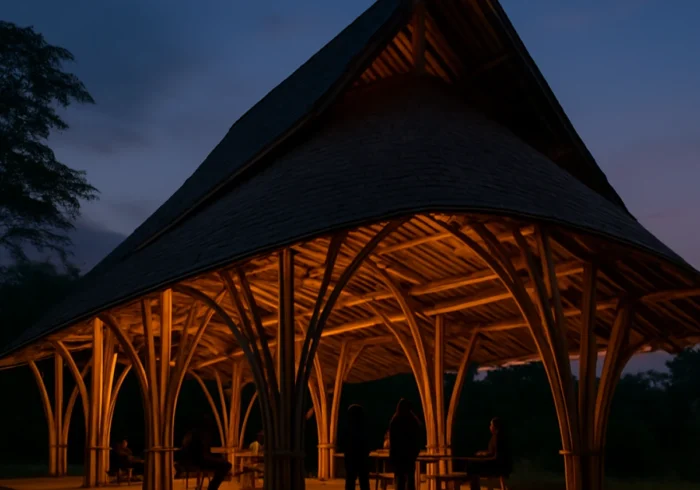
Bamboo has become popular in modern architecture because it grows back fast, stores carbon and rivals steel for tensile strength. Even a few sustainable building materials offer all three at once.
Most people still picture garden screens or scaffolding when they hear the word. However, builders now use it for roofs, halls and bridges across Southeast Asia. And this growing interest in bamboo construction is what brings builders to Bamboo Expo.
This guide covers how quickly bamboo regrows, what its strength means on site, and which architects are building with bamboo now. You’ll also see the treatment and joint details that keep a bamboo structure standing.
What Makes Bamboo Such a Strong and Sustainable Building Material?
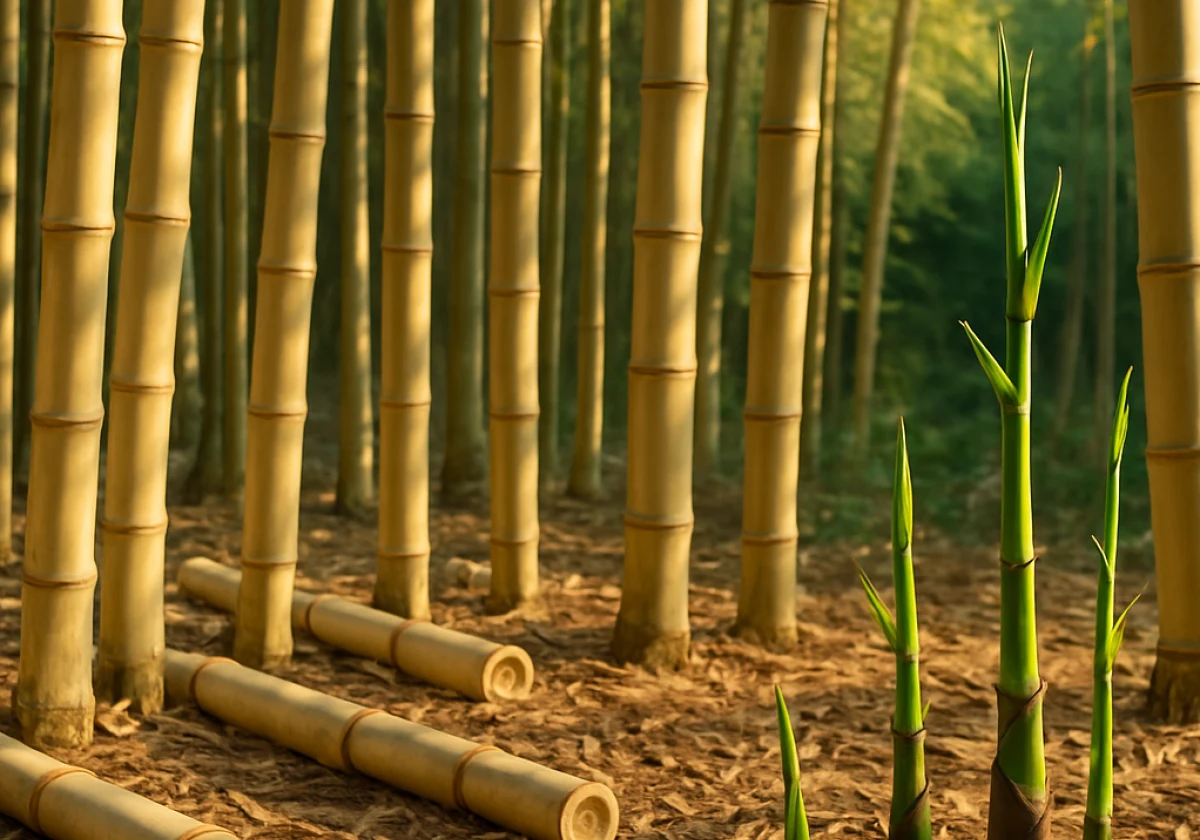
Bamboo is a strong and sustainable building material because it has a high strength-to-weight ratio and regrows within years. These properties make it useful for construction, which is why engineers continue testing its performance.
Three properties of bamboo explain the attention.
How Fast Does Bamboo Grow Back After Harvest?
After harvesting, bamboo’s underground root continues producing fresh shoots without replanting. Most species reach usable maturity in three to five years.
In fact, bamboo is the fastest-growing plant on record, with some species adding about 91 cm in a single day. That pace makes a managed clump a renewable resource in the plainest sense (the same clump keeps producing poles without any replanting).
So if growers harvest mature culms selectively, the clump will continue producing new shoots. In contrast, hardwood plantations typically require replanting after harvesting.
Why Bamboo Has a High Strength-to-Weight Ratio
Bamboo resists stretching well for its weight, although its tensile strength varies by species. Its strength-to-weight ratio makes it useful for roof frames and footbridges. Bamboo also handles compression, so suitable poles can support vertical loads as columns.
And much of that strength comes from its hollow tube shape. Fibres run lengthwise through the wall, which gives bamboo strength along its length while allowing some flexibility. You can feel the flex yourself if you push a standing culm sideways.
That same flexibility pays off during earthquakes, where rigid buildings crack and bamboo springs back. Builders across Southeast Asia have trusted that behaviour for generations.
Carbon Sequestration and a Smaller Carbon Footprint
Did you know bamboo can store carbon even after it’s harvested? As it grows, bamboo absorbs carbon dioxide from the air and stores carbon in its stems. This process is known as carbon sequestration, and some of that carbon remains stored in the finished building.
Besides, bamboo can have a lower carbon footprint because preparing its poles often uses less energy than producing steel. Builders cut, treat and dry the poles without the high-temperature processes needed to make steel. So if you spend a day on a bamboo site, you’ll notice hand tools rather than furnaces.
Transport plays a role in bamboo’s carbon footprint as well. Sourcing bamboo locally reduces emissions from delivery. However, its overall environmental impact still depends on harvesting methods, processing and transport distances.
Modern Bamboo Architecture Is Winning Over Architects Around the World
Few people expected a woody grass to headline award-winning buildings across Bali, Vietnam and beyond. Yet bamboo architecture now anchors sustainable design shortlists, and these projects aren’t temporary showpieces.
For example, take the Green School in Bali. IBUKU, the design firm associated with Elora Hardy, helped create its bamboo classrooms and other structures. Students have used those spaces every school day for years, which shows how bamboo can support buildings used daily. Hardy’s team worked with bamboo’s natural shapes, so the columns vary in appearance.
Over in Vietnam, architect Vo Trong Nghia and his firm use bundled bamboo culms to create columns that support large roofs. Their Bamboo Wing project demonstrates this technique and has drawn international attention to bamboo architecture (the photographs often travel further than the buildings themselves).
Beyond Asia, bamboo in architecture turns up in Colombian bridges and houses built from Guadua angustifolia, while workers in Hong Kong still raise scaffolding beside steel towers. Closer to home, Australian architects specify bamboo cladding on sustainable design projects where clients ask for natural materials.
Across these projects, what strikes us every time is the warmth bamboo brings to a finished space. Its natural grain and colour create an inviting atmosphere that paint alone can’t easily copy. We find that these details give each structure its own character.
Working Through the Construction Challenges of Building with Bamboo
With proper treatment and construction details, bamboo structures can resist insects, moisture and wear for many years. Admiring finished buildings is easy, though the detailing decides whether yours lasts.
Builders using bamboo hit the same few problems on site. And each one has a known fix.
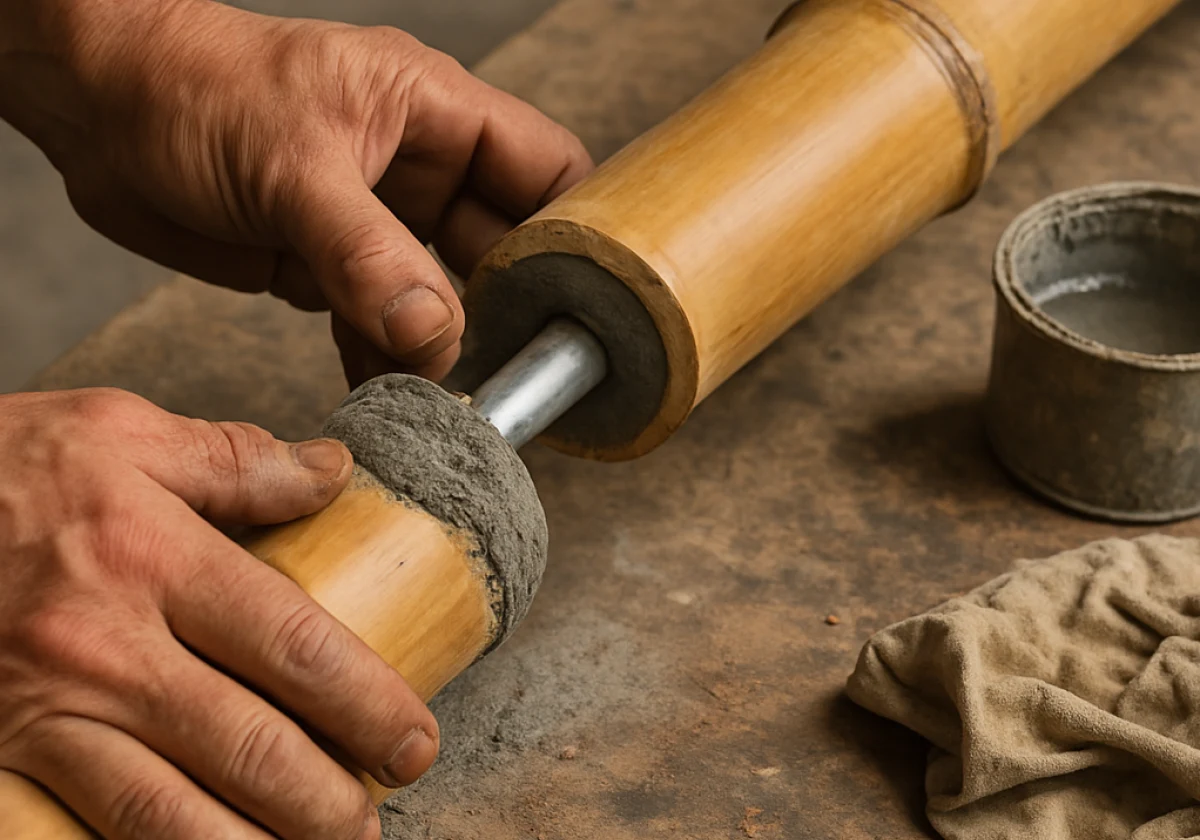
- Treatment Against Insects: Untreated bamboo culms contain starch that attracts wood-boring beetles. Soaking the poles in a borax and boric acid solution makes them toxic to these insects. Traditional methods also include smoking poles over a fire, although protection levels vary.
- Moisture And Ground Contact: Keep every pole clear of wet soil and under a generous roof overhang. Water sitting against a culm starts rot, which no treatment can reverse later.
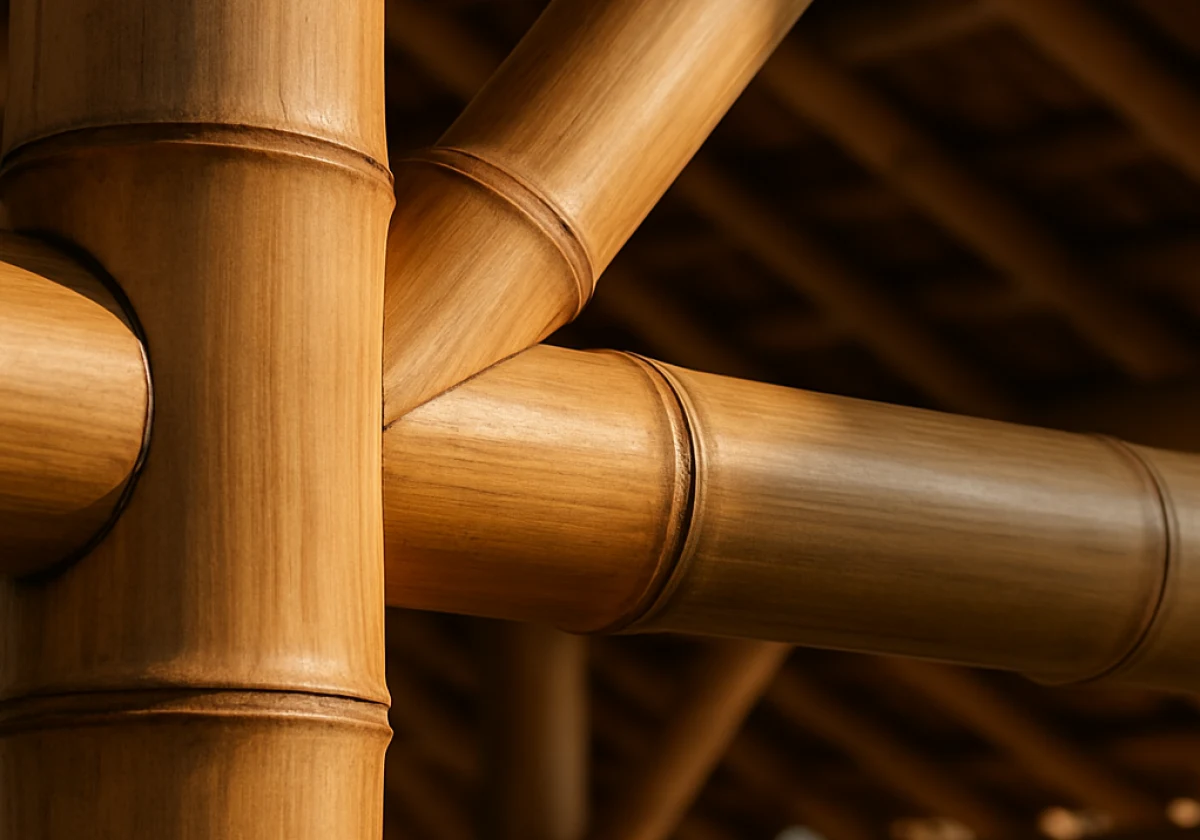
- Joints That Carry Load: Because poles are round and hollow, they don’t bolt together like sawn timber. Builders use steel pins, bolts or reinforced connections to transfer loads between poles. The right connection depends on the structure and the forces involved.
Treat the poles, lift them off the ground, and detail every joint with care. You’ll get more out of good connections than out of premium poles, and bamboo buildings then last as long as the timber alternative.
The Future of Sustainable Bamboo Architecture: Where Engineering Heads Next
Engineered bamboo products are already appearing in structural systems that once relied on timber, steel or concrete. Manufacturers press and bond bamboo strips into uniform sections with more consistent strength and dimensions than raw poles. These products also give builders more ways to use bamboo in construction.
The table below sorts the main ones by what each one replaces on a build.
| Product | Replaces | Common Use |
|---|---|---|
| Laminated bamboo | Structural timber | Beams and columns |
| Bamboo plywood | Sheet plywood | Walls, ceilings, furniture |
| Raw poles | Round timber | Roof frames and pavilions |
Modular bamboo components offer another option. Workshops can cut and label parts before delivery, which allows crews to assemble them on-site with less cutting and adjustment.
Anyone who’s specified a beam knows engineers need reliable strength data before approving structural materials. Engineered bamboo offers more consistent properties than raw bamboo poles, which makes its performance easier to assess. As testing methods improve, architects may find more opportunities to use bamboo in low-carbon buildings.
Ready to Build with Bamboo?
In modern architecture, bamboo earns its place by regrowing quickly, storing carbon and carrying structural loads. Existing bamboo buildings show what’s possible when builders choose suitable materials and construction methods.
Start by visiting a bamboo project near you and asking the builder or architect which species and treatment methods they used. Those answers can help you understand what goes into a lasting structure.
Keen to put bamboo into your next build? Explore Bamboo Expo for guidance on species, treatment and bamboo design before your next structure leaves the drawing board.