
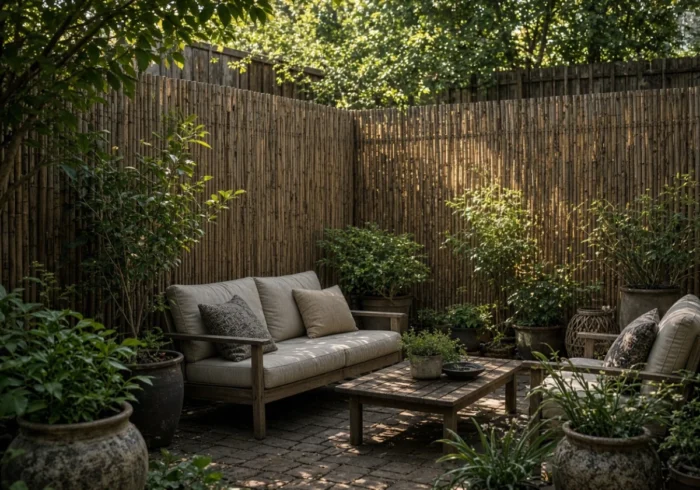
Bamboo screening develops gaps mainly through natural cane shrinkage, and your installation choices decide how wide those gaps grow. Every cane loses water after harvest, so it narrows a little and loosens inside the wire holding it.
Owners tend to notice only once the neighbour’s shed shows through the fence line. By then, fixing the problem may take more work than securing the screen properly during installation. That’s the pattern Bamboo Expo sees behind complaints about privacy screens.
This guide covers what makes canes shrink, which installation shortcuts open gaps, and how panel design changes the result. You’ll also get the yearly care routine that keeps the screening secure.
What Causes Bamboo Screening Gaps in the First Place?
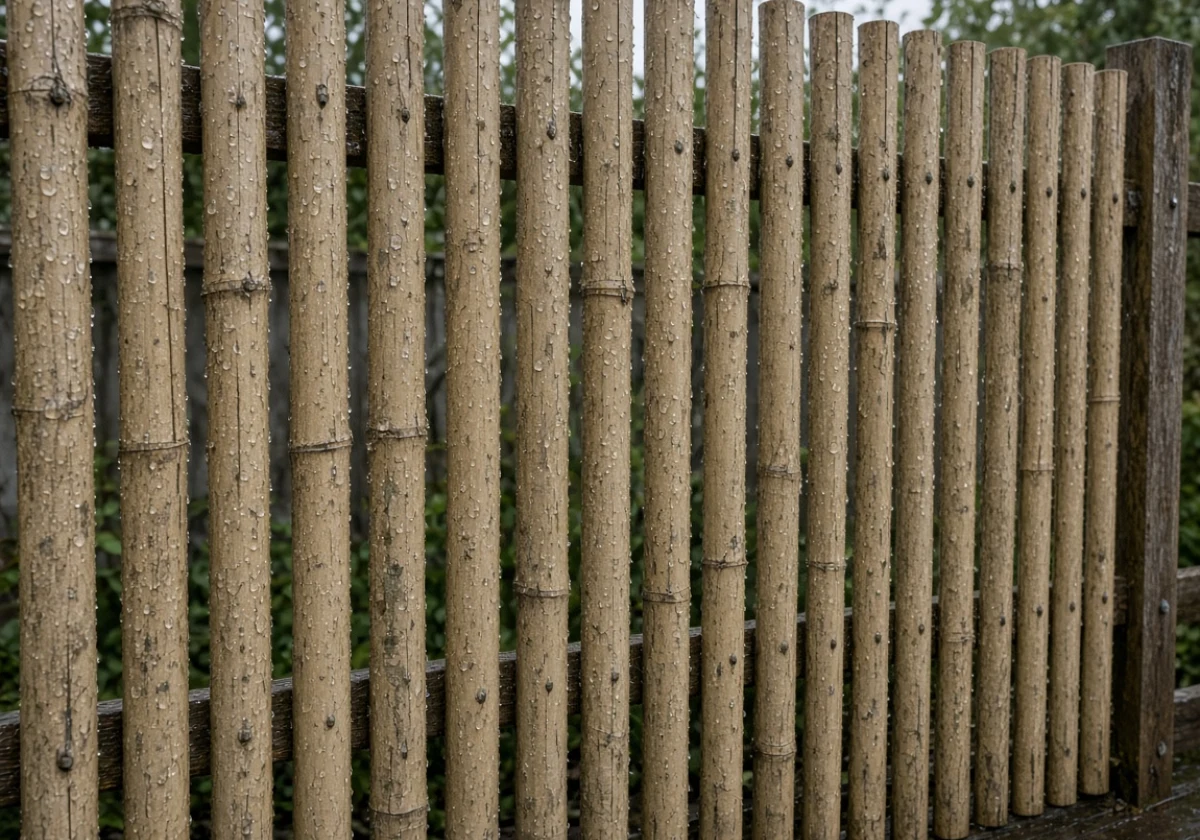
Moisture changes are a common cause of bamboo screening gaps, even when the screen was installed correctly. That’s because bamboo continues to absorb and release moisture long after harvest, so gaps don’t always mean you’ve bought a faulty product.
Natural bamboo canes respond to moisture changes, so secure fixings keep the screen in position. Three forces do most of the damage, and they build on each other.
Natural Shrinkage as the Canes Dry Out
Fresh bamboo canes contain water within their walls. As the canes dry, they lose this moisture and become narrower, reducing the overall width of the roll.
Timber also shrinks as it loses moisture, although its structure and drying behaviour differ from bamboo. According to Wonamu, bamboo absorbs moisture in humid conditions and releases it in dry weather. As a result, its dimensions can change as moisture levels rise and fall.
Most of this shrinkage happens during the first year after installation, particularly through the first summer. Once the canes have dried and settled, their size becomes more stable. However, later moisture changes don’t necessarily restore the original spacing between the canes.
Weather Exposure in the Garden
After the initial drying, bamboo canes continue to expand and contract as the weather changes. They absorb moisture during rain and shrink again in the sun. Over time, these repeated changes can loosen the binding wire and create gaps in the screen.
Heavy rainfall can make these changes more noticeable. According to CSIRO’s State of the Climate findings, heavy rainfall events are becoming more intense as the climate warms. And heavy downpours can leave outdoor screens wet for longer, especially where drainage and airflow are poor.
Sun exposure also affects how quickly the canes dry out. West-facing fences often receive strong afternoon sun, which can cause faster drying and greater shrinkage. As a result, the sunny side of a fence may develop visible gaps while the shaded side stays tighter.
Movement Between Panels and Posts
Weather affects the fence frame as well as the bamboo canes. As timber posts dry, they can shrink and twist, causing the panels attached to them to move out of position. This movement puts extra pressure on the fixings, especially when strong winds push against the fence.
The pressure is greater on taller fences, such as those around 2400mm high, because they catch more wind. Over time, repeated gusts can loosen the fixings and cause the panels to shift further.
Gaps often appear between panels along long boundary fences, where small shifts become easier to see. Pushing a sagging edge back into position may help temporarily, but it will keep moving until the loose fixings or shifting frame are repaired.
Installation Choices: Where Bamboo Fencing Goes Wrong
Many gaps that owners blame on bamboo actually come from poor installation. A fence might look fine when first installed, but shortcuts can cause problems after a few months of weather exposure. These are three common installation mistakes that can lead to wider gaps:
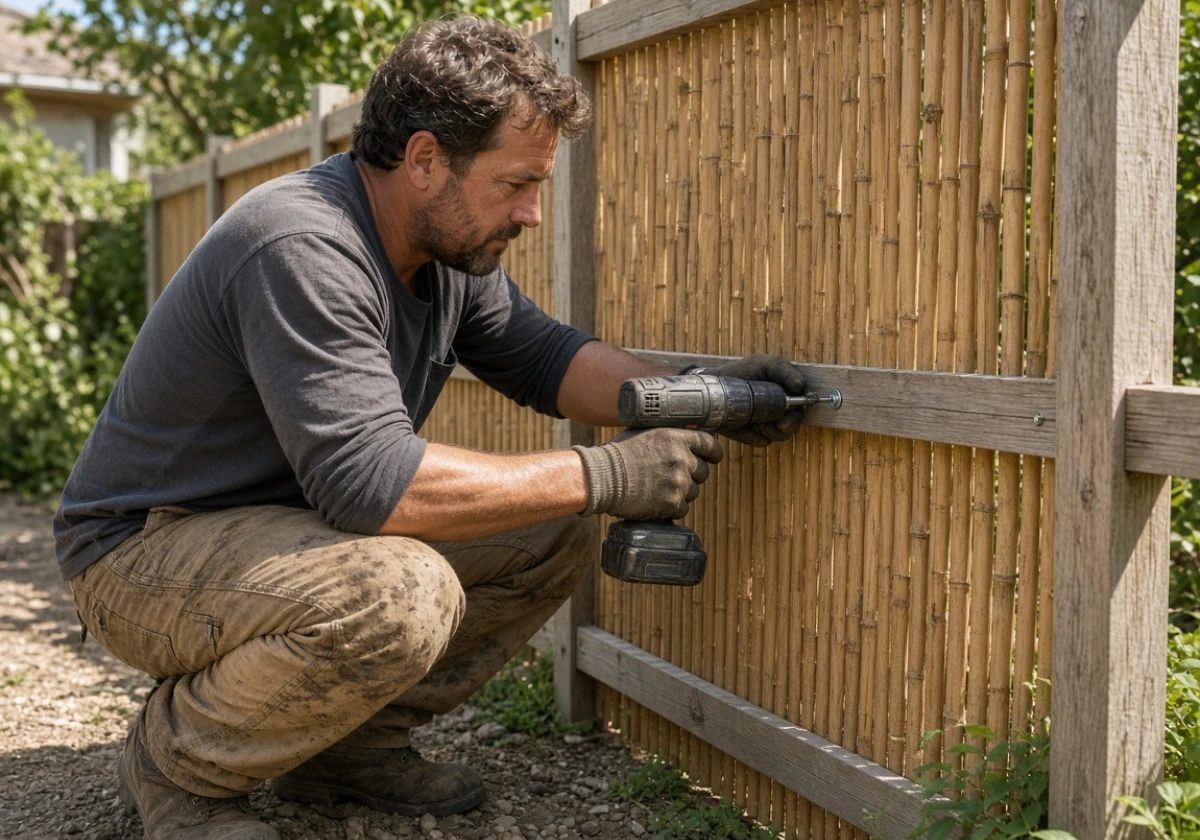
- Loose Wire Tension: Rolling a screen out and fixing it slack leaves every cane room to slide sideways. Secure one end of the roll, then keep it taut as you attach it along the frame. A slack roll won’t come good later without stripping the run back down.
- Corner-Only Fixing: Using only four screws at the corners leaves the middle of the panel unsupported. Strong winds can push the centre out of shape and cause the canes to spread apart. Place fixings evenly along the top, middle, and bottom rails to hold the screen firmly.
- No Batten Behind: Fixing bamboo directly against a brick wall leaves little room for drainage or secure attachment. Battens provide a solid surface for screws and keep the canes slightly away from the wall. This gap also allows water to drain instead of collecting behind the screen.
Taking extra time to secure the screen properly can prevent gaps from developing over the next few years. In many cases, the fixings fail before the bamboo canes show signs of wear.
Choosing the Right Panel Design for Your Outdoor Spaces
Picking the right bamboo screen panels at the start saves you from patching gaps every season. Cane size, backing and frame all change how much movement a panel absorbs (the frame does more work than the cane).
Compare the four options below against the job in front of you.
| Product | Best For | Gap Risk |
|---|---|---|
| Natural cane rolls | Covering an existing timber fencing run | Higher, canes slide inside the wire |
| Framed Bamboo Panels | Boundaries and pool fencing | Low, the frame fixes the spacing |
| Black bamboo slats | A bamboo wall feature or wall art backdrop | Low, each slat screws to a batten |
| Bamboo Poles | Capping joins and dressing corner posts | Low, you fix every pole on its own |
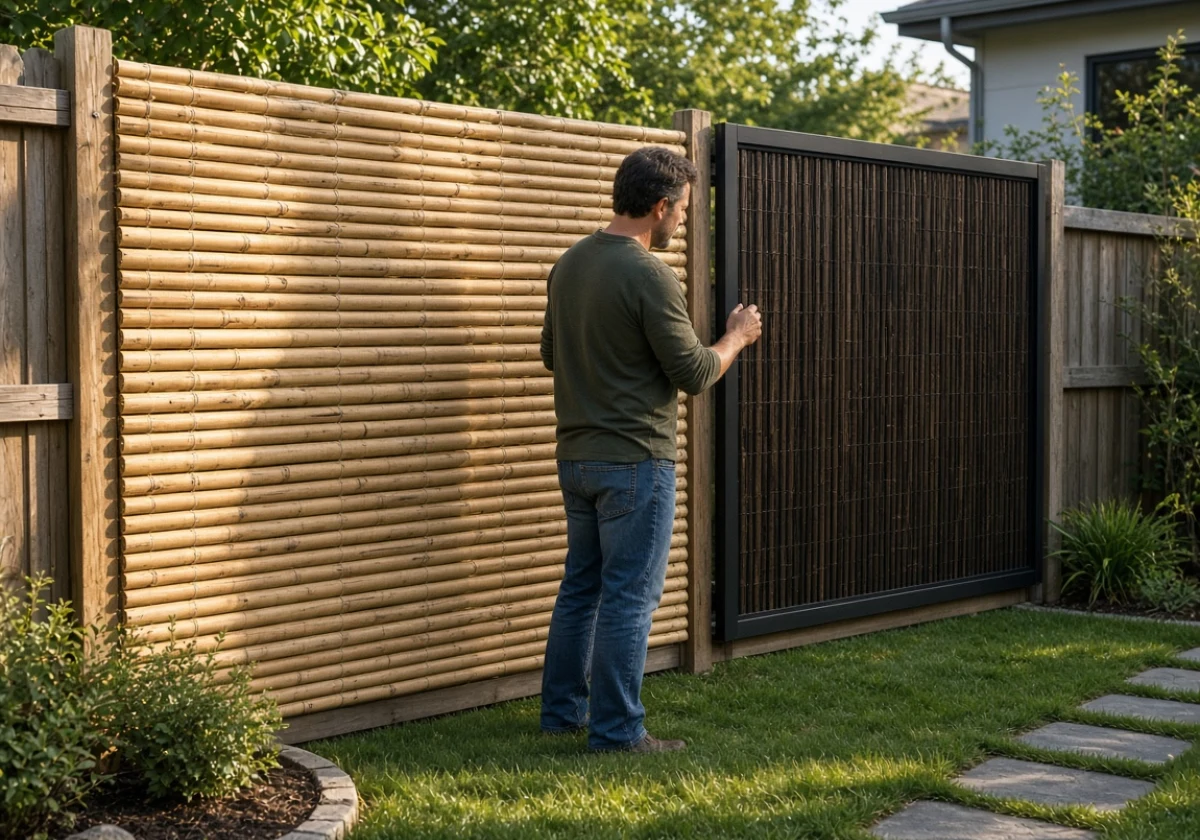
Each option handles movement differently, depending on how it is installed. For example, black bamboo slats can be fixed with small spaces between them to let light through while still providing some privacy. This makes them a good choice for narrow courtyards that might feel closed in with a solid screen.
Framed bamboo panels often cost more than basic cane rolls, but the frame helps keep each section in position. This makes them a better choice for boundary fences where long-term privacy is important. Natural cane rolls are more affordable and suit temporary screening, but they may need more adjustments as the canes move.
Simple Maintenance Habits That Protect Bamboo Screens
Even a well-installed bamboo screen needs occasional checks, especially after strong winds or prolonged rain. Most screens only need an hour or two of attention each year, mainly to check for loose fixings, moisture damage, and sagging.
Spring is a good time to inspect the fixings after winter rain and wind. Press the middle of each panel to see if it moves, and check for screws that have started to loosen. Pay close attention to the steel fixings near the ground, as they are more likely to rust.
Once the fixings are secure, check the condition of the bamboo coating. Decking oil helps control how quickly the canes absorb and release moisture, which reduces sudden changes in size. Applying a fresh coat each year also protects the surface and gradually deepens the bamboo’s natural colour.
Keep the plants in check as well. Climbers trap water against the screening and hold it there for days after rain, which leaves one side wet while the other dries. We trim climbing plants back by a hand’s width to give the bamboo more room to dry.
Finally, check the wire tension and overall shape of the screen (particularly after a wet winter). If a roll starts to sag, tighten the wire before the gaps become wider. Check the screen after prolonged rain or dry weather, when changes in moisture may affect the canes and fixings.
Keep Your Bamboo Screen Tight for Years to Come
Bamboo screening gaps often come from natural shrinkage, loose fixings or movement in the supporting frame. Secure fixings and regular checks help maintain privacy as the bamboo responds to changing weather.
Start with the sections where gaps have appeared, and check the fixings before replacing any bamboo. If any section feels loose, address it before the gaps become wider.
Bamboo Expo shares practical guidance on fencing and screening for homeowners and builders. Contact us for advice on your run before you fix a single panel.