
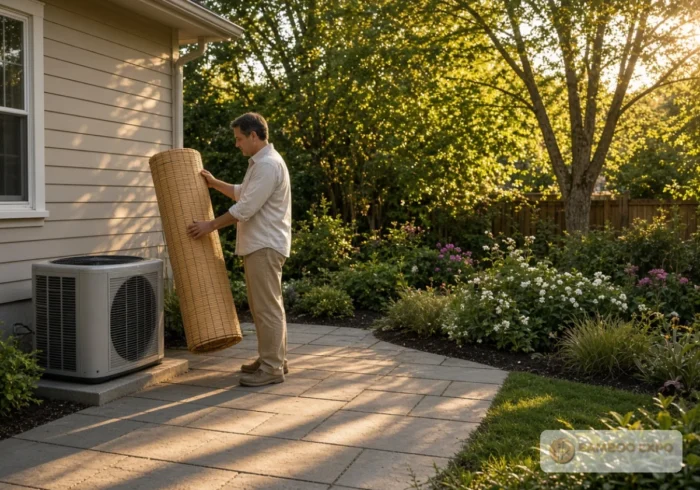
Bamboo screening suits an outdoor air conditioning unit only when you plan for clearance and airflow before looks. A bamboo screening air conditioner setup that hugs the condenser traps the unit’s hot exhaust, so the system works harder to cool your home.
Plenty of homeowners want an air conditioner privacy screen to hide the boxy unit from the patio, and they miss the airflow trade-off. Bamboo Expo supplies bamboo screening, fencing and panels for Australian homes and gardens. We treat every screen near a condenser as a layout question first, because the gaps around the unit decide how well it runs.
This guide sets out the front, side, top, service, and wall gaps a condenser needs. After that, we’ll compare four bamboo screen styles on airflow, privacy, and cost. The last section covers weatherproofing checks that keep the screen upright and the unit clear. Start with the gaps below.
Why Does an Outdoor AC Unit Need Breathing Room Behind a Bamboo Screen?
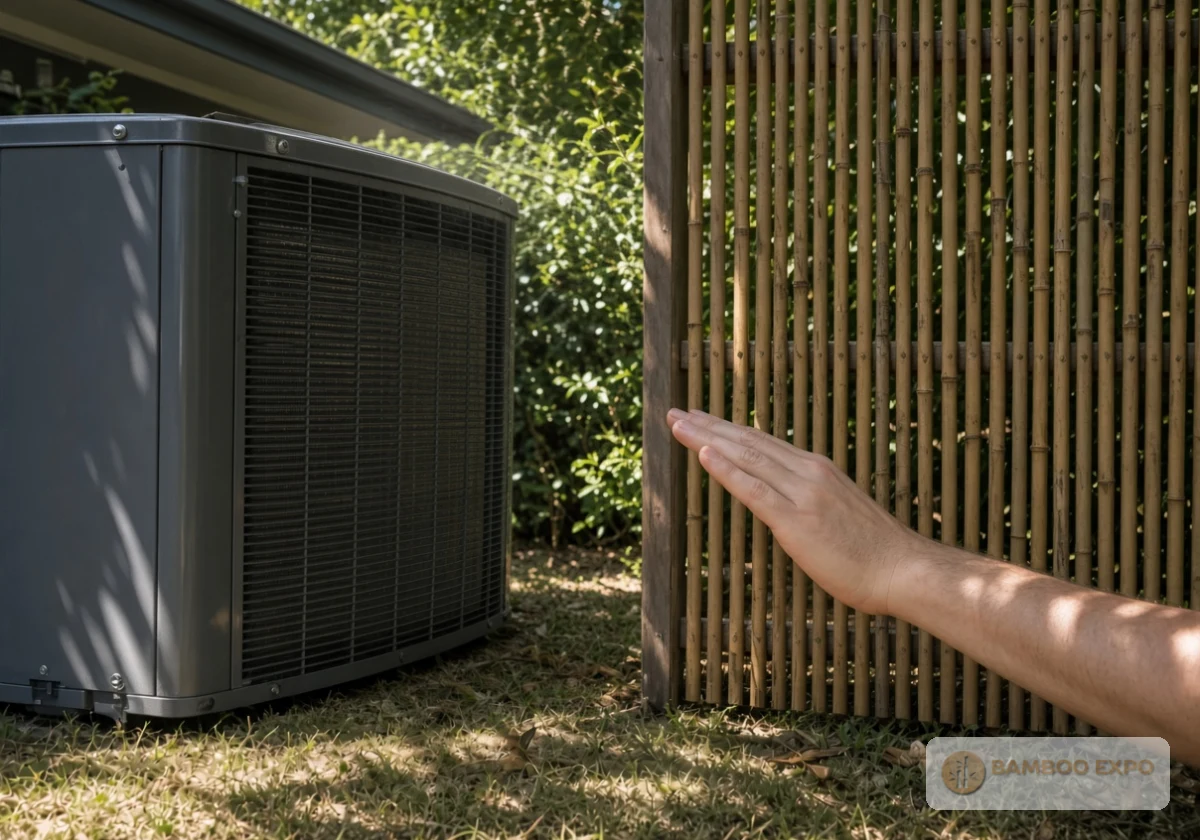
Every condenser dumps the heat it pulls out of your home, so the hot exhaust needs a clear path away. Outside air flows across the coil fins and absorbs the heat from indoors. The fan then pushes the warmed air out through the front grille or the top.
When a screen sits too close, the unit starts drawing its own exhaust back in. The Mitsubishi Heavy Industries maintenance guide flags the same risk. The manufacturer warns that dirt, debris, or plants around the condenser restrict airflow, which reduces efficiency and can cause overheating. A bamboo panel parked against the fins blocks airflow the same way a pile of leaves would.
The warning signs show up well before anything breaks. Your compressor starts running long cycles, and the air leaving the fan feels hot to the touch. Power bills also climb through a Brisbane summer, when the unit already works hard. If you notice long cycles or hot exhaust after building a screen, move the panels further out. The cycles will shorten within a few hot days if airflow was the problem.
Most people want the screen as close as possible so it eats up less of the yard. Resist the urge, since a screen hugging the fins costs you power every summer. Every design choice below starts with measured gaps, then fits the bamboo around them.
Clearance Distances: How Far to Keep Bamboo Screening From the Condenser
Keep bamboo screening at least one metre from the front and sides of the condenser, and leave the top fully open. The service side and the wall pocket need their own gaps, which the sections below spell out.
Many bamboo AC enclosure builds come unstuck on the service side, since owners judge the view from the deck. Each face of the condenser does a different job, so each one gets its own measurement.
Front and Side Clearance: Aim for One Metre of Open Space
Daikin Australia’s covering advice calls at least one metre of clear space on each side a good rule of thumb. They also advise against covering the unit and suggest asking a dealer about an air deflector kit.
A full metre lets the fan draw fresh air from further out. The front grille needs the same space, because most split system condensers blow their exhaust forward.
Before you plan any bamboo screening air conditioner layout, check the installation manual for the maker’s minimum. Work to whichever figure is larger, Daikin’s metre or the manual’s number. If your side path can’t fit one metre, keep as much space as the path allows. Never close a side off completely, even on a narrow run beside the fence.
Top Clearance: Why the Space Above the Fan Must Stay Open
Warm exhaust rises, so any roof over the unit traps heat right where the coil draws air. On top-discharge units, which blow straight up, a lid pushes the hot air back down into the fins.
A pergola-style bamboo cap rarely works over a condenser, even when it looks tidy in brochure photos. Heat builds under the cap on hot afternoons, right when your home needs cooling most.
To hide the unit from an upstairs window, plant tall bamboo in pots at least 1 metre out from the sides. The canes give height without closing the air path above the fan.
Service Panel Side: Two Questions for Your Technician Issues
The service panel holds the electrical and refrigerant connections, so a technician kneels there with hand tools and gauges. A fixed screen across the panel means unscrewing bamboo before any work starts, and you pay for the extra labour.
A hinged bamboo gate solves the problem, since your technician can swing the gate open in seconds. Technicians usually remove the unit’s side cover early in a service, so a gate saves time on every visit.
Before the posts go in, call your AC service company with two questions. How much kneeling room do they need, and which side does the cover come off? Mark both answers on the ground with pegs or spray paint.
Wall Clearance: The Gap Between the Screen and the House Wall
Your condenser already sits a set distance off the wall, and many models draw air through a rear coil in the pocket behind. A screen wrapped around to meet the wall boxes the pocket in, so the rear coil starves for fresh air.
Stop each screen run short of the house, or leave both ends open. The open ends give air a second way in and out of the pocket. Aim for an end gap at least as wide as the unit’s own wall gap.
Once you’ve marked all five gaps, our guide to bamboo screening installation walks through posts and fixings. Setting each post on your marks stops the planned clearance from shrinking during the build.
Choosing Among the Bamboo Screen Styles Available for Outdoor AC Unit Screening
Slatted bamboo panels suit most condensers, because you set the gap between slats yourself. Airflow through any outdoor AC unit screening depends on the open space between canes. Here’s how four common styles compare on airflow, privacy, lifespan, and cost.
| Screen style | Airflow through the screen | Privacy cover | Typical lifespan outdoors | Rough cost per metre |
|---|---|---|---|---|
| Rolled bamboo fencing | Low, since tightly wired canes leave few gaps | Full | Shortest of the four, as thin canes split in sun | Lowest of the four |
| Slatted bamboo panels | Good when you space the slats apart | Strong, set by slat spacing | Long with a sealed frame | Mid-range |
| Bamboo lattice | Highest, through the open grid | Light, so the unit stays partly visible | Long if the frame sits off the ground | Mid-range |
| Live bamboo in planters | Good, as wind moves through the leaves | Strong once grown | Ongoing with water and trimming | Highest, counting planters and soil |
Choose slatted panels for the fan side, and widen the slat gap where exhaust leaves the unit. Save rolled fencing for runs well clear of the coil, where full cover won’t choke the intake. Lattice suits spots where airflow counts and partial cover is fine.
Weatherproofing and Upkeep: Keeping a Bamboo Screen Sound Beside the Condenser
A bamboo screen beside an outdoor condenser faces constant exposure to moisture, sunlight, and wind. Reverse-cycle units release defrost water in winter, while nearby condensate pipes sometimes leave the ground damp. Over time, these conditions affect the bamboo and its fixings.
Poor maintenance also puts the condenser at risk. A damaged screen that shifts towards the unit could obstruct airflow or strike its fins. Work through these five checks before and after installation.
Seal Before You Install: Choose a clear exterior sealer suitable for bamboo and coat the panels before installation. Pay particular attention to cut ends, where exposed fibres absorb moisture. Follow the manufacturer’s instructions for recoating rather than waiting for serious surface damage.
Raise the Base: Keep the bottom rail above wet ground using suitable supports or a raised concrete strip. Leave the condenser’s drainage path clear so water doesn’t collect beneath the screen. A gap at the base also gives you room to remove fallen leaves.
Concrete the Posts: Each post needs a secure footing suited to the screen’s height, wind exposure, and ground conditions. Follow the post supplier’s installation requirements, including the recommended footing depth. After strong storms, check for movement around the posts and tighten any loose fixings.
Inspect Loose Canes: Split bamboo, damaged panels, and loose stainless steel wire deserve attention before the next windy day. Check the upper sections where sun exposure is strongest. Replace damaged pieces before they shift towards the condenser or obstruct airflow.
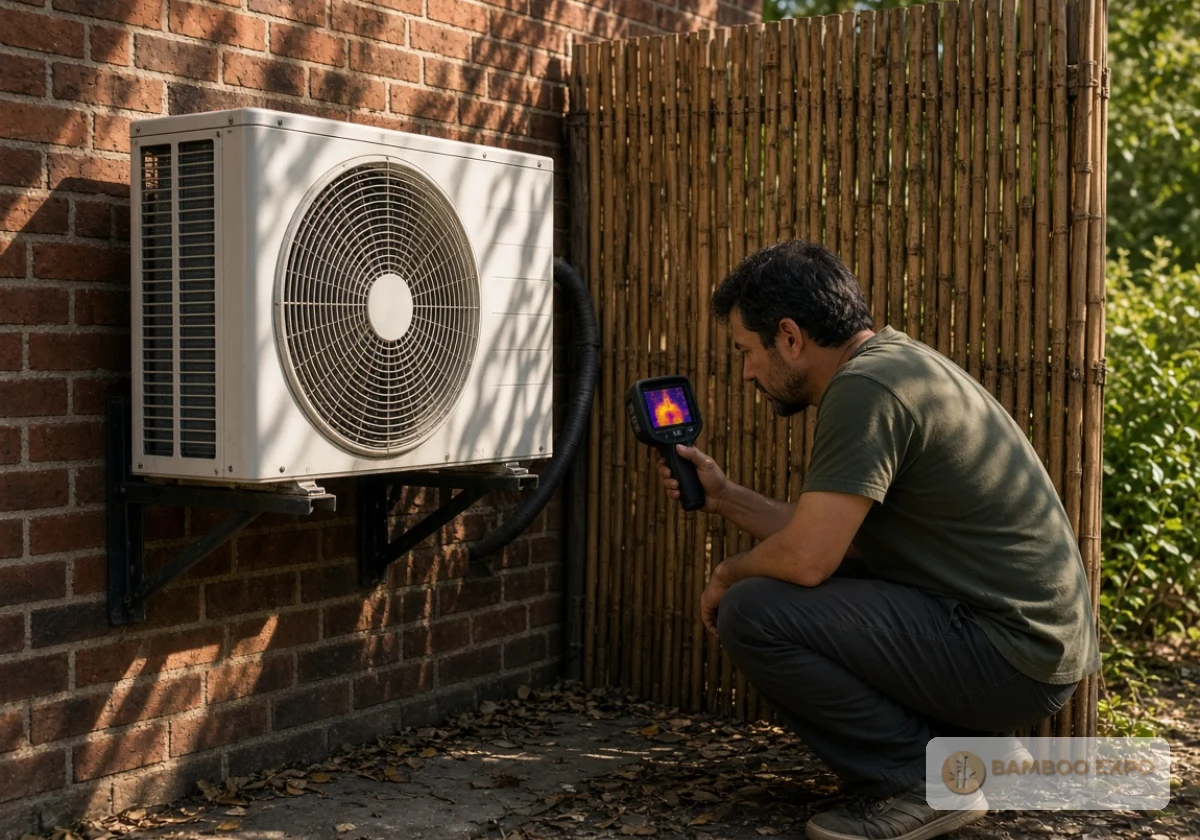
Re-Check Clearance: Measure the distance between the screen and condenser after installation, repairs, or any changes to the surrounding area. Compare those measurements with the manufacturer’s airflow clearance requirements. Pay particular attention to the discharge side, where restricted airflow affects performance.
Book your screen check alongside the spring AC service so one visit covers both jobs. Your technician already has the side cover off, so measuring the gaps takes only a few minutes.
Plan the Clearance, Then Pick the Bamboo
A bamboo screen and a condenser can share the same corner of the yard without trouble. The unit needs open air at the front, sides, and top, plus a working room for a technician.
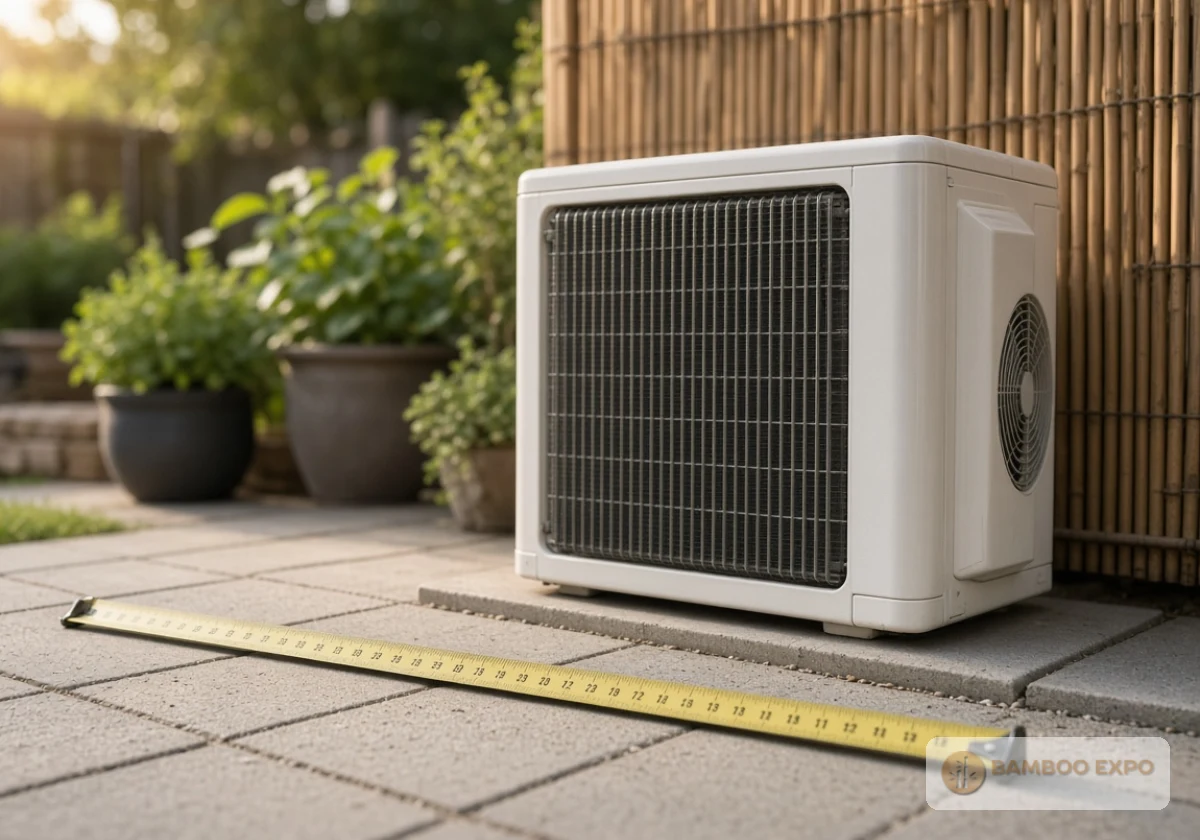
Grab a tape measure this weekend and mark the front, side, top, service, and wall gaps with pegs. Then compare the marked area against the styles in the table, and pick the one that fits inside your pegs.
Ready to screen your AC unit without starving it of air? Contact Bamboo Expo with your measurements, and we’ll help you choose a bamboo AC enclosure that suits your clearances.