
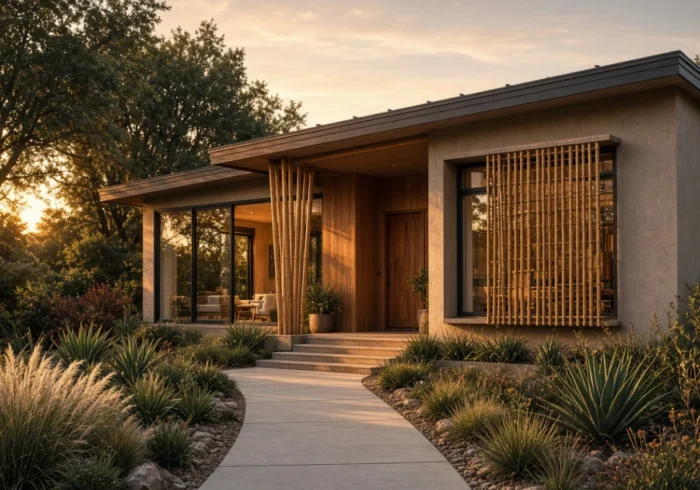
Bamboo’s future in sustainable design is structural. Engineered bamboo panels now frame low-rise buildings where architects once specified steel or concrete. Laminated beams carry floors and roofs, so a grass that is best known in Australia for flooring and screens now does load-bearing work.
That shift surprises many Australians, since bamboo still reads as a finish rather than a frame. Bamboo Expo connects the growers, processors and designers who are already using bamboo for structural work in Australia and Asia.
This guide covers how fast bamboo regrows and how it measures up against concrete and steel. You’ll also see how it pairs with rammed earth and other natural materials. Finally, it covers the certification, fire, and supply hurdles bamboo must clear before it becomes normal on Australian sites.
Bamboo Joins the Shortlist of Green Construction Materials
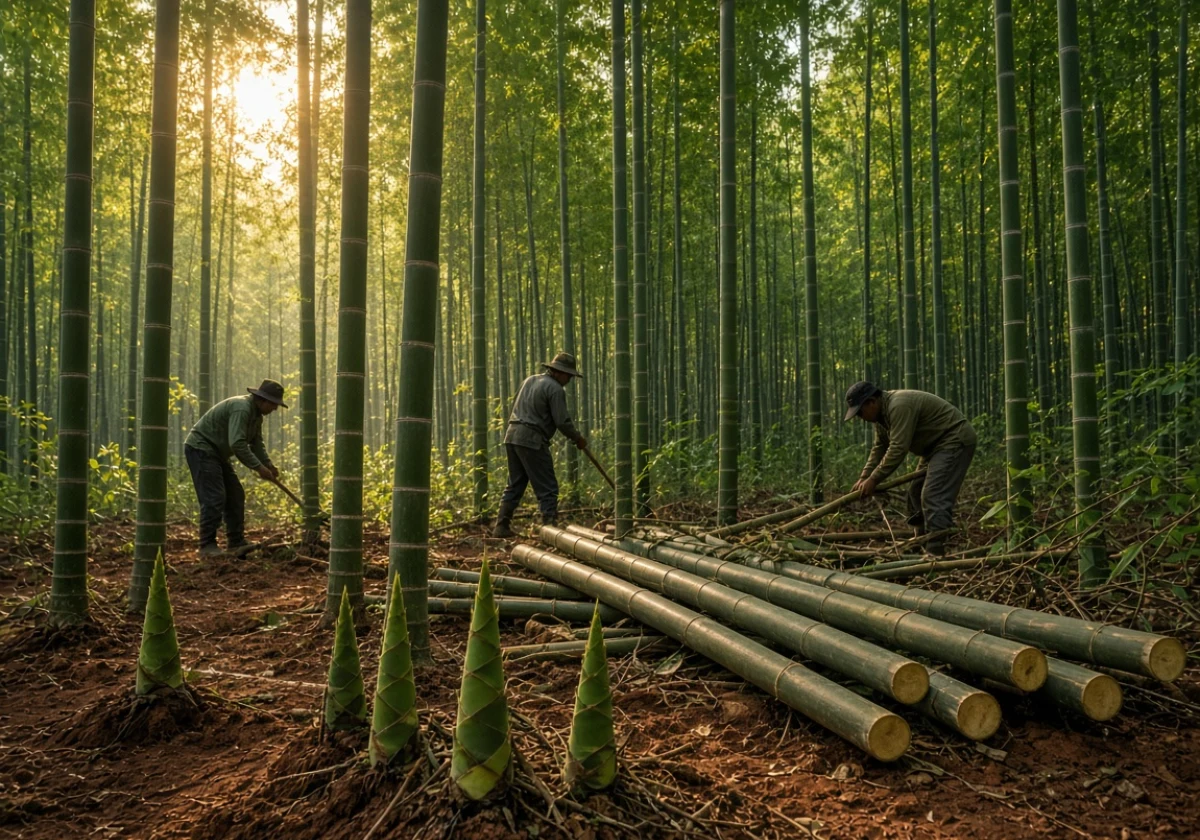
A bamboo culm reaches full height in a single growing season and is ready to harvest in three to five years. Hardwood trees need decades before they yield a usable beam. That gap is why sustainability leaders keep adding bamboo to the list of sustainable building materials they’ll approve.
Three factors drive the interest: the growth cycle, the structural numbers, and the materials bamboo works alongside.
Why Bamboo Grows Back Faster Than Timber Crops
Speed starts with biology, because bamboo is a grass rather than a tree. Moso, the main commercial species, gains most of its height within weeks of breaking through the soil. Some bamboo species also hold the fastest-growing plant record, at up to 91 cm in 24 hours.
Cutting a mature culm doesn’t kill the plant either. The underground rhizomes keep sending up new shoots each season, so you harvest from a stand that stays alive for decades.
A managed stand can supply a fresh harvest every three to five years. Plantation pine in Australia usually needs 25 to 40 years, and hardwoods take far longer. That short cycle keeps land productive without clearing new forest.
What Makes Bamboo Strong Enough to Build With?
Bamboo’s strength comes from long fibres that run straight along the culm. Weight for weight, good-quality bamboo matches or beats mild steel in tension, according to published lab tests.
Raw culms split and soak up water, so mills laminate them into flat panels and structural beams. Borax treatment protects against insects, while kiln drying lowers moisture. Fire-retardant coatings can then improve fire resistance before the material leaves the mill.
Once milled and treated, engineered bamboo behaves like a predictable building product rather than a raw plant. Ask suppliers for test results against the relevant ISO bamboo standards. In our experience working with bamboo products, specifiers relax the moment that certificate lands on the desk.
Where Bamboo Sits Among Green Building Materials
Mass timber is the closest comparison, since both are renewable and both store carbon dioxide inside the building. Cross-laminated timber leads in mid-rise projects, while bamboo panels work best in low-rise homes and fit-outs.
Beyond that pair, eco-friendly building materials include hempcrete, recycled steel and reclaimed wood. Mycelium panels grown from fungi are a newer, still experimental option. For insulation materials, straw bales and cork harvested from cork oak trees both offer strong thermal resistance.
Each material solves a different problem. Hempcrete regulates humidity, mycelium reuses farm waste, and straw insulates walls. That’s why sustainable construction practices often combine several on one site. Sustainability in construction also favours materials with low processing energy.
Bamboo’s own advantage is reliable supply. Short harvest cycles help keep stock moving when timber orders face long lead times.
How Does Bamboo Compare With Concrete and Steel?
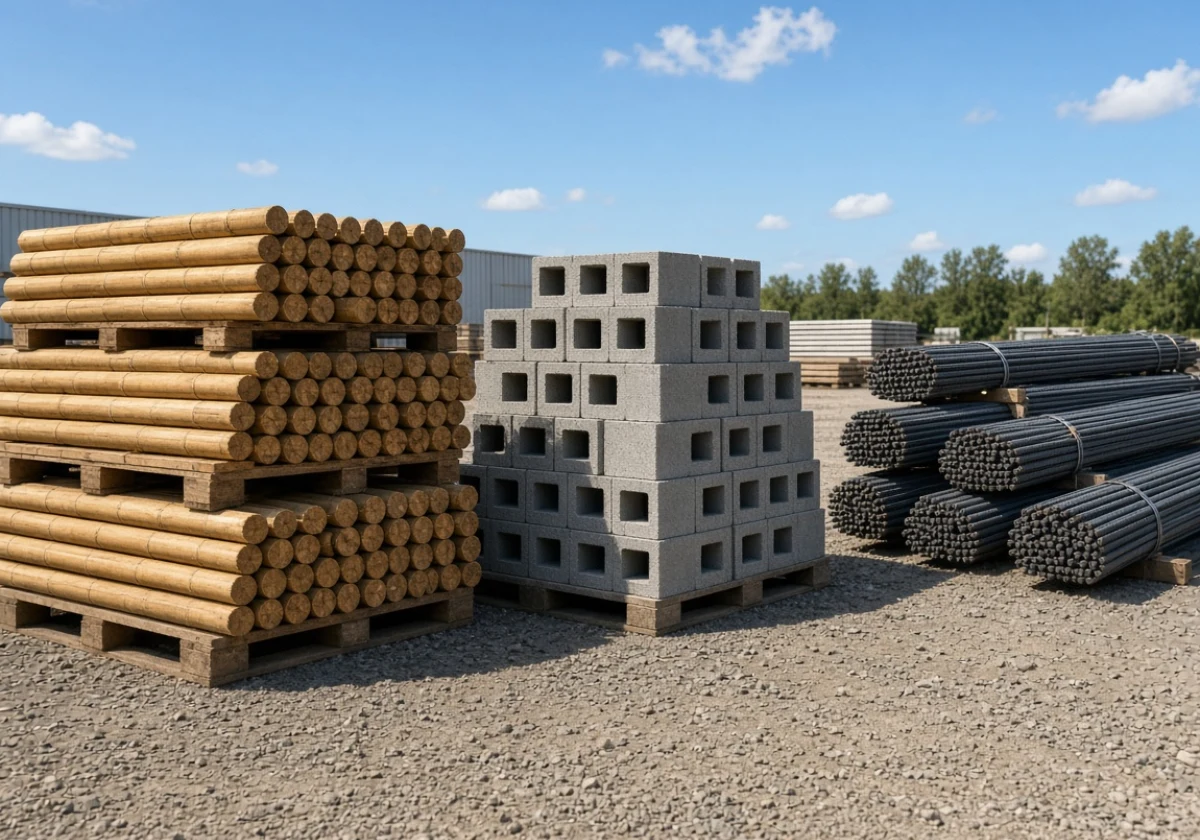
Bamboo competes with concrete and steel on strength per kilogram, though it needs treatment against moisture and fire. Weight settles most remaining questions. A bamboo frame weighs a fraction of an equivalent concrete frame, so smaller crews and lighter cranes can handle it.
The table below compares all three materials on the measures engineers weigh when making a structural choice.
| Measure | Bamboo | Concrete | Steel |
|---|---|---|---|
| Strength per kilogram | High in tension, light to lift | Strong in compression, weak in tension | Highest overall, heaviest to move |
| Embodied carbon | Low, mostly milling and glue | High, cement firing drives it | High, ore smelting and rolling |
| Renewal time | Three to five years | Quarried, so none | Recycled steel reuses old stock |
| Main weakness | Moisture, insects, and fire untreated | Cracking and carbon emissions | Corrosion and price swings |
Steel still leads in high-rise towers. For low-rise work, bamboo is now among the sustainable materials the construction industry can price and specify. If you’ve only met bamboo as flooring, those numbers will take a minute to accept.
Designing Homes With Bamboo, Recycled Materials and Rammed Earth Construction
On the design side, bamboo pairs easily with recycled and earth-based materials. Light bamboo framing gains thermal mass from heavy walls, which cuts the need for mechanical heating and cooling. That lowers the home’s environmental footprint.
Here are the pairings that do most of the work in a sustainable building.
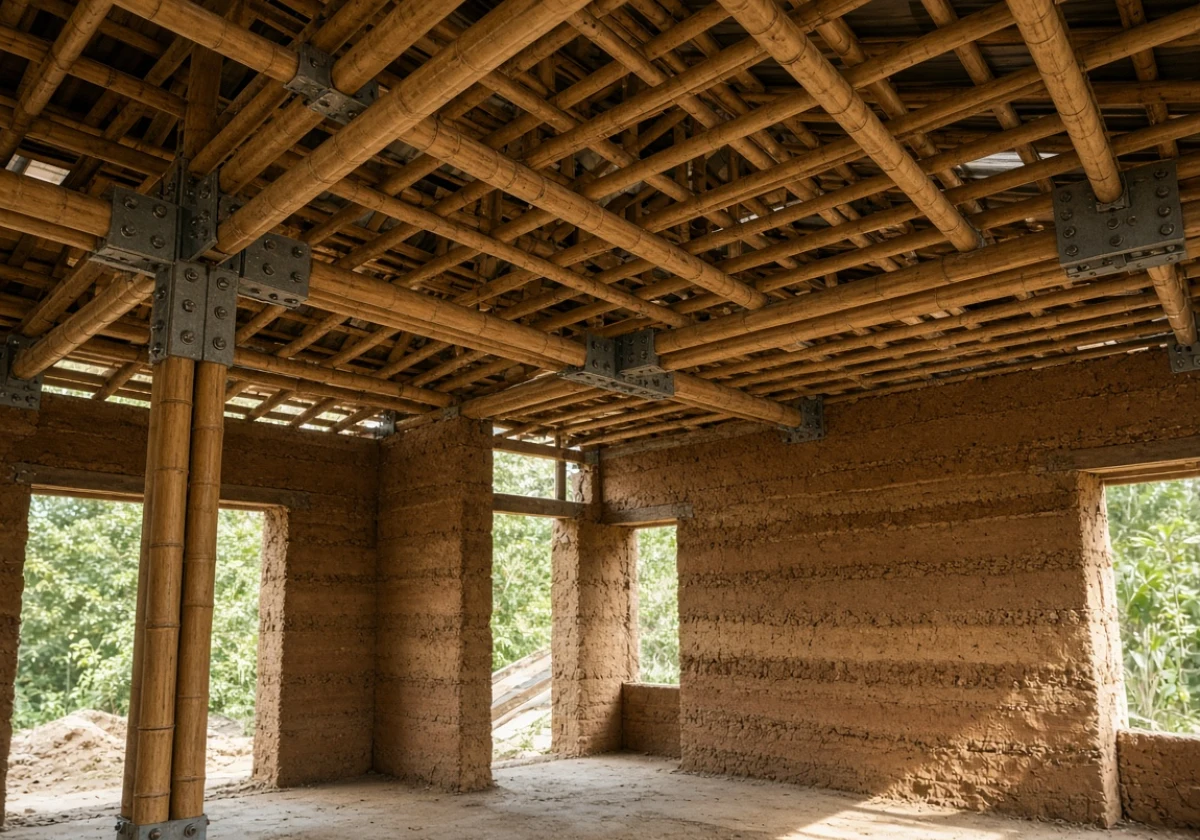
- Bamboo and Rammed Earth: Rammed earth walls bring heavy thermal mass, which steadies indoor temperatures and improves thermal performance through a hot week. A light bamboo roof sits easily on these walls without overloading them. Builders often use locally sourced materials, though most soils need a small share of cement to stabilise them.
- Bamboo and Recycled Materials: Recycled steel brackets and salvaged glass splashbacks can replace new fixings and finishes. Reusing existing stock avoids fresh mining and smelting, which keeps embodied energy low. These fixings suit bamboo panels, which take screws and brackets much like timber.
- Bamboo and Reclaimed Wood: Reclaimed wood boards add colour and grain that fresh bamboo can’t match. Mixing the two keeps sound timber out of landfill and gives interiors a warmer, layered finish.
Pair bamboo with something heavy and something reused, and the house will handle heat, load and wear. Good eco design starts with the wall system, because the heaviest material sets the footings and room layout. Bamboo then fills the lighter roles around it.
Bamboo Future: Green Architecture and the Next Wave of Construction Materials
Will structural bamboo still look unusual on an Australian building site in 2040? Probably not, because supply chains and standards are slowly catching up with designers’ plans.
Across Asia, crews have built with bamboo for generations, such as scaffolding and even whole houses. Based on our experience installing bamboo structures, Australian clients ask about fire before strength. Fire-retardant treatment helps, but each product still needs tested fire resistance ratings under the NCC.
Certification is the main hold-up. Builders already know the sustainable construction techniques involved, since laminated bamboo cuts and fixes much like timber. Once engineered bamboo carries ratings comparable to mass timber, it’ll be simple to specify. Rating tools such as Green Star and LEED already reward low-impact materials.
Green architecture also favours lighter frames, because they need smaller footings. Smaller footings use less cement, and cement production drives a large share of construction’s greenhouse gas emissions. Designers can cut embodied carbon this way well before any solar panel goes on the roof.*
Price could win builders over in time. As plantations and mills scale up, production costs should fall, while cement and steel prices stay tied to energy costs. Check current supplier quotes before you budget, since this outlook is a forecast.
Choosing Bamboo for Your Next Build
With fast renewal, low embodied energy, and structural performance, you can test and earn bamboo a place on the specification sheet. Treated bamboo keeps its strength, so the main design task is managing moisture and fire through good detailing.
Start with one element: a floor, screen, or ceiling. Then watch how it behaves in your climate. From there, framing will feel like a small step rather than a leap.
Bamboo Expo brings growers, suppliers and designers together for anyone ready to build with bamboo. Contact the team with questions about products, certification, or suppliers before you specify anything.