
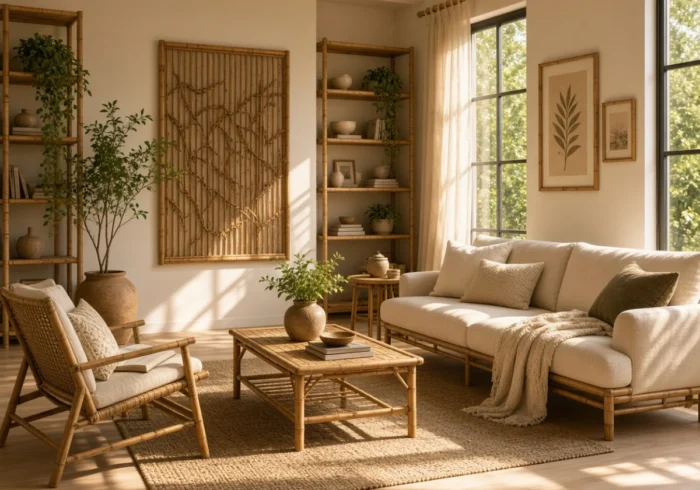
Bamboo works as a design element when you pick pieces that look beautiful and still cope with daily use. Most rooms fall on the second half, since one pretty screen won’t survive a busy hallway.
That split between looks and wear catches out plenty of first-time buyers. Suppliers like Bamboo Expo cut the same grass for very different jobs, so two items can share a name and share nothing else.
This guide covers which pieces handle knocks, how walls and blinds change a room, and what a living plant adds. You’ll also see bamboo set against hardwood and rattan on cost and water resistance.
Using Bamboo in Interior Design: Where Good Looks Meet Daily Wear
What decorative bamboo does best indoors is add warmth without a big spend. One panel or one chair shifts the colour of a room, so your home design ideas don’t need a full renovation. It suits most interior design styles, including coastal and minimal, and pairs naturally with other organic materials like linen and jute.
Bamboo Furniture That Handles Everyday Life
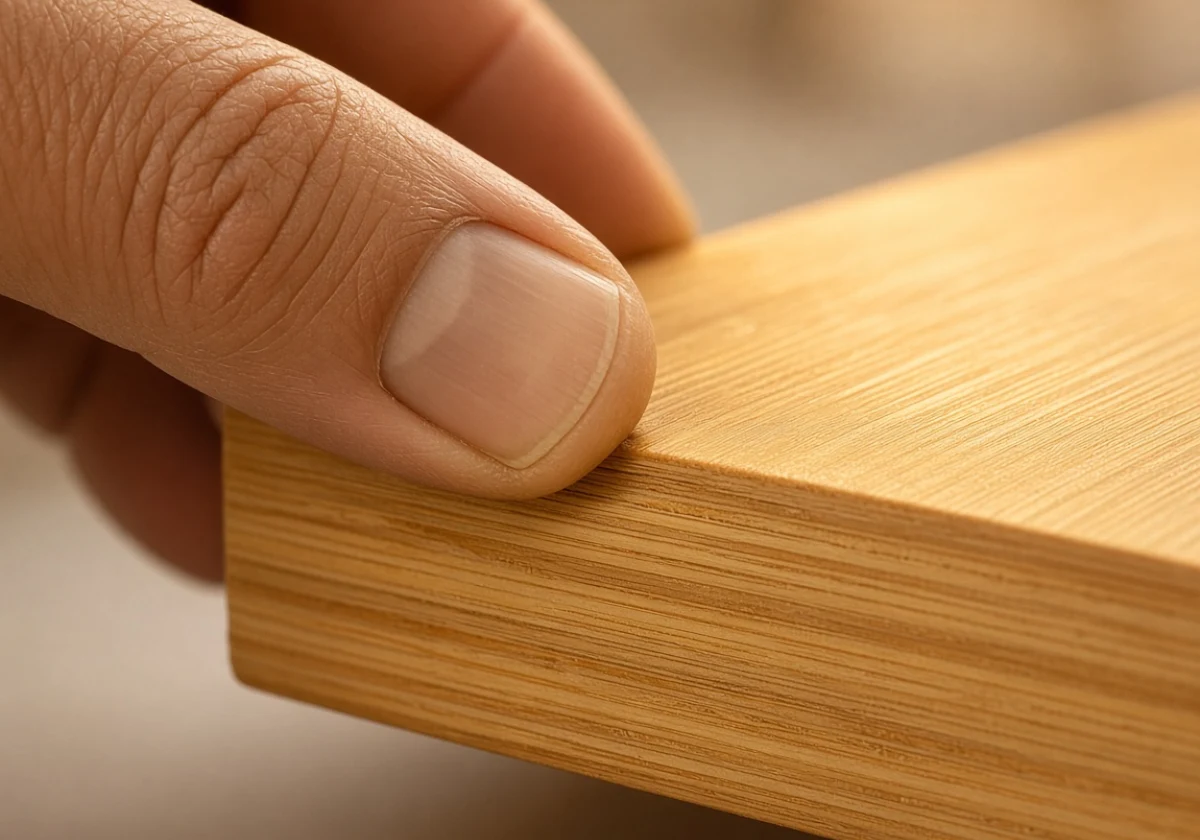
Good bamboo furniture lasts when the maker glues strips into solid boards instead of wrapping cheap particle board in a thin skin. That quality shows in a simple thumbnail test on a cut edge, where solid laminated bamboo barely marks and veneer dents straight away.
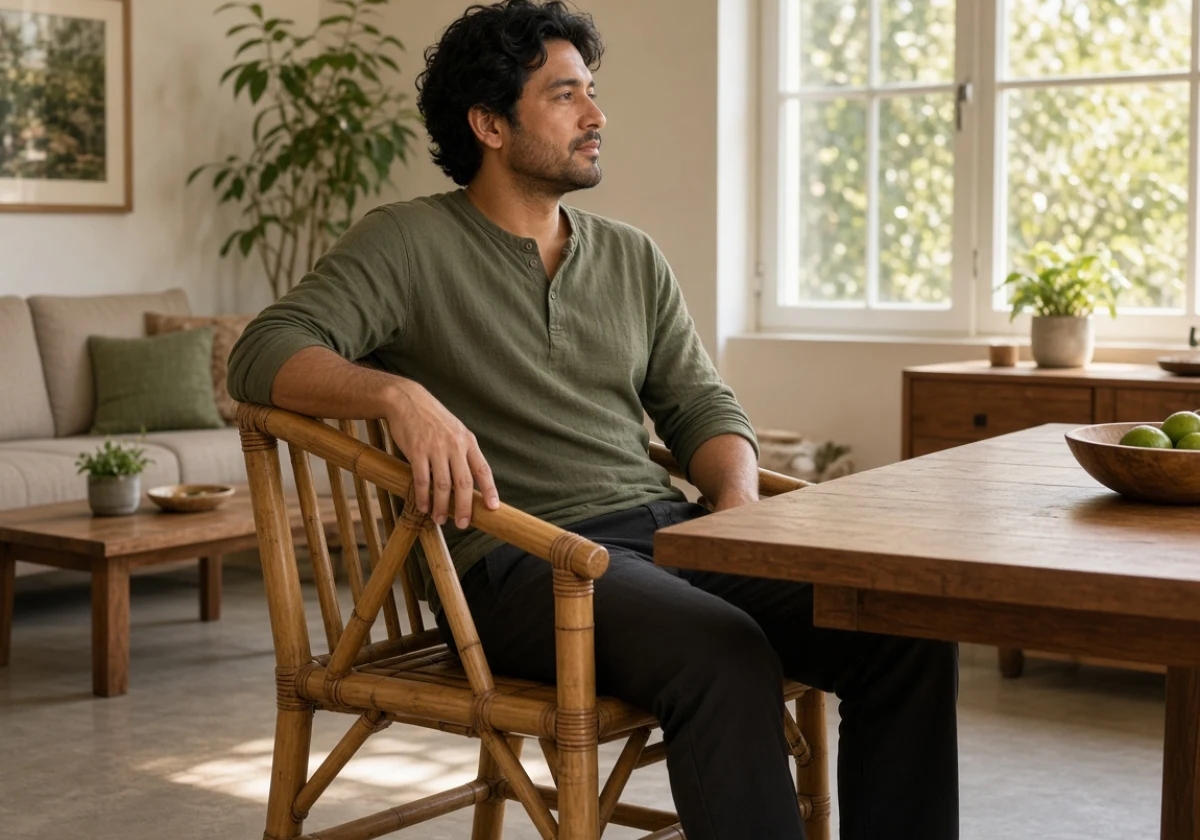
Beyond the board itself, the joints decide how long a chair survives. When you strip down any second-hand dining room chair, you will find the same weak point without fail. Stapled corners come loose long before the rest of the frame gives way. Bolted or dowelled joints, on the other hand, hold their shape (and a quick wobble test will tell you far more than any label ever could).
So spend your money where the load sits, like a dining table, a bamboo sofa frame or a bed base. Lighter items such as an end table can afford thinner construction, since nobody leans their whole weight on them.
Giving a Feature Wall Texture and Warmth
When used as a wall treatment, split bamboo registers as texture rather than pattern, which is why it calms a room rather than overwhelming it. Panels fix onto timber battens, and that leaves a small air gap behind the surface.
The gap allows the panel to breathe and prevents trapped moisture from staining the cane. If a full wall panel is beyond your budget, a hanging above a bed creates a similar effect for less. Use off-cuts and cord, since bamboo suits DIY projects well.
Even so, keep the pieces away from shower spray, because moisture lifts the fibres and the weave will sag.
Window Treatments That Soften Harsh Light
Window treatments in woven bamboo reduce afternoon glare without darkening the room. The weave scatters light, so brightness stays while screens and faces stop squinting.
During a hot Sydney summer, filtered light also keeps west-facing rooms cooler through the worst hours. A home office behind that glass gains the most because a screen you can read beats one you squint at. Pair the blind with a light curtain when you want full privacy after dark.
Once the sun is gone, the same logic moves to the ceiling. Bamboo pendant lights scatter a bulb’s glare the way a blind scatters daylight. Bamboo weighs so little that an ordinary hook holds a shade. A pair of woven floor lamps carries the tone into corners the window never reaches.
Measure the inside of the frame before you order, and measure twice, since window openings are rarely square. This way, you can ensure a window treatment to soften the harsh sunlight.
Why Do Bamboo Design Ideas Work So Well in Small Homes?
Light colour and slim profiles keep tight rooms feeling open. Heavy timber eats visual space, while thin bamboo poles let your eye travel past them to the wall behind. Four traits do most of the work in a flat or a narrow terrace.
- Light Visual Weight: Pale, straw-toned surfaces throw back more daylight than dark stained timber. Rooms read larger because the floor and walls stop swallowing the light you already have.
- Slim Furniture Pieces: Hollow poles carry load at a fraction of the bulk, so legs and arms stay thin. A bamboo dining chair typically measures 40 cm across the seat, compared with 50 cm or wider for a solid timber equivalent. That 10 cm difference per chair adds up around a small table.
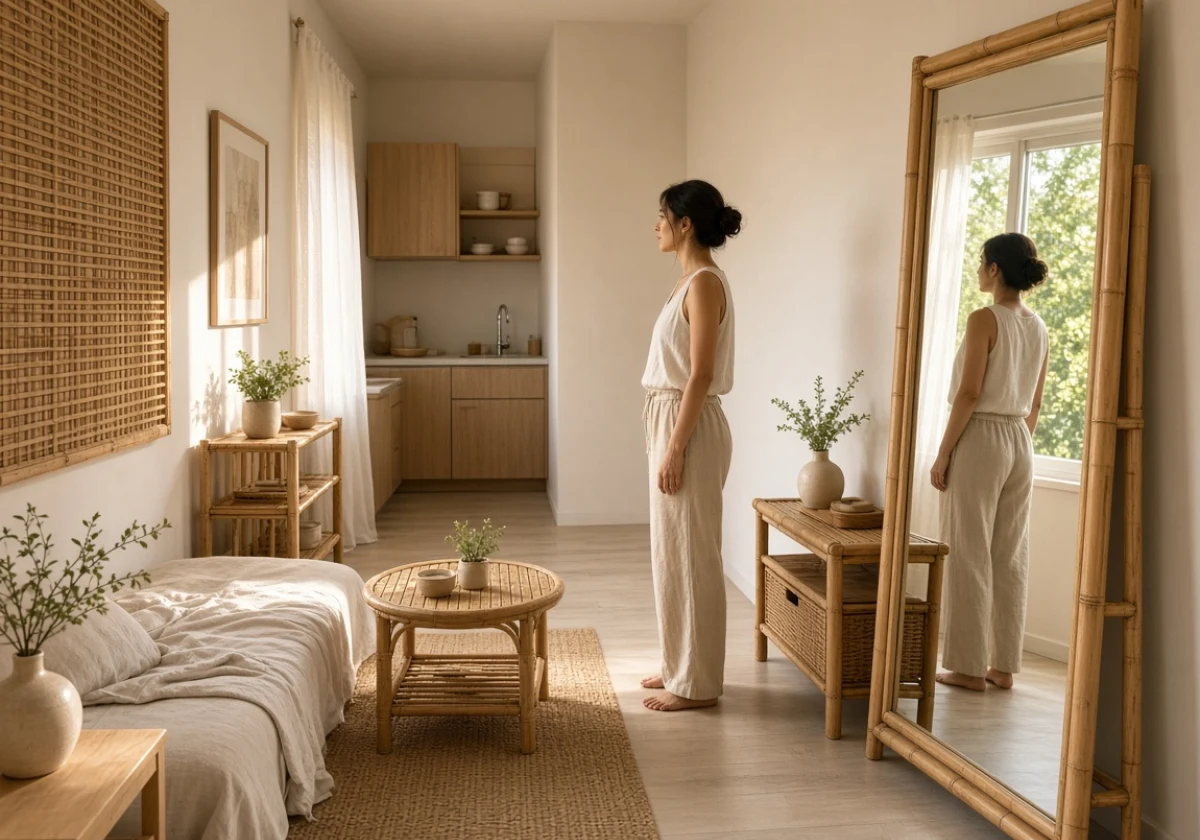
- Bamboo Mirror And Frames That Bounce Light: Hang a mirror in a bamboo frame opposite a window and the room borrows the view outside. Picture frames in the same tone tie the scheme together without adding another colour.
- Affordable Swaps For Cramped Spaces: Replacing one bulky cabinet with a slim bamboo shelf unit costs a fraction of knocking out a wall. Price both options before you start, since the furniture swap often frees the same floor space for under $500.
Actionable Tip: Start with the piece that blocks your path, not the prettiest one in the catalogue, and if you’ve ever turned sideways to pass a sideboard, you’ll know the one.
A Living Bamboo Plant Pulls Its Weight as Decor
Most people treat a bamboo plant as simple greenery, yet it decorates a room as much as furniture does. A tall cane pulls the eye upward, which makes a standard ceiling feel higher than the tape measure says.
Beyond that lift, the vertical line fills the awkward gap beside a living room sofa or between a window and a corner. Clumping varieties stay put in a wide planter, while running types push out shoots and need a sealed container with a solid base.
When you place bamboo indoors, choose a spot with bright but indirect light, as direct sun through glass will scorch the leaf tips. If you notice that water pools in the saucer, tip it out straight away, and hold off watering until the top few centimetres of soil have dried out.
Keep in mind that lucky bamboo sold in small glass vases isn’t true bamboo at all; it’s a Dracaena. After changing the water every couple of weeks, it will thrive happily on a kitchen bench (a good way to see how it performs before committing to a larger plant).
In our experience, people who start with one bamboo plant tend to keep it alive. The same cannot be said for most indoor ferns. Rooms with bamboo in one or two spots also read better than a full themed fit-out, so one plant in one good pot is usually enough.
Weighing Up Bamboo Against Other Natural Design Elements
Now that you know where bamboo fits indoors, it helps to see how it compares with timber and rattan. All three count as natural design elements, yet they behave differently once daily life starts.
The table below sets them side by side on the four points buyers ask about.
| Material | Cost | Water resistance | Durability | Sustainability |
|---|---|---|---|---|
| Bamboo | Low to mid | Good once sealed | 3 to 5 years raw, well beyond that when finished | Harvests at 3 to 5 years, regrows from the same root |
| Hardwood | Highest | Strong, slow to swell | Decades with upkeep | Decades of regrowth per tree |
| Rattan | Low | Poor, sags when damp | 3 to 5 years indoors | Fast-growing vine, woven by hand |
Pick bamboo when budget and regrowth speed matter. Pick hardwood when the piece needs to outlast the room around it. Growth explains the price difference, since bamboo ranks among the fastest-growing plants on record, with giant species adding 30 cm daily. Each cane cut at 3-5 years regrows from the root rather than starting over.
Hardwood still wins a benchtop that outlives the kitchen, and architectural design often mixes the two in the same room. Contemporary designs do the same on a smaller scale, pairing a woven bamboo screen with one solid timber shelf.
Start Small and Let Bamboo Grow on You
Bamboo earns its place indoors when the piece you choose suits the wear it’ll get. Looks and function come from the same decision, made once and made well.
Pick the one spot that bothers you, whether that’s a bare wall, a glaring window or a dead corner. Live with that change for a month before you add anything else. Ready to add bamboo to your next room? Explore Bamboo Expo for design ideas and guidance on matching the right material to the job.