
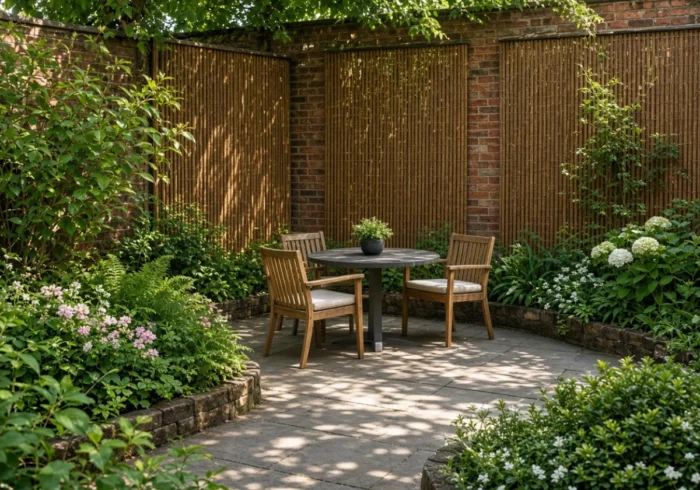
Planning bamboo screening against a brick wall means checking the masonry, choosing the right panels, and fixing them securely. Get those three right and the screen sits flat and stays put.
Trouble usually starts at the drill. Brick, mortar and rendered block each hold a fixing differently, so the wrong plug works its way loose.
This guide covers how to read your wall before buying, which panel sizes suit standard brickwork, and the fixings that hold in masonry. It also covers the care routine that keeps the colour from going grey. First, we’ll get to know the reasons for choosing bamboo screening on a brick wall.
Why Choose Bamboo Screening for a Brick Wall?
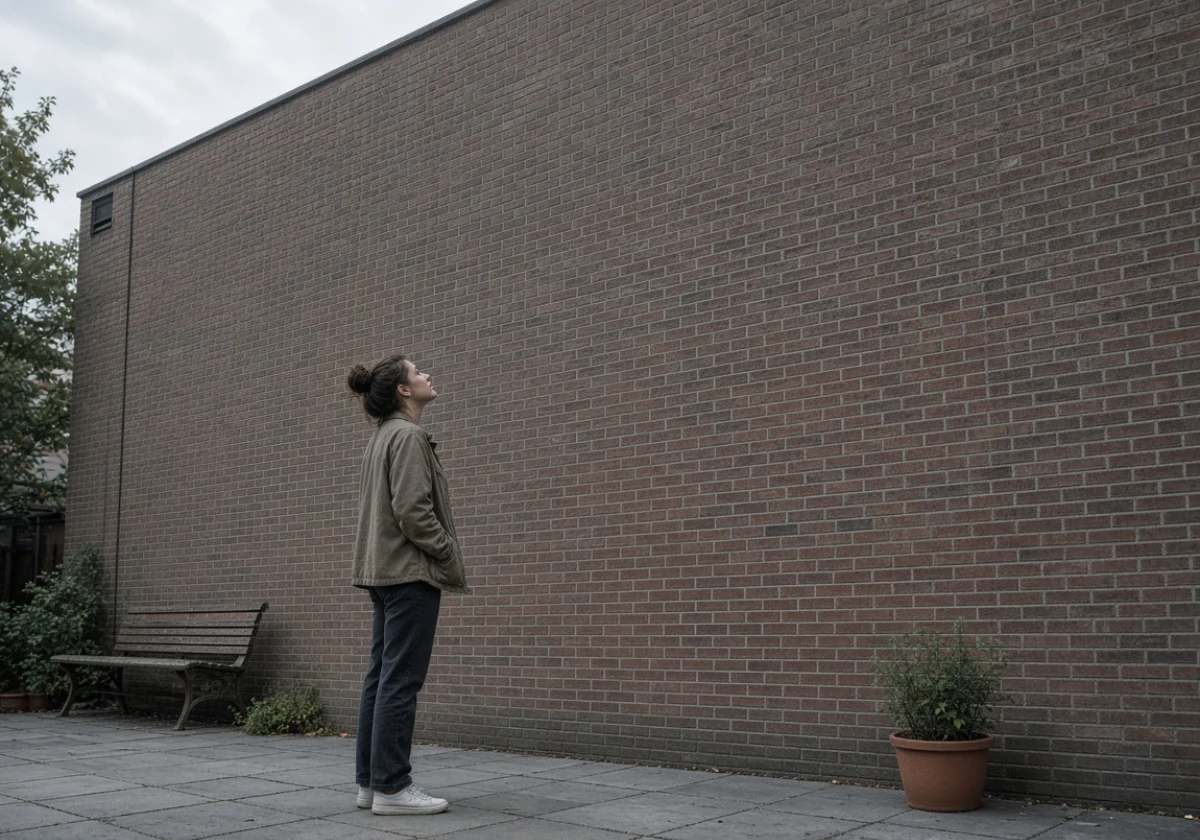
Bamboo screening suits a brick wall because it hides plain masonry, enhances privacy, and needs no major construction. You’re adding a surface over what’s already there, so nothing needs digging and the wall keeps doing its structural job.
If you’ve ever stood in a courtyard looking at a blank run of red brick, you’ll know how much it shrinks the outdoor spaces around it. A bamboo screen breaks that flat face into vertical lines, which makes the same view from the living room read as softer and deeper.
Beyond the look, the material itself earns a place here. Natural Bamboo is one of the fastest-growing plants on earth, and the quickest bamboo plant on record puts on 91 cm a day, so supply stays steady, and the price per panel stays sensible.
Brick also throws heat and noise back at you, and a layer of bamboo screening softens both while doubling as a wind buffer on an exposed corner. The canes break up sound bouncing off the hard surface, and the shade keeps bricks cooler at night (west-facing walls feel that stored heat the most).
Privacy is the other reason people start looking at outdoor privacy screens. Plenty of suburban boundary walls stop at chest height, and bamboo fencing fixed above that line adds cover in a backyard without blocking light. Around a pool area, it softens a hard boundary too, though screening never replaces compliant pool fencing.
The wall itself decides what’s possible here. Drill into enough older Melbourne brickwork, and you learn that a soft lime joint won’t hold a screw the way clay brick will.
Choosing Quality Bamboo Screening Panels for Your Garden Wall
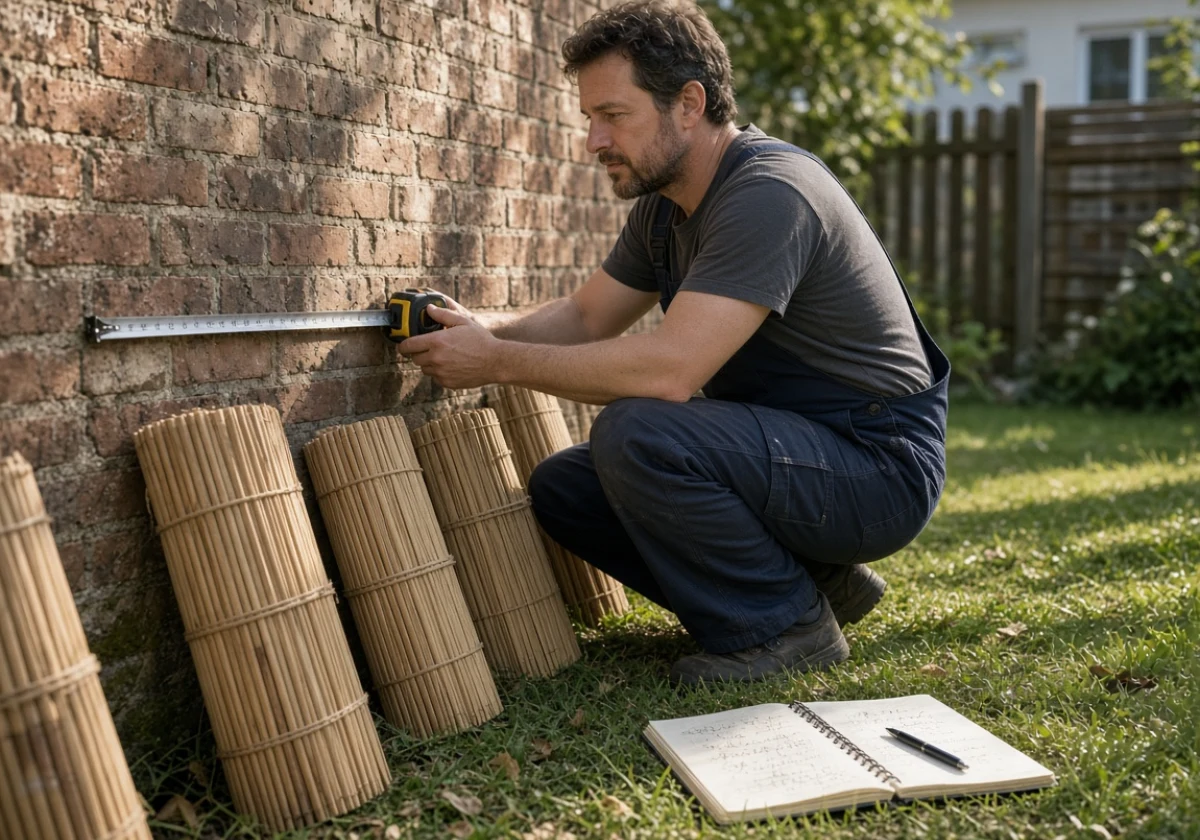
With the reasons settled, buyers often grab the first outdoor bamboo panels they see, then find the size is wrong for their wall. Measuring the brick face first, both height and width, saves a return trip and a wasted offcut. Since bamboo screening panels and rolls come in set heights, the wall dimensions should guide your product choice rather than the other way round.
Match your wall to the product type in the table below before you order anything.
| Product | Best Suited To | What To Check |
|---|---|---|
| Bamboo roll screening | Long, flat runs over 3 m and full bamboo privacy cover | Wire spacing, since loose wire lets canes sag |
| Rigid bamboo panel | Short returns and courtyard walls, a great choice for small spaces | Frame squareness against uneven brick |
| Black bamboo slats | Feature sections beside a door or gate | Colour match across separate packs |
| Clumping Bamboo plants | Softening the top edge of the wall | Mature height and root spread |
So, it’s clear that rolled screening covers long runs quickly, while a rigid panel holds its shape on brickwork that isn’t flat. If you prefer living bamboo screening, choose a non-invasive clumping variety, as running types can spread beneath paving. To finish the planting area, add low ground cover between the bamboo canes and the brick.
Unlike panel fencing that stands in its own posts, a screen on brick leans entirely on the fixings you choose. Those same panels dress up a tired garden fence, though timber gives you more places to drive a screw than brick does. Where your measurements sit between two sizes, contact experts before buying rather than trimming on site.
Installing Bamboo Screening on a Brick Wall Step by Step
Once the right products arrive, the best part about a planned installation is that your bamboo screening stays straight and secure for years. Rushing a bamboo screening job is what leaves panels bowing at the top by the second summer.
Work through the three stages below in order, since installing bamboo over masonry depends on what you fix into first.
Stage 1: Choosing the Right Fixings for Masonry
Masonry anchors or nylon wall plugs with countersunk screws hold best on a brick wall. Aim for the brick face rather than the mortar joint, as old mortar tends to crumble under load.
It’s important to get this drilling decision right because a poor fixing will work loose over time, and this way your bamboo screening stays secure for the long term. Use the hammer drill setting on brick, and switch to rotation-only when drilling into mortar to avoid cracking it further. Hammer action suits solid clay brick, which is common in older Melbourne homes, yet it can blow chunks out of render.
Beyond the plug itself, choose stainless or hot-dip galvanised screws so rust can’t streak the brickwork. Those orange runs sink into pale brick and never wash off.
Stage 2: Fixing Timber Battens Before the Panels Go Up
Timber battens give your screws something solid to bite into, as bamboo alone can’t offer enough grip. Use treated pine battens running horizontally, one along the top and one along the bottom of each run.
Space them so every panel edge lands on timber, which usually means a third batten through the middle on a tall wall. If you skip that middle batten, the panels will sag at the centre, and it’s a mistake most people only need to make once.
As you fix the battens in place, check each one with a spirit level, as the brickwork underneath may be uneven. Any lean at the top shows up clearly once the bamboo panels are in place.
Stage 3: Attaching Bamboo Wall Panels with Screws and Wire
Lift the panel into place against the battens and hold the top edge level before any screw goes in. If you’ve ever wrestled a 2 m panel alone, you’ll want a second pair of hands here.
Then, attach the bamboo screening with wood screws and washers driven through the frame or the woven wire. Without a washer, the screw head pulls straight through a cane.
Finish by tying the loose top corners back with galvanised wire. That last step stops wind lifting the panel away from the wall on gusty nights.
Good Maintenance Keeps Your Bamboo Fence Looking Fresh for Years
Once you install bamboo screening properly, a simple care routine protects that effort through every season. It’s low maintenance rather than no maintenance, and full sun is what fades the colour quickest.
The habits below cover washing, sealing, and the yearly check that catches damage early.
- Wash Twice A Year: Warm water and a soft brush lift dust and cobwebs out from between the canes. Pressure washers split the fibres, so keep the hose on a gentle spray.
- Seal Against Weathering: Brush on a clear bamboo protector or decking oil every 12 to 18 months. When exposed to full sun, bamboo greys faster than most wood fencing, and oiling slows that weathering to hold the warm colour longer.
- Check Fixings Each Spring: Run your hand along the battens and feel for any screw that’s backed off. Timber swells and shrinks through hot and cold months, which loosens fixings in damp, shaded areas first.
Together, these jobs take very little time across a year, and well-kept bamboo screens keep a home looking cared for. We’ve seen people who skip them end up with grey, brittle canes that no amount of oiling later will fix.
Ready to Give Your Brick Wall a New Look?
Getting this right comes down to reading the masonry, buying the size that fits, and fixing into solid brick. Everything after that is a short seasonal routine.
Measure your wall this weekend and test the mortar with a screwdriver tip before you order. A soft joint changes which fixing you need.
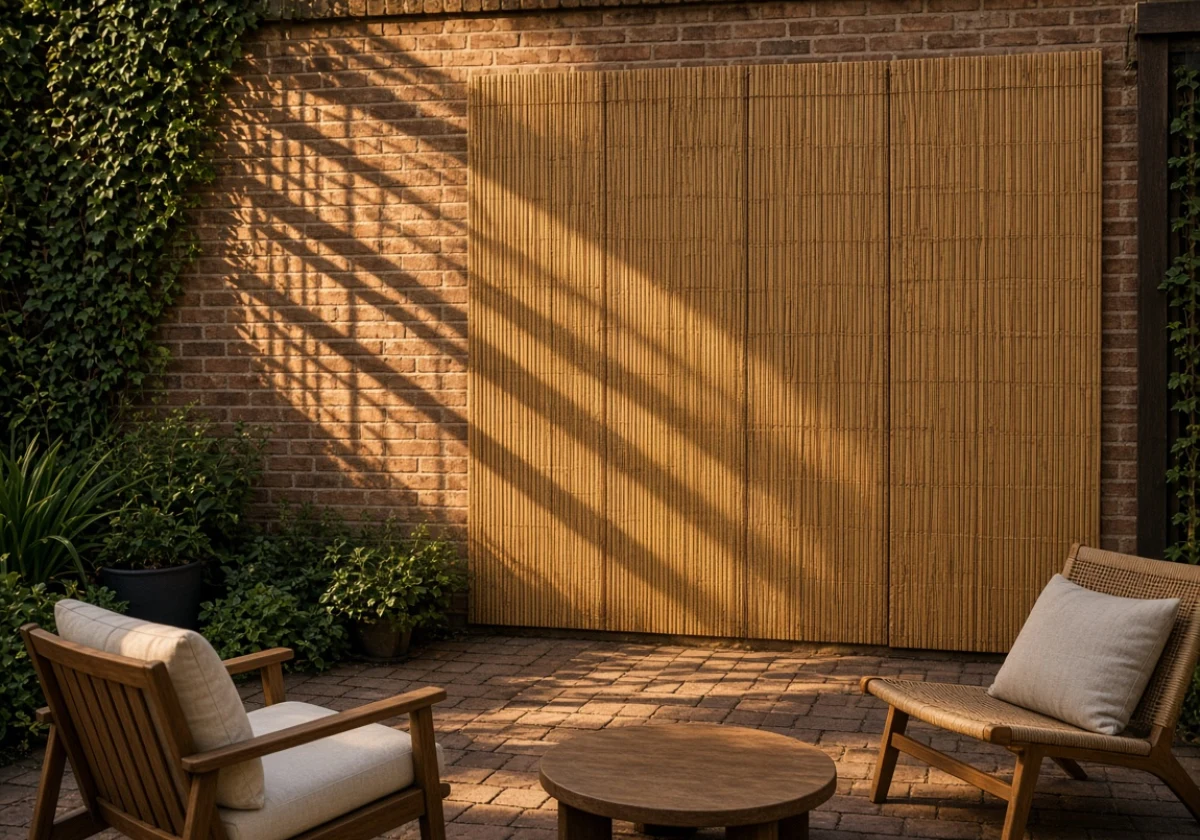
Bamboo Expo shares practical fencing and screening guidance for home gardens and courtyards. Contact us for help matching panels to your wall, and that blank run of brick can start looking like part of the garden.