
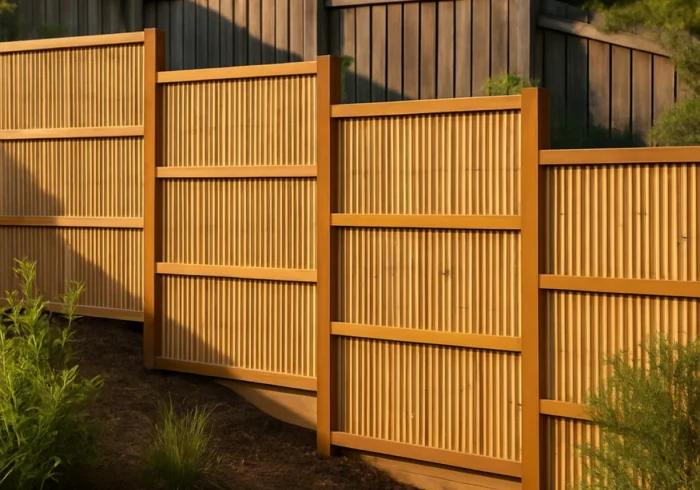
On a sloping fence, bamboo screening stays neat when you step each panel down rather than following the ground line. That one choice keeps the top edge reading as a clean horizontal line when you look out from inside the home.
Most gardens around Melbourne sit on some fall, which makes a fence on sloped ground the norm rather than the exception. But at Bamboo Expo, we speak with people who screwed their panels directly onto the rails and only spotted the crooked line afterwards.
This guide covers measuring the fall, positioning posts, closing the gaps under each step, and caring for bamboo through the year. Let’s get into it.
A Fence on Sloped Ground Changes How Bamboo Panels Hang
Most bamboo screening installation problems start with the fence rather than the panels, because a crooked frame passes its angle straight to the screen. Timber palings usually follow the slope of the ground, which means your rails already run on an angle before the installation process begins.
Three checks sort this out before you start drilling, and each one builds on the answer from the last:
Measuring the Fall Before You Buy a Single Panel
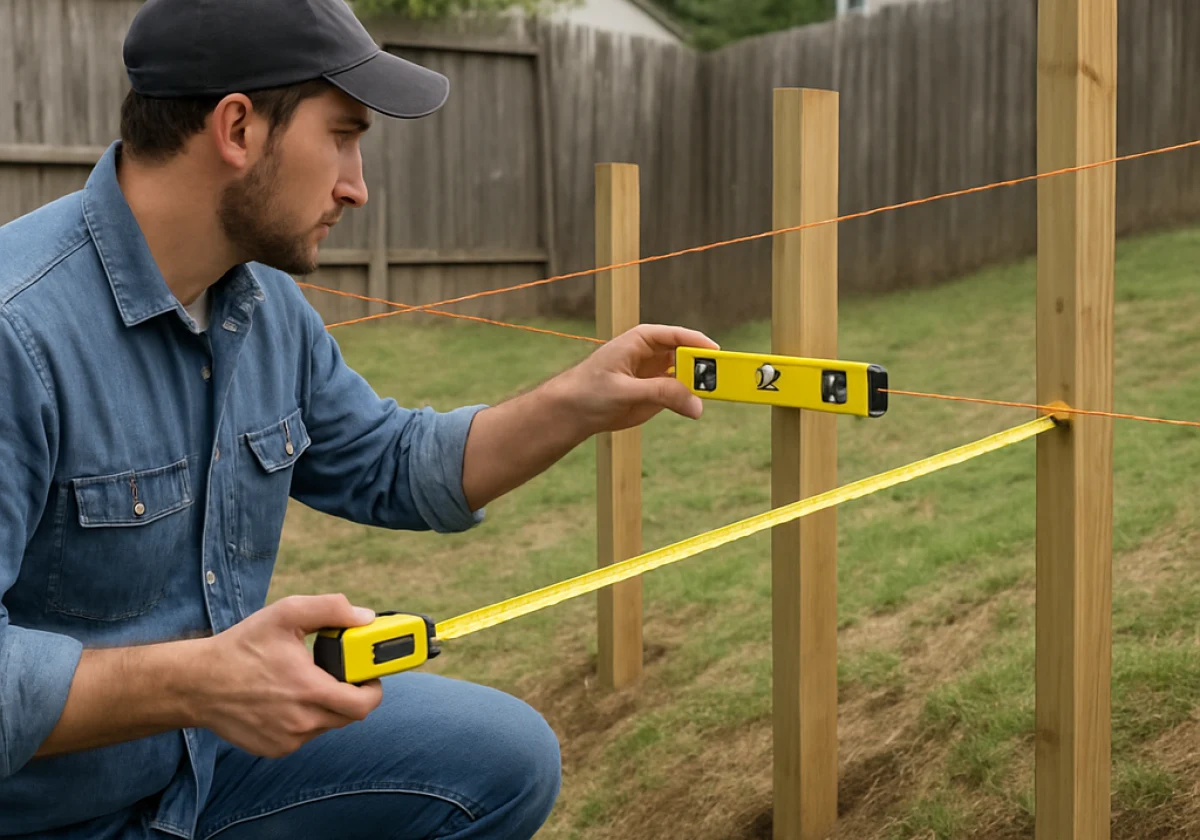
Run a string line from the highest post to the lowest one, then measure the drop at each post along the way. That total fall figure tells you how many steps your run needs and how deep each one should sit.
Divide the fall by the number of bays so every step drops by the same amount. A 600 mm fall across six bays gives you a tidy 100 mm step, which the eye reads as deliberate rather than sloppy.
Tip: Measure twice before ordering, because panels come in fixed sizes and a short bay leaves a gap you’ll patch later.
Why Your Posts Decide Where Each Panel Sits
Every panel edge needs a solid fixing point, and a screen this size carries real wind load onto those uprights. Set your post spacing to match the panel width, usually 1.8 m or 2.4 m, rather than trimming panels to suit odd bays.
In this case, install each post 100 mm to 150 mm lower than its uphill neighbour, so every panel steps down onto a solid fixing point. Across years of fitting bamboo screens on sloping blocks, we’ve found that one extra post always beats cutting a panel down. Skip it, and the weight of the screen pulls the whole run out of square within a couple of windy weeks.
Marking a Level Line for the Panels to Follow
With the posts standing, mark the top of each panel with a spirit level using a pencil line drawn across the post face. Laser levels save time on long runs, though a 1200 mm spirit level handles most suburban fences fine.
Then check each mark against the one beside it, since a 10 mm error repeated over eight bays shows badly by the last panel in the run. Snapping a chalk line along those marks before you lift anything into place means the whole screen goes up straight.
How Do You Keep Privacy Gaps Out of a Stepped Bamboo Screening Installation?
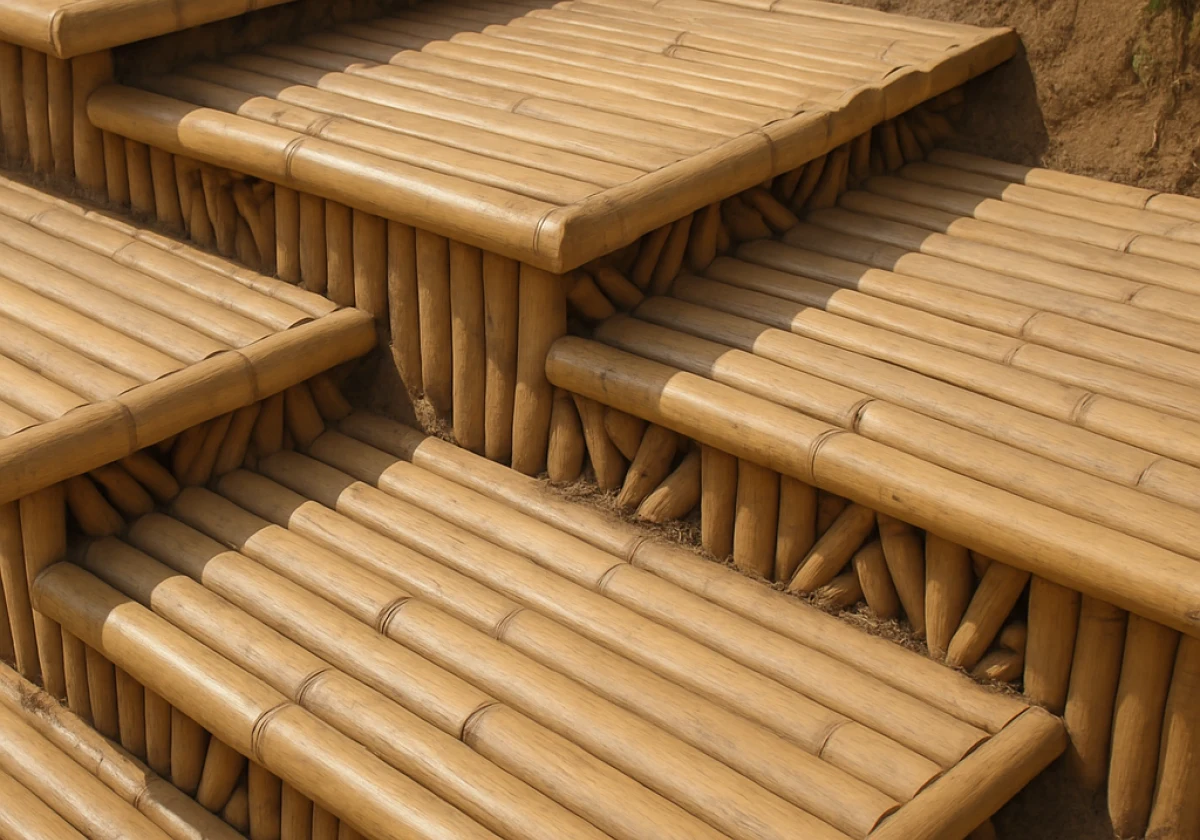
You keep privacy gaps out of a stepped run by overlapping panel edges and screening the triangles beneath each step. Those triangles open up where the panel bottom meets sloping ground, and they hand your neighbours a clear view through.
Here’s how to close each gap:
- Overlap the Panel Edges: Slide each new panel 50 mm across the one uphill. This stops daylight showing through the join and braces the edge against wind.
- Infill Under Each Step: Offcuts from the roll fill the triangle left below every step. Fix them to the bottom rail with galvanised wire and cut the canes with a fine-tooth saw so they don’t split.
- Close the Ground Gap: Low planting or a strip of pebbles along the base hides the last 100 mm of daylight, and both options keep airflow moving.
Check your work from the neighbour’s side of the fence, because that’s the angle a privacy screen has to beat. Ten minutes of infill now saves you a season of feeling watched.
Choosing Between Stepped and Raked Panels for Bamboo Fencing Australia-Wide
Picking the right method early saves you from pulling panels off the rails and starting again halfway along the run. Stepped runs hold every panel level, while raked runs follow the slope so the top edge sits permanently on an angle.
The table below shows where each method works and what you need to account for before installation:
| Method | Best for | Watch out for |
|---|---|---|
| Stepped | Steeper or uneven falls, formal gardens, standard panel sizes | Triangular gaps left under each step |
| Raked | Gentle, consistent falls and long, even slopes | Custom cutting on every bay, higher labour cost |
Most sloping blocks can use stepping where standard panels suit the layout, since each panel stays level and often needs fewer modifications. Raking makes more sense on a smooth, consistent fall, while uneven ground can make every change in the slope more visible.
Care Through the Year: Helping Bamboo Fence Panels Handle Melbourne Weather
Once your bamboo fence panels are up and level, a little seasonal care will keep them that way. Melbourne throws wet winters and dry, hot summers at the same fence, and natural canes react to both. The aim stays simple: move water off the screen and stop direct sun bleaching the colour out.
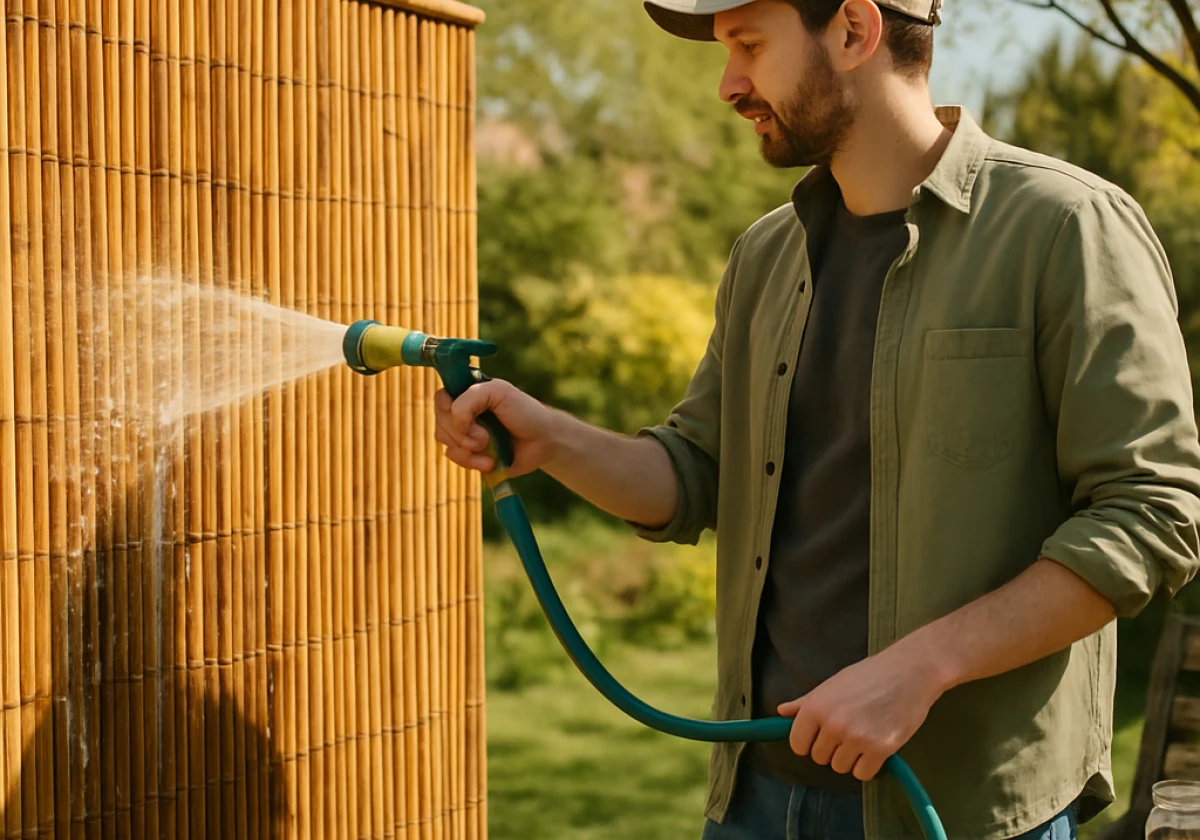
Every spring, hose the panels down and re-check the ties, since canes shrink and swell enough to work fixings loose. Brush on a clear outdoor oil to slow moisture and hold that honey colour for another year.
Through summer, trim back any climbing plants that trap water against the screening and lift pots clear of the base. Airflow does most of the maintenance work for you, so leave a 20 mm gap between the panel bottom and the soil (yes, that little gap does a lot of heavy lifting).
Come winter, check the bottom rail for rot after heavy rain, since water sits longest there on a sloping block. We’ve pulled apart enough tired bottom rails to know that rot starts low and quiet, long before you see it from the house.
If you want a living layer behind the screen, choose a clumping bamboo like Bambusa textilis. Some species grow up to 91 cm in a day, so a clumping type saves you years of digging out runners. These seasonal habits add years to a screen and take about 20 minutes each time.
Get Your Panels Sitting Straight This Weekend
A sloping block doesn’t stop you from getting a straight screen line; it only changes the order you work in. Measure the fall first, set the posts second, then hang every panel dead level.
Grab a string line and a tape this weekend and mark out exactly where each step will land. Plenty of suburban runs come together in a single Saturday once the posts stand true and square.
Bamboo Expo supplies bamboo fencing Australia-wide, including screening rolls and framed panels for homes and gardens. Contact us for sizing tips and delivery options.