
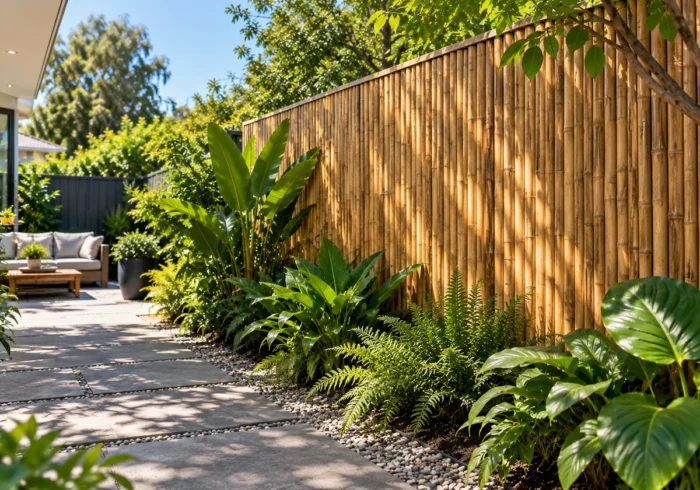
If you’ve got a fence, a bare wall, or an empty corner, but nothing that actually feels finished, you’re probably looking at wasted space. To be honest, most backyards have at least one area like this, because landscaping budgets usually go toward grass and a single garden bed first.
Bamboo outdoor design gives those overlooked areas a clear purpose without the cost of a full renovation. It adds texture, height, and structure while working well in areas where timber fencing and brick borders may not be the best fit.
Those qualities make bamboo panels useful in a range of spaces. For example, a garden corner, a pool surround, and a bare patio edge can all use the same bamboo panels in different ways.
This guide explores those possibilities in more detail. You’ll get to learn practical setups for feature walls, garden borders, balconies, larger yards, and water features.
But first, let’s look at why bamboo is winning out over timber.
Why Bamboo Is Replacing Timber in Backyard Design
Most homeowners are replacing timber fencing with bamboo because timber struggles in Australian conditions. Humidity gets into the grain and warps timber, while UV exposure dries it out and splits the surface. As a result, most timber fences need re-staining every two to three years just to look decent.
Bamboo doesn’t have this problem. It flexes instead of cracking when the sun’s beating down. Plus, it holds its shape through those wild swings between a scorching January and a wet, miserable June.
And once you’re not fighting the material just to keep it standing, you’ve got more options open to you. That includes a feature wall, a border, or a full privacy screen, all using the same panels.
How Bamboo Outdoor Design Turns a Blank Fence into a Feature
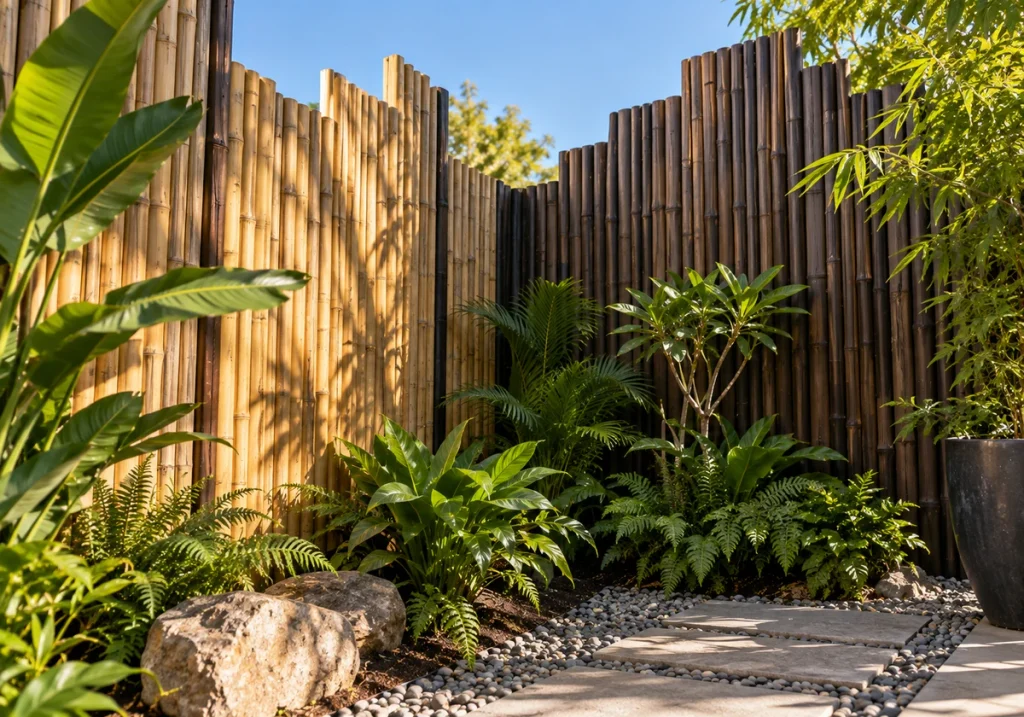
A plain fence just sits there until you actually add something to it. Bamboo outdoor design is one of the simplest ways to change that. A few panels can add texture, colour, and shape to a zone that used to feel like an afterthought.
And the same panels look completely different depending on where you put them.
Feature Walls Work Hardest in a Courtyard Corner
Courtyard corners are where bamboo texture really earns its keep. The light and shadow in a tight space show off the grain clearly, in a way an open fence line rarely does. If that corner happens to catch full sun for most of the day, even better. The warmth brings out the natural tones. And because you’re covering less area, the panels themselves cost less to install.
Mixing Panel Heights Stops the Wall Looking Flat
When you stagger the panel heights instead of running one flat row across the whole wall, you break up the surface and add depth. You can reinforce that effect with colour by combining natural and dark bamboo tones (it’s the kind of combination we’ve seen age well). Take a courtyard edge done in two tones, for example. The colour split still reads clearly even after a few seasons outdoors.
Why Bamboo Garden Borders Outlast Besser Block
Besser block cracks when the soil beneath it expands and contracts through the seasons, and that movement is what causes most border failures. Bamboo doesn’t fight that movement the same way rigid block does, which is the main reason it holds its line for longer. Bamboo Expo builds border panels for exactly this problem, and they hold steady in yards where block and brick keep letting people down.
Beyond just flexing with the ground, here’s what else makes bamboo the stronger choice:
- No Mortar or Footings Needed: If you want a border without weeks of prep work, bamboo skips it entirely. There’s no mortar to mix and no concrete footings to pour, which cuts install time down significantly compared to block edging.
- Termites Steer Clear of Treated Bamboo: You don’t have to worry about pest damage over time, since treated bamboo goes through a borate-based treatment. Timber borders usually leave out this step; they break down faster and become easier targets for pests.
- Weight Stays Off the Soil: Bamboo panels are far lighter than block or brick, so they don’t add extra pressure to soil that’s already shifting.
Fair warning though: cheap, untreated bamboo won’t hold up the same way, so check what you’re buying before committing.
With that sorted, the next question is how bamboo handles a much smaller footprint.
What Changes Bamboo Garden Ideas from Yard to Yard?
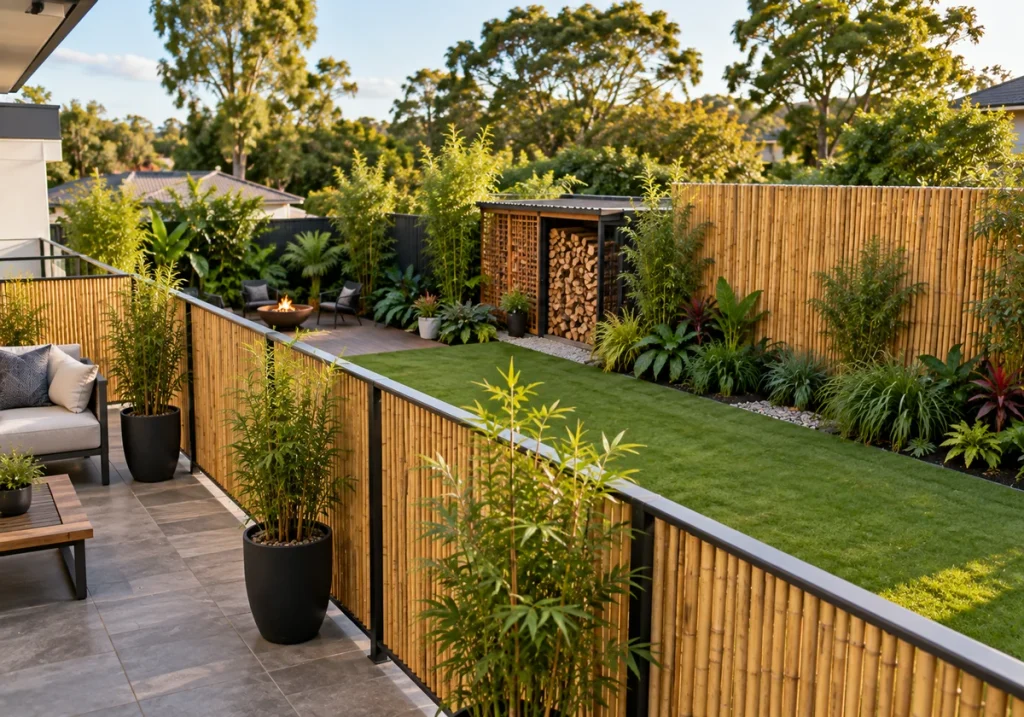
Not every yard suits the same bamboo setup, and the amount of space you have decides what actually works. A balcony and a full-sized backyard need two different approaches. Let’s see why.
Balconies Need Narrow Panels and Potted Bamboo
A balcony or a tight patio edge doesn’t give you much room to move, so narrow panels are the way to go. They won’t block airflow or eat up natural light the way a bulkier screen would. Potted bamboo works alongside the panels here, which adds greenery without any root systems creeping into the tiles or drainage below.
Weight is the other factor to plan for. Most balconies carry a load limit for anything fixed to the railing or floor. So you should check that figure before ordering anything heavier than a lightweight panel.
Larger Yards Can Use Bamboo Screens as Dividers
More space changes what bamboo can actually do. Instead of just lining a rail, full-height screens can separate an entertaining area from a utility zone, hiding compost bins, sheds, or firewood from view. That same extra space also allows for planting beds alongside the screens (something a balcony rarely has room for).
Bamboo Gives Water Features a Tropical Feel
A plain concrete pond edge looks stark on its own, but bamboo behind it changes that instantly. Want to know the best part? It works with almost any water feature already sitting in a yard, from a small fountain to a full pond setup.
Here’s how bamboo pairs with what’s already there:
- Softening Hard Edges: Concrete and stone pond surrounds look harsh on their own. A row of bamboo panels behind them breaks up that hard line with natural texture.
- Backdrop for Moving Water: If a fountain or waterfall runs nearby, bamboo behind it will add its own sound and movement. That layers with the water instead of competing against it.
- No Full Panelling Needed: Small courtyard fountains only need a few potted bamboo stems nearby, rather than a full run of panels around the whole area.
- Hiding Pool Equipment: Pool pumps and filtration units sitting near a water feature stand out for the wrong reasons, and bamboo screening tucks them out of view (thin panels, surprisingly good at hiding clutter).
At sunset, bamboo throws long shadows across the water that concrete never will, and that’s usually the detail that convinces people. A pond bordered by bamboo also feels more private than one framed by an open lawn, since the panels block the sightline from neighbouring yards.
Bamboo Works Best Behind Landscape Design Features
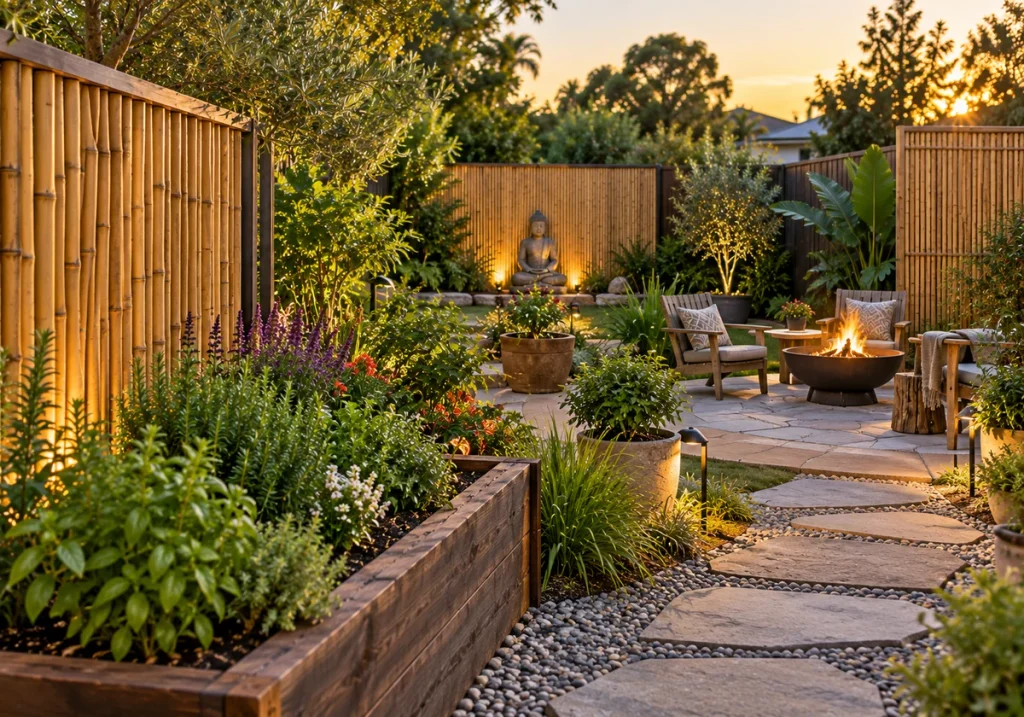
You might be thinking bamboo only works as a screen by now, but it also earns its place as a backdrop. When you place it behind other landscape design features, it lets the main piece hold focus while still adding texture around it. Four places where that combination works well:
- Framing Garden Statues: A statue against a bare wall competes with the fence line behind it. Bamboo panels remove that distraction and let the piece stand out on its own.
- Backing a Fire Pit: Evening lighting can bring out the warmer tones in bamboo around a fire pit area. Keep the panels at a safe distance from flames and other heat sources when planning the layout.
- Lining Garden Pathways: Run panels alongside selected stretches of a pathway rather than enclosing the entire route. Breaking the run with planters creates natural pauses as you move through the garden.
- Structuring Raised Garden Beds: Raised beds need something behind them, or the whole thing looks unfinished. Bamboo panels solve that in one step by giving the bed a defined edge that holds up over time.
These smaller applications can carry one visual theme across areas that serve completely different purposes. They also give you room to change individual garden features later without reworking the entire layout.
Once the structure’s in place, it’s less about upkeep and more about how the whole yard comes together.
Your Next Step Toward a Bamboo Backyard Makeover
Bamboo suits a wider range of spots than a single fence line ever could, including feature walls, garden borders, pond surrounds and pathway edges. Each setup uses the same panels differently, so the right choice comes down to your own yard, rather than a fixed formula.
If you’re picturing a specific corner, a fence, or a bare patch near the pool, that’s usually enough to start planning around. Bamboo Expo stocks the panels for each of these setups, ready for a yard that’s still figuring out its final look.
Get in touch with Bamboo Expo to talk through your space and find panels that suit it.
Frequently Asked Questions About Bamboo Outdoor Design
People planning a bamboo project usually ask a few of the same things before getting started. Here are four we hear often.
Does Bamboo Pair Well with Brick, Render, or Colorbond?
Bamboo sits comfortably against most existing house materials. It softens the harder edge of brick and render, and it adds warmth next to Colorbond without clashing with the metal’s clean lines. You don’t need to match tones exactly, just avoid two competing textures side by side.
What Design Ideas Work Best for Small Outdoor Spaces?
Lighting makes the most significant difference in a small space, since uplighting behind bamboo panels adds depth once the sun goes down. Mirrors placed near a panel can also double the sense of space. These design ideas cost little but change how a small courtyard or balcony feels.
Does Bamboo Attract Bees or Other Garden Wildlife?
Bamboo doesn’t flower often, so it draws far fewer bees, butterflies, or pollinators than flowering plants like hydrangeas do. Gardeners wanting a low-maintenance look without extra wildlife activity near seating areas often prefer it for that reason.
How Much Does a Bamboo Project Typically Cost?
Price depends on the size of the property and how much decking, gravel, or fencing the project replaces. A small feature wall costs far less than a full-property screen, so it’s worth scoping the project before committing to a budget.