
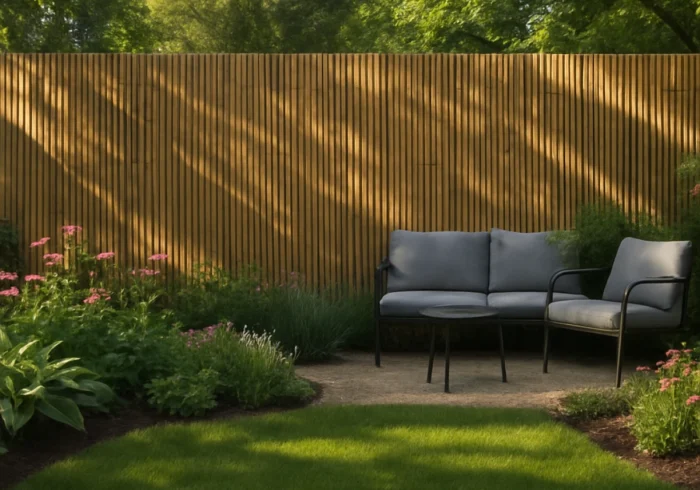
Leave 50 to 75 mm of ground clearance between your bamboo screening and the garden bed soil. That small gap decides whether your screen lasts 15 years or starts crumbling before its fourth birthday.
Most people skip the measurement because a flush bottom edge looks tidier on install day. Then the base darkens, softens, and frays, and the repair costs far more than the original panels ever did.
Here’s the thing: good bamboo screening installation is decided at the bottom rail rather than the top. This guide covers clearance numbers for four common garden bed styles. It also discusses the install order that keeps water off and the patio fixes that protect your privacy.
Why Does Bamboo Fence Ground Clearance Make or Break Your Screen?
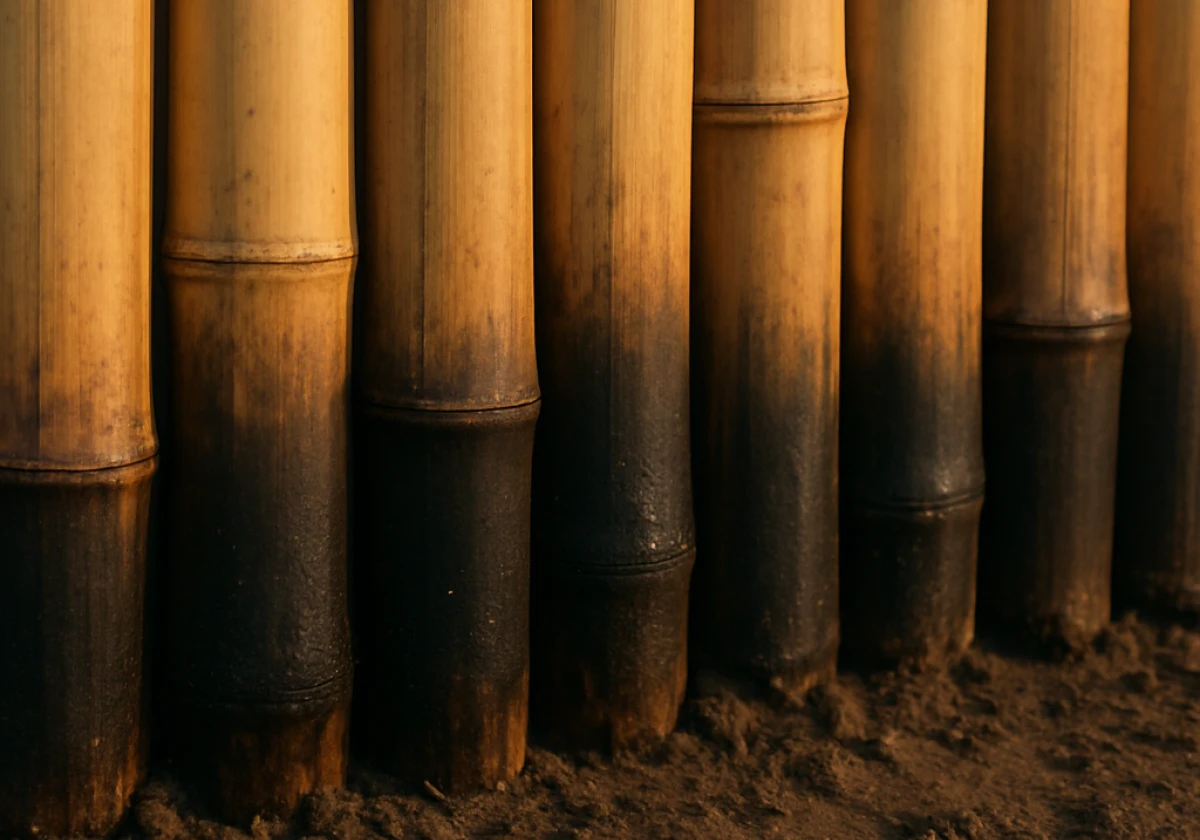
Bamboo fence ground clearance makes or breaks your screen because canes rot fast once they touch damp soil. Every other care step, from oiling the canes to spacing the posts, only pays off when air moves freely under the bottom rail.
Three things explain why that gap counts for more than the height of your panels.
How Soil Contact Drives Bamboo Fence Moisture Up the Canes
Bamboo canes act like drinking straws. Each hollow tube pulls water up through its open fibres as soon as a cut end touches wet soil.
Once a cut end stays in wet soil, moisture in a bamboo fence can climb 100 mm or more into a cane during a single wet week. This can happen well before any staining appears on the outside face of the panel.
Once summer heat dries that waterlogged fibre, it splits. No amount of oil will rescue a cane that’s already soaked through.
What Melbourne’s Wet Winters Do to Panel Bottoms
Melbourne averages 575.3 mm of rain a year, according to Bureau of Meteorology records for Melbourne (Olympic Park). Close to a quarter of that falls in June, July, and August. Garden beds hold it long after the sky clears.
Meanwhile, the low winter sun never reaches the bottom 100 mm of a screen, so that shaded strip stays damp for weeks at a time.
At Bamboo Expo, our Melbourne inspections found panels installed against soil developed rot signs within a few seasons. Raised panels remained in good condition for much longer periods.
Signs Your Screening Panels Sit Too Low
Press your thumb firmly along the base of each cane. A bamboo privacy screen sitting too low feels spongy instead of hard and hollow.
Beyond that, look for black speckling, frayed cane ends, and mulch piled above the bottom rail, since all three point straight to ground contact.
Smell gives it away too, and a musty edge near the soil tells you water has been sitting against your panel through wet seasons.
Clearance Guidelines: Matching the Gap to Your Garden Bed Style
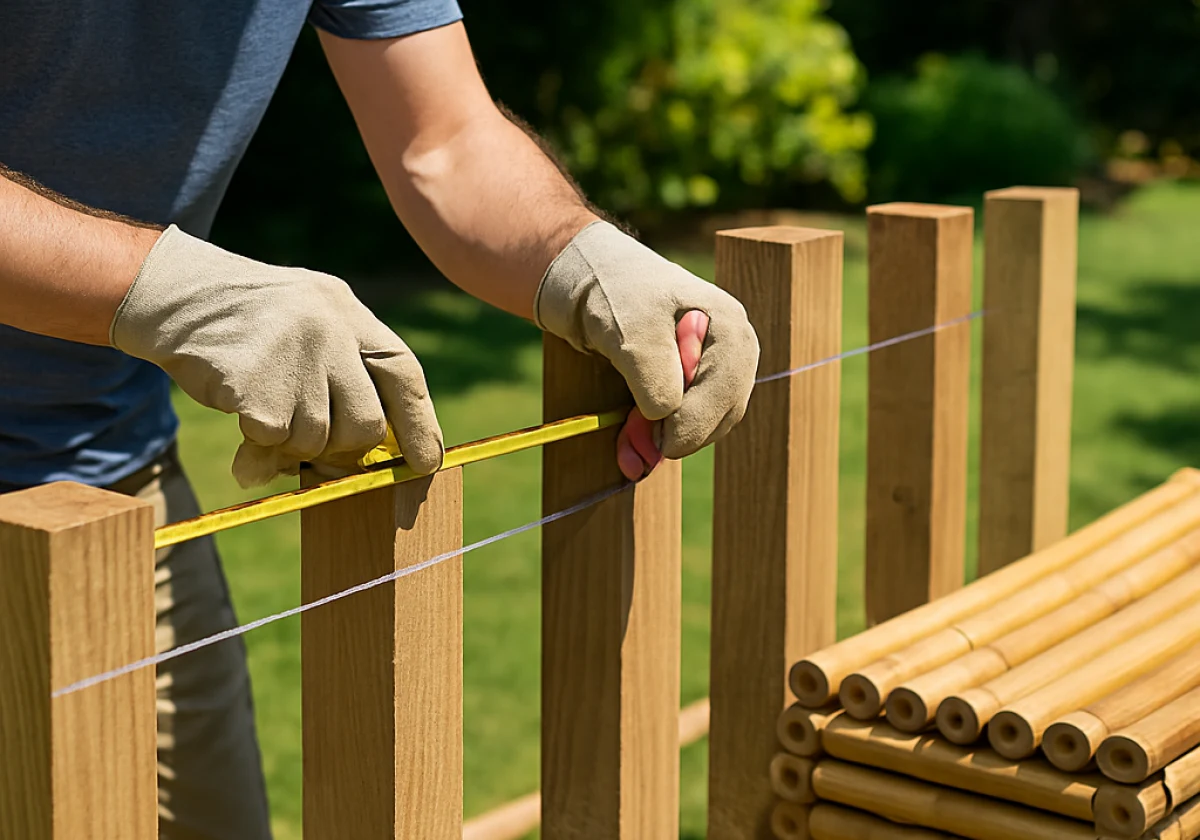
If your panels already show these signs, don’t just replace them at the same height. The right gap depends on what sits beside the screen, so find your garden bed style in the table below before you mark a single post.
| Garden bed style | Recommended clearance | Why |
|---|---|---|
| Raised bed with timber edge | 50 mm | Edging holds soil back, so splash is the only real risk |
| Mulched bed | 75 mm | Mulch settles and gets topped up, stealing 20 to 30 mm a year |
| Lawn edge | 60 mm | Clippings and wet grass pack hard against the panel base |
| Irrigated veggie bed | 75 mm | Daily watering keeps the soil surface damp all year round |
Measure from the highest point of soil or mulch rather than the lowest, because that peak decides how wet your panel really gets. Recheck the gap each spring (mulch creeps up faster than expected).
Bamboo Screening Installation Tips That Keep Outdoor Bamboo Panels Dry
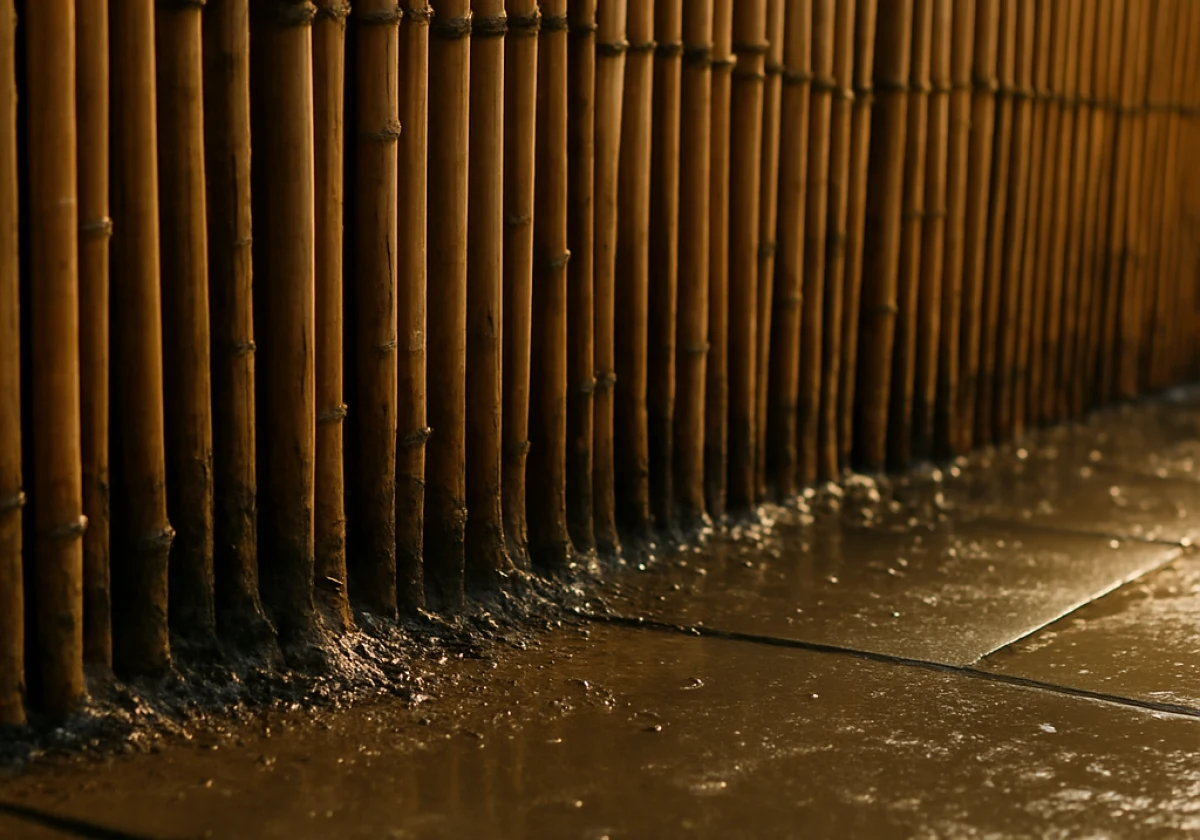
Order counts for more than effort on install day, since one skipped step undoes the other four. Work through these five in sequence and your outdoor bamboo panels stay dry through every watering.
- Clearance Line Marking: Snap a chalk line across all posts at your chosen height before lifting any panel into place. One line beats eyeballing each panel.
- Rail Mounting Height: Panels should hang from timber or steel rails, with every fixing point at least 100 mm above the bed surface.
- Gravel Strip Placement: Lay a 100 mm band of 10 mm gravel beneath the screen to stop rain splashing mud back onto the canes.
- Bottom Edge Sealing: Exterior decking oil on the cut ends slows water entry by closing the open fibres. Two coats should outlast one, though the extra season is worth verifying.
- Post-Mulching Gap Checks: Remeasure once fresh mulch goes down, because topping up a bed twice a year buries the clearance you paid for.
Honestly, the marking and the gravel strip are the two that get skipped once the panels look finished. Doing both on the same day has saved us more callbacks than any other part of our bamboo screening installation process.
Protecting Privacy Where Screens Meet Patio Edges and Lawns
Patio edges and lawn borders hide the same moisture traps as any garden bed. Rain hits your paving and bounces back up to 300 mm, coating the bottom of each panel with grit and water.
If you have ever swept a patio after a summer storm, you know how far that spray travels. Sprinkler overspray adds to it, and wet clippings pack into the gap where they hold damp against the cane for days. Clear them out monthly with a stiff broom (two minutes now saves a whole panel).
Worried that a visible gap gives prying eyes a clear view? At standing height, nobody can see through a 60 mm slot near the ground. Privacy and security work at eye level, and that low strip costs you neither.
Consider using bamboo plants in front of the screen rather than dropping your panels down. Clumping varieties like Bambusa textilis give you cover without trapping water, and their growth rate fills the space within two summers.
Give Your Bamboo Screen the Gap It Needs
A 50 to 75 mm gap costs nothing on install day and adds a decade to the working life of your bamboo fencing. Height, spacing, and finish all count for less than what happens at the bottom.
Measure your highest soil point this weekend and check what your current panels are resting on. Sorting the clearance now beats replacing rotted panels in three years.
We at Bamboo Expo supply panels, screening, and clumping plants for homes and commercial spaces across Melbourne. Talk to us about stock, sizing, and bamboo screening installation advice.