
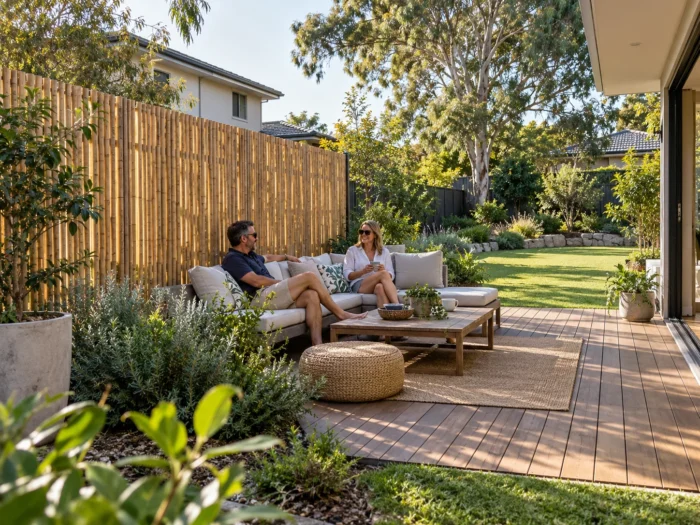
Bamboo screening creates outdoor privacy using woven, cut poles that block sightlines while letting light and air move through your backyard. That combination separates it from a solid fence, which shuts out the view and the breeze at the same time.
Plenty of homeowners reach for timber palings first, then meet the cost of replacing warped boards every few years. At Bamboo Expo, we watch that cycle push families towards natural bamboo panels instead.
Choosing bamboo is only the first decision. You also need to consider the materials, the amount of light you want, the cost, and the installation method. You can work through all four in an afternoon.
Bamboo Screening Basics: How Natural Panels Build Backyard Privacy
Most backyards feel exposed until dense panels fill the gaps other fences leave behind. If you’ve ever stood in your yard wondering why the neighbour’s window feels so close, you already know the privacy problem these panels solve.
Below, we cover what goes into a panel, how it compares with timber and metal, and what to ask a supplier:
Materials Behind Quality Bamboo Panels
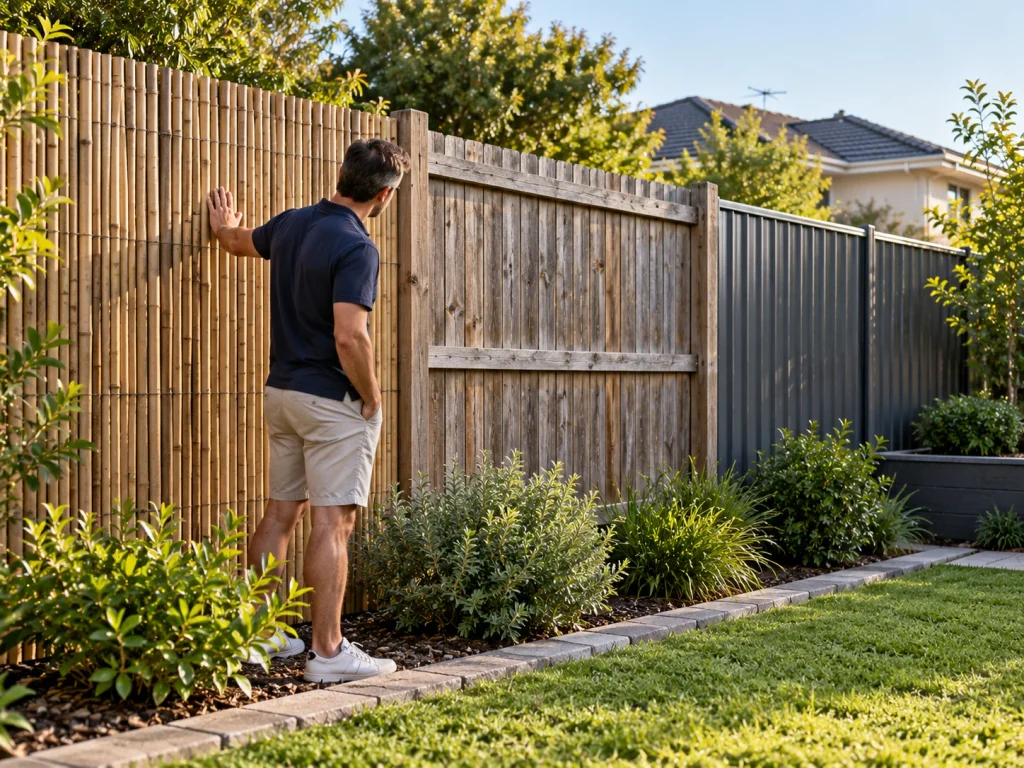
Good panels start with mature bamboo poles, cut after three to five years, once the fibres have hardened enough to resist splitting under load. Poles harvested before three years split under load, so age directly affects how long the panel lasts.
From there, the maker wires each pole to galvanised cross supports, and that wire, not glue, decides how long a panel keeps its structure.
Good suppliers also treat the poles against rot and disease. Proper treatment helps protect panels in gardens that experience wet winters and dry summers (we learnt this the hard way).
Ask whether the fencing bamboo is ethically sourced too. Sustainable bamboo regrows from the same root system without replanting, and the fastest species on record managed 91cm of growth in a single day.
Is Bamboo Fencing Tougher Than Timber or Metal?
Bamboo fencing beats softwood timber on hardness, and treated poles sit close to hardwood. It also weighs far less than steel or aluminium.
Metal still wins on lifespan in coastal areas, so bamboo suits inland gardens and courtyards better than a salt-sprayed beachfront fence. Once location is settled, colour becomes another consideration. Black bamboo costs more than the golden kind, though its darker tone hides weathering well.
In practice, a well-fixed panel typically lasts eight to fifteen years outdoors, and swapping one damaged section costs far less than re-boarding a whole run.
Finding More Information on Bamboo Products
Before you compare quotes, ask for the pole diameter, panel height, and wire gauge. These three numbers show how sturdy a panel is and whether it will fit your fence line.
Our team answers those questions daily. Customers who compare quotes on actual numbers know exactly what will arrive.
A sample offcut helps too. Holding a piece shows you the finish and colour better than any photo.
How Does Bamboo Screening Let Light In While Blocking the View?
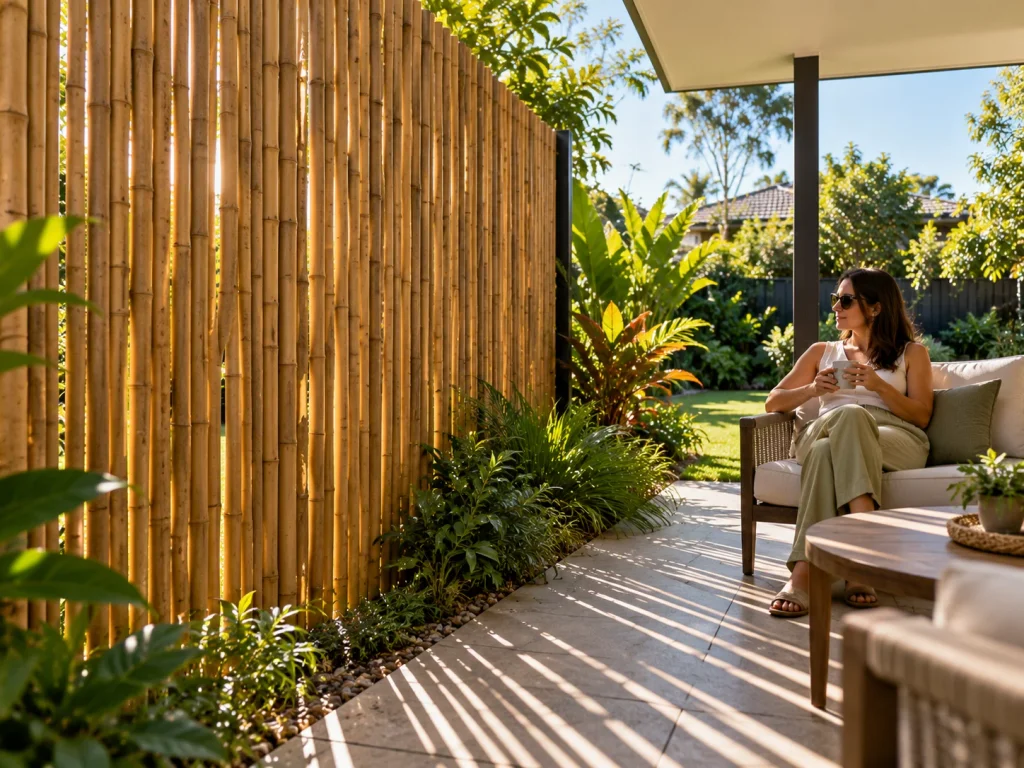
Bamboo screening blocks eye-level views, while narrow gaps let light and air pass through. Dappled light lands across the lawn instead of the flat shadow a solid fence throws all afternoon.
Three build choices control how much privacy and how much daylight you end up with.
- Pole Spacing: Narrow gaps of two to four millimetres break up sightlines at standing height, yet daylight still slips between the poles. Tighter spacing buys more cover and less glow.
- Panel Height: Fixing panels at 1800 mm blocks a neighbour’s ground-floor view, though sightlines from a raised deck run higher than that. Add a 300 mm extension on the deck side instead.
- Airflow Gaps: Air moves straight through the poles. Garden beds stay cooler, and each panel carries less wind load in a storm. Solid fences catch that wind and can lever their posts loose.
Together, these three choices decide how private and how bright your yard feels. Set your spacing and height, and the light and airflow will follow.
Bamboo Screening Holds Its Own Against Other Privacy Fencing Options
Bamboo costs less than solid timber to install and needs little upkeep. Line those two factors up against your alternatives before you sign anything.
The table below compares four common privacy screens on installed cost, yearly upkeep, and light:
| Option | Installed cost per metre | Yearly upkeep | Light through |
|---|---|---|---|
| Bamboo screening | $80 to $150 | Oil every spring | Yes, filtered |
| Timber paling fence | $150 to $300 | Paint or stain yearly | None |
| Colorbond steel | $110 to $200 | Wash down only | None |
| Hedging plants | $60 to $120 | Trim and water monthly | Partial |
Honestly, people ask why choose bamboo over steel, and the answer comes down to light and warmth (steel reads as a wall rather than a garden). Hedging costs less upfront, yet it takes about three summers to fill in.
Of the boundary fencing solutions above, bamboo covers the most ground: versatile screening for a courtyard, a pool surround, or a bin store.
Choosing and Installing Bamboo Screening for Your Outdoor Space
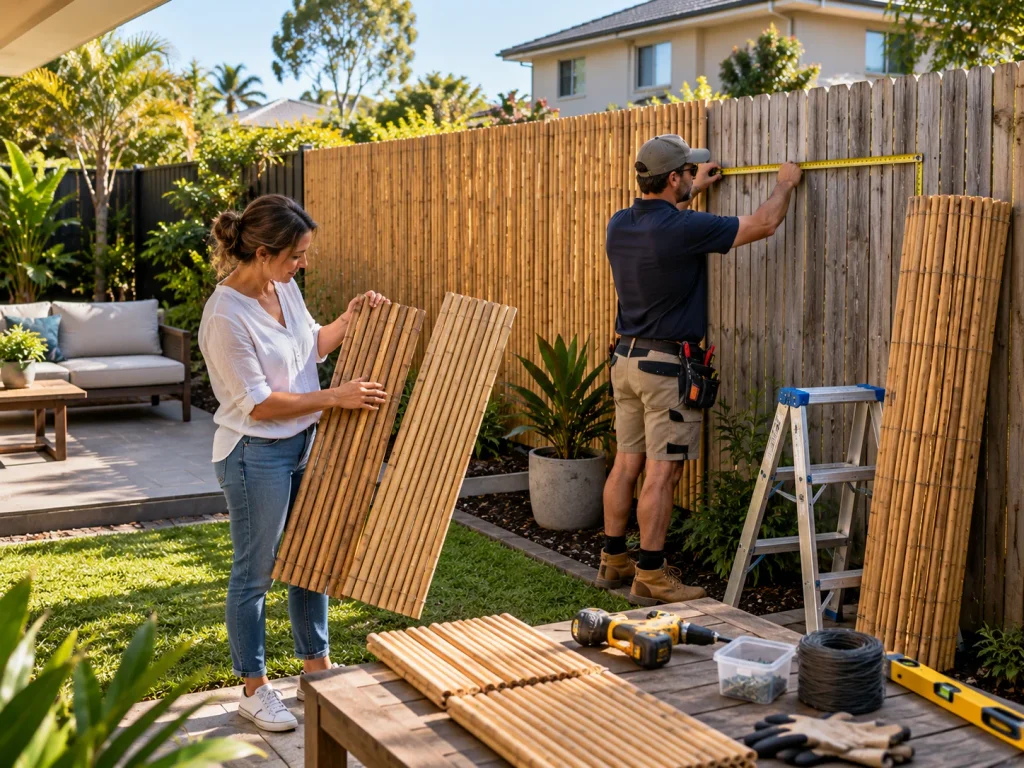
Once you’ve compared options, installing bamboo screening correctly keeps it looking good for years. Measure your run in metres, divide by panel width, then add one spare panel for cuts and mistakes. Home jobs mostly use 1800 mm bamboo fencing panels, which two people can lift without hiring a ute.
Next, fix the panels to a frame instead of straight onto soil, because ground contact rots the bottom poles first. Stainless screws through the cross wires hold better than cable ties, and they let you lift a single panel off later for repairs.
Installation takes a weekend on flat ground. On a slope or anything above two metres, professional installation is worth the fee.
These panels also squeeze into narrow spaces where a gate or a hedge would never fit, like the strip beside a driveway. Clumping bamboo suits you better if you want living privacy screening instead, though it needs regular watering through its first two summers (running bamboo raids the neighbour’s lawn).
In our yard, we oil the display panels every spring. That oil keeps the natural look of the poles intact, since natural bamboo silvers off fast in full sun.
Bottom line: Minimal upkeep, no sanding, no repainting.
Bring Bamboo Screening Into Your Backyard Today
Bamboo gives you a private backyard that still feels open, a balance no solid fence manages. You keep the daylight, the airflow, and a boundary that reads as part of the garden, with little maintenance.
Measure your run this weekend and count your panels, and you will be most of the way to a finished job. The rest takes a frame, a drill, and a weekend.
At Bamboo Expo, we supply panels, poles, and fixings for homes across Australia. Contact us for sizing advice and a delivery quote.