
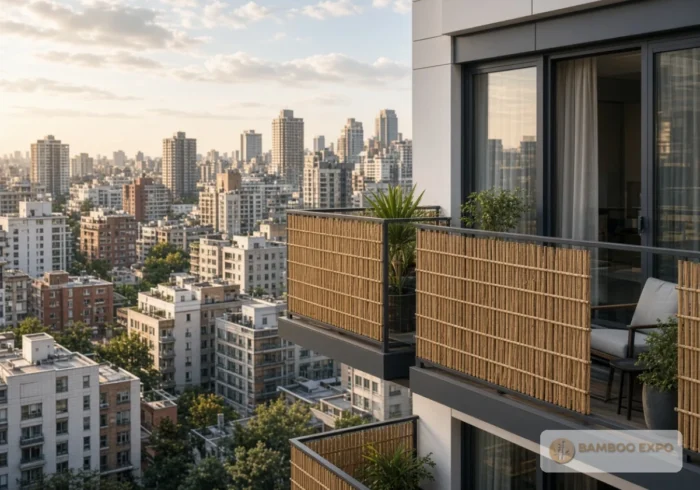
Bamboo balcony screening holds up in wind when you tie it firmly to a solid railing and leave gaps for air to pass. Get both right, and a screen rides out a blustery afternoon several floors up.
Trouble usually starts well before a storm arrives. A screen tied at only a handful of spots on a wobbly railing forces those few ties to carry all the strain. Sooner or later, one of them snaps. Bamboo Expo supplies bamboo screening, fencing and panels for Australian homes and commercial projects. We’d like you to fix your screen once and never chase it down the street.
This guide explains why balcony winds hit so hard and which fixings to use. You’ll also learn how gaps reduce wind pressure and which panels suit exposed sites.
Why Do Balcony Winds Push Bamboo Screens So Hard?
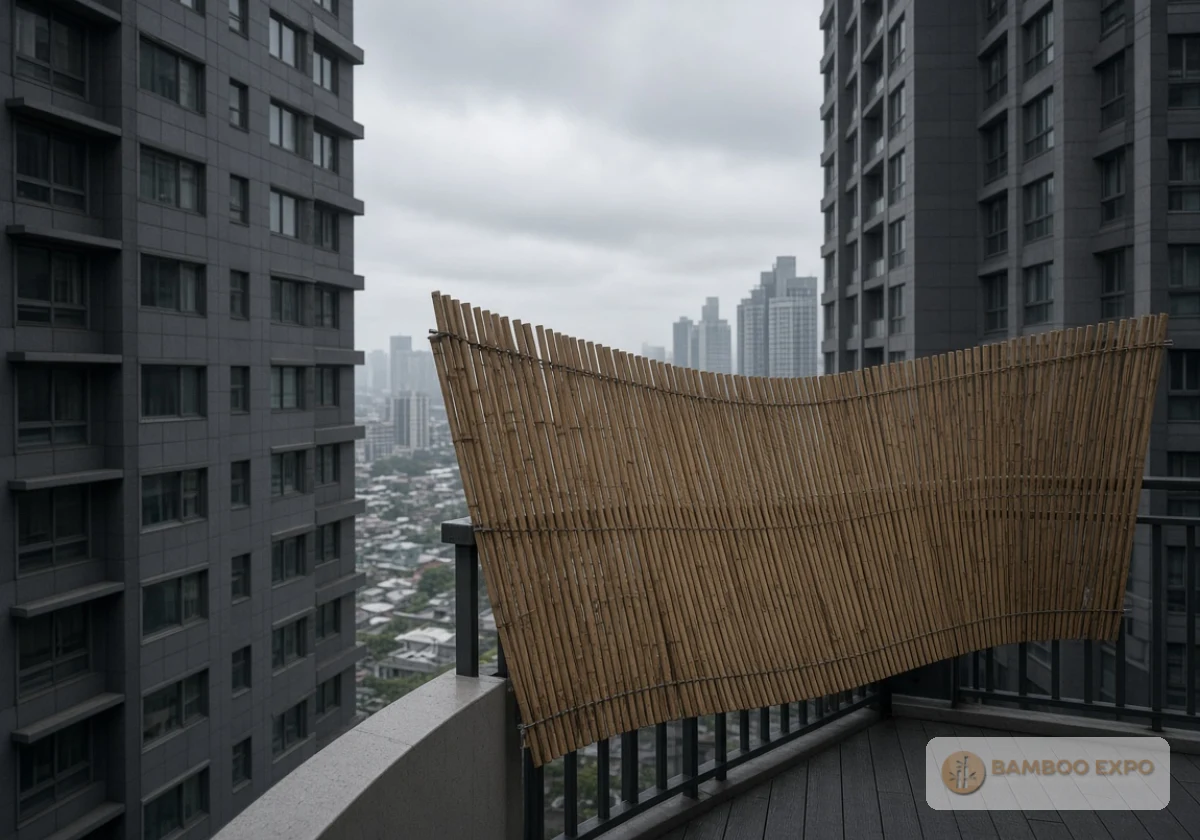
Three forces stack up on a balcony: height, gaps between buildings and a solid screen surface. Together, they make a closed screen behave like a sail.
Any plan for bamboo balcony screening wind protection starts with height. Geoscience Australia’s wind multipliers page lists height among the main factors that determine wind speed. Others include wind intensity, ground surface roughness and topography. A balcony several storeys up sits above the trees and fences that slow air at ground level. Up there, your screen meets the full strength of the wind with nothing to soften it.
Neighbouring buildings also make wind direction unpredictable. Air squeezing between two towers speeds up and swirls around corners. A balcony on an end wall can therefore cop gusts from odd angles. You’ll often spot the swirling first when pot plants tip over on a day that felt calm on the footpath.
A tightly woven panel with no gaps catches the full force of each gust. The panel passes that force straight to the ties. From there, the fixings and the railing behind them carry all the strain.
The next two sections deal with both ends of the problem: fixings first, then airflow.
Balcony Bamboo Fence Installation: Fixing Points That Hold Firm
That strain is where most screens fail. Too many balcony screens rely on a few cable ties and a lot of hope. If you’re installing bamboo screening for the first time, plan the whole installation process before you buy a single panel. A balcony bamboo fence installation on an exposed corner needs extra fixing points and a stiffer panel. The same rules apply to any bamboo fencing you attach to a balcony.
Checking the Railing or Frame Can Take the Load
Push firmly on the railing at several points along its length. If it flexes or rattles, a screen will multiply that movement every time the wind picks up. Tighten loose brackets or have them repaired before you hang anything.
Next, check what the railing is made of. Steel, aluminium and solid timber usually cope well with fixings. Frameless glass gives you nothing safe to tie onto. On glass balustrades, use a freestanding framed screen or a planter-mounted panel instead. A row of potted bamboo plants can also provide privacy screening without touching the glass.
If you live in an apartment, check with your strata or body corporate manager first. Most buildings have by-laws on what you can attach to a balustrade, and the rules vary by state. Asking now costs nothing, while removing a non-approved screen later costs time and money.
Cable Ties, Stainless Wire or Screwed Battens: Which Products to Use Where
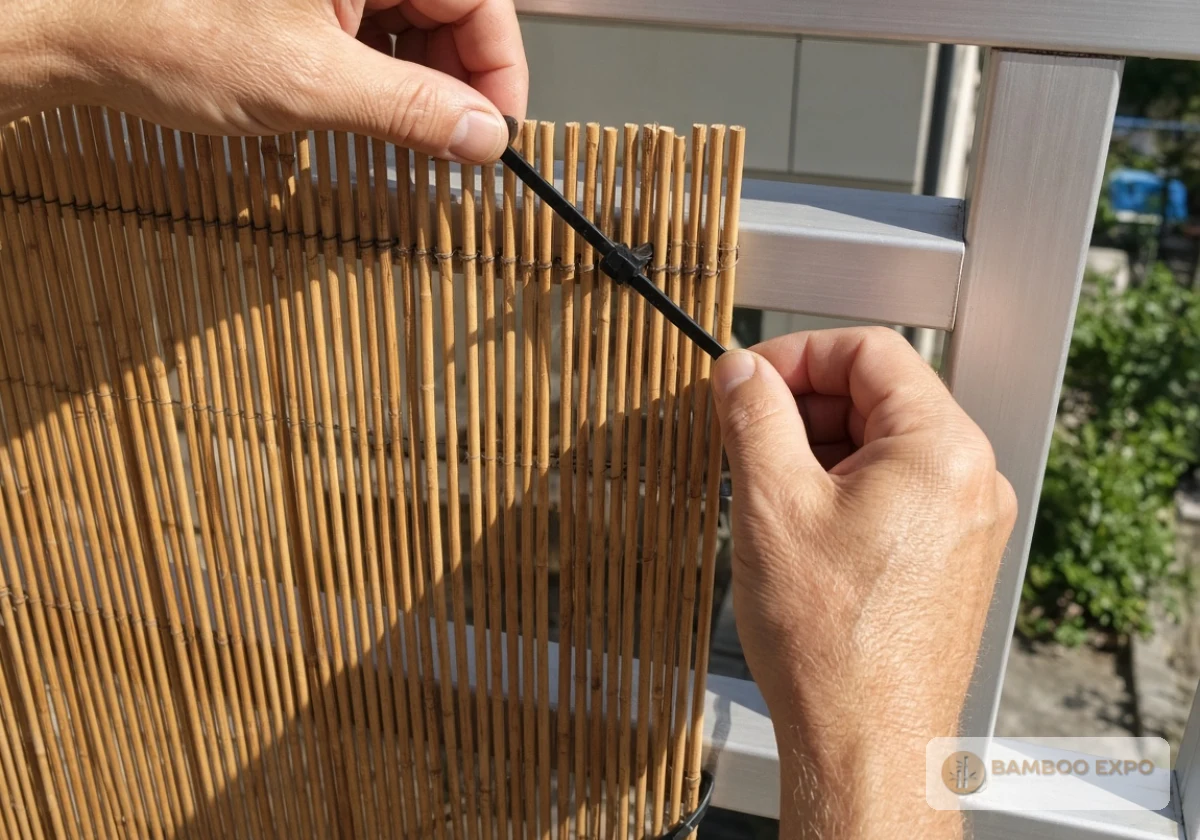
UV-stabilised cable ties are made for outdoor use and suit light rolled screens on metal railings. Plain nylon ties turn brittle in strong Australian sun, so check the packet says UV-stabilised before you buy.
Stainless wire suits heavy-duty panels and coastal balconies, where salt air corrodes ordinary steel. WoodSolutions balustrade guidance states that all metal connections in external balustrades and handrails should be non-corrosive. Choose 316 marine-grade stainless if your balcony catches salt spray.
Screwed timber battens give the firmest hold on timber frames. Treated pine works well for most balconies, while premium hardwood stands up to harsh coastal weather. Use stainless or galvanised screws so rust doesn’t streak the bamboo (or drip onto your downstairs neighbour’s balcony tiles).
Spacing Fixings Closely Along the Top and Bottom
Fix the screen at even intervals along both the top and bottom edges. A gap of roughly 20 to 30 cm between ties suits most balconies, and exposed sites suit the tighter end. Close spacing spreads the wind load across many small points, so no single tie strains enough to snap.
The bottom edge needs the same care as the top. A screen fixed only along the top swings in every gust and soon rubs through its ties.
Mark your spacing with chalk or tape before you start. Pre-marking keeps the gaps even and stops you skipping a spot near the corners (where gusts tend to curl in and hit hardest).
Adding a Mid Rail on Tall Panels
Tall panels bow in the middle when a strong gust hits. The bowing drags on the top and bottom ties and can split canes over time.
A horizontal mid rail gives the screen a third line of support. A timber batten, aluminium angle or tensioned stainless wire all work well. Fix the rail to each railing post or upright so it stays rigid when the panel pushes against it.
Tie the panel to the mid rail at the same spacing you used along the edges. If you’ve ever lain awake listening to a loose screen, you’ll also notice the mid rail quietens most night-time rattling.
Choosing Quality Bamboo Canes That Bend Less Under Pressure
Thicker canes bend less because a wider, denser cane carries more load before it flexes. High-quality bamboo with evenly sized canes also spreads pressure across the whole panel.
Thin reed or split bamboo, in contrast, folds and frays once wind works on it. Split bamboo can look similar in photos but wears out quickly on a high balcony.
Before buying, squeeze a few canes and check the binding wire is tight and rust-free. For an exposed balcony, choose canes of an even diameter with tight binding wire.
Letting Wind Pass Through Your Balcony Garden Screen
Even the best canes need help from airflow. Air that passes through the bamboo never reaches your ties.
Gapped screens often outlast solid ones held by identical fixings, because less force reaches each tie. You keep most of your privacy, since passers-by can’t make out detail through narrow gaps. Picture holding a bedsheet on a windy clothesline, then a sheet of mesh. The solid fabric tugs hard, while the mesh barely moves.
Gaps help the canes as well. Moving air dries the bamboo quickly after rain and helps prevent mould. A dry screen also stays light on the railing.
Five airflow choices need settling before you tie anything on:
- Pick Panels With Visible Gaps: Choose bamboo panels with small, even gaps between canes over tightly woven reed. The gaps let gusts pass while still blocking clear views into your balcony. Hold a sample up to the light in store to check the spacing.
- Leave a Gap at Floor Level: Stop the screen a few centimetres above the balcony floor. Air can then escape underneath, so pressure doesn’t build up behind the panel. The gap also lets rainwater drain away and makes sweeping easy.
- Stop Short of the Ceiling: On covered balconies, leave five to ten centimetres between the top of the screen and the ceiling. Trapped air can then spill over the top during strong gusts. The gap also lets light into the space and stops the balcony feeling boxed in.
- Skip Solid Backing Materials: Avoid lining the screen with shade cloth or plastic sheeting. Backing blocks the airflow your gaps allow, and the screen behaves like a sail again. If you need extra privacy, choose canes with narrow gaps and keep the backing off.
- Take Rolled Screens Down: Roll up or remove lightweight rolled screens before a forecast storm. Rolled screens lack the frame needed to resist strong gusts. Check Bureau of Meteorology warnings for your area and store the roll somewhere dry.
Settle these choices before you fix anything, while changes still cost nothing. Swapping a solid panel for a gapped one later means cutting and redoing every tie.
Rigid Bamboo Balcony Panels Outlast Rolled Screens on Exposed Sites
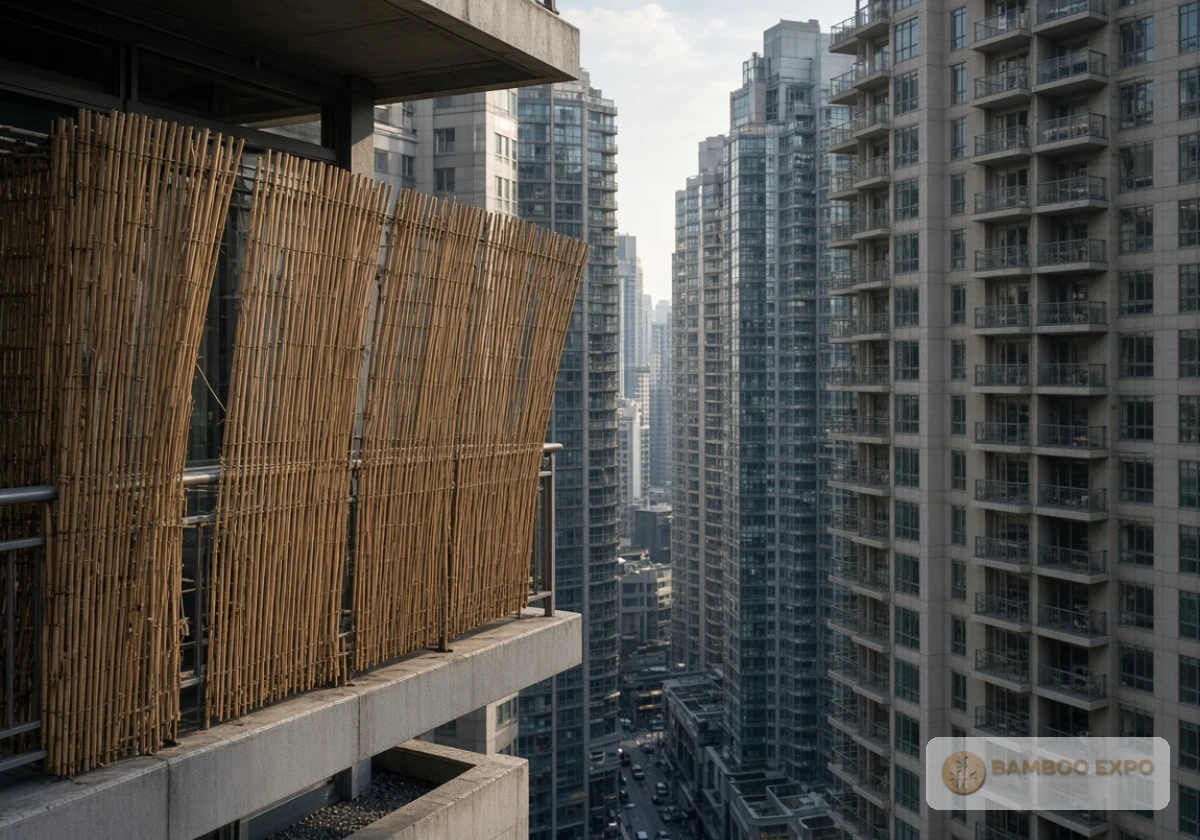
Framed, rigid panels are the sturdiest choice for exposed balconies, because the frame stops the screen bowing. Rolled screens still work well where the wind is gentle.
Two balconies on the same tower can need different bamboo balcony panels depending on height and direction. A low, sheltered balcony can get away with a light roll. A high corner unit facing the prevailing wind needs something stiffer. Check which way storms usually arrive in your city before you choose. In Sydney, for example, that often means southerly busters.
The table below compares common screening products on weight, wind tolerance, fixing method and expected lifespan.
| Panel type | Weight | Wind tolerance | Fixing method | Expected lifespan | Best suited to |
|---|---|---|---|---|---|
| Rolled reed or split bamboo | Light | Low, flexes and frays | Cable ties | Shortest | Sheltered, low-level balconies |
| Rolled whole-cane screen | Medium | Moderate | Stainless wire or ties | Medium | Partly sheltered balconies with a top rail |
| Framed rigid panel (aluminium frame or timber) | Heavy | High, the frame resists bowing | Screwed battens or brackets | Longest | Exposed, high or corner balconies |
If your railing moves in a moderate breeze or your balcony sits on a corner, go straight to framed panels. Rolled screens are light and easy to install. They still suit sheltered balconies and outdoor living areas at ground level, where gusts rarely build.
Framed bamboo fence panels also work as wall panels, so one style can carry through indoor and outdoor areas. Around a pool area, screening can block views but can’t replace compliant pool fencing. Check your state’s pool safety rules before attaching any screen near a pool barrier.
Fix It Once and Let the Breeze Do Its Worst
This weekend, push on your railing at three or four points and note any spot that moves. Then count your ties and measure the gaps between them. If any stretch of edge can flap freely, add ties before the next storm warning.
Take rolled screens down when strong winds are forecast, and plan a framed panel if your balcony is exposed. A well-secured screen keeps your outdoor spaces private and your pot plants upright.
Need help with a windy balcony? Contact Bamboo Expo to find the right panels and fixings for your balcony’s exposure.