

Bamboo screen mould (black, grey, or green spotting) appears where moisture sits on the poles for too long. You can clean it off at home with mild products, then stop it from returning by helping the bamboo dry quickly after every wet spell.
It’s frustrating when mould keeps returning, especially since repeated growth can slowly damage the outer surface of your bamboo screen. At Bamboo Expo, we supply bamboo fencing and screening, with practical advice on caring for outdoor panels.
With that in mind, this guide explains why mould grows on bamboo and which cleaning solutions work safely. You’ll also learn how to clean your screen step by step and how sealing, airflow and placement help prevent mould from returning.
First, let’s understand how the problem starts.
Why Does Mould Grow on Outdoor Bamboo Screens?
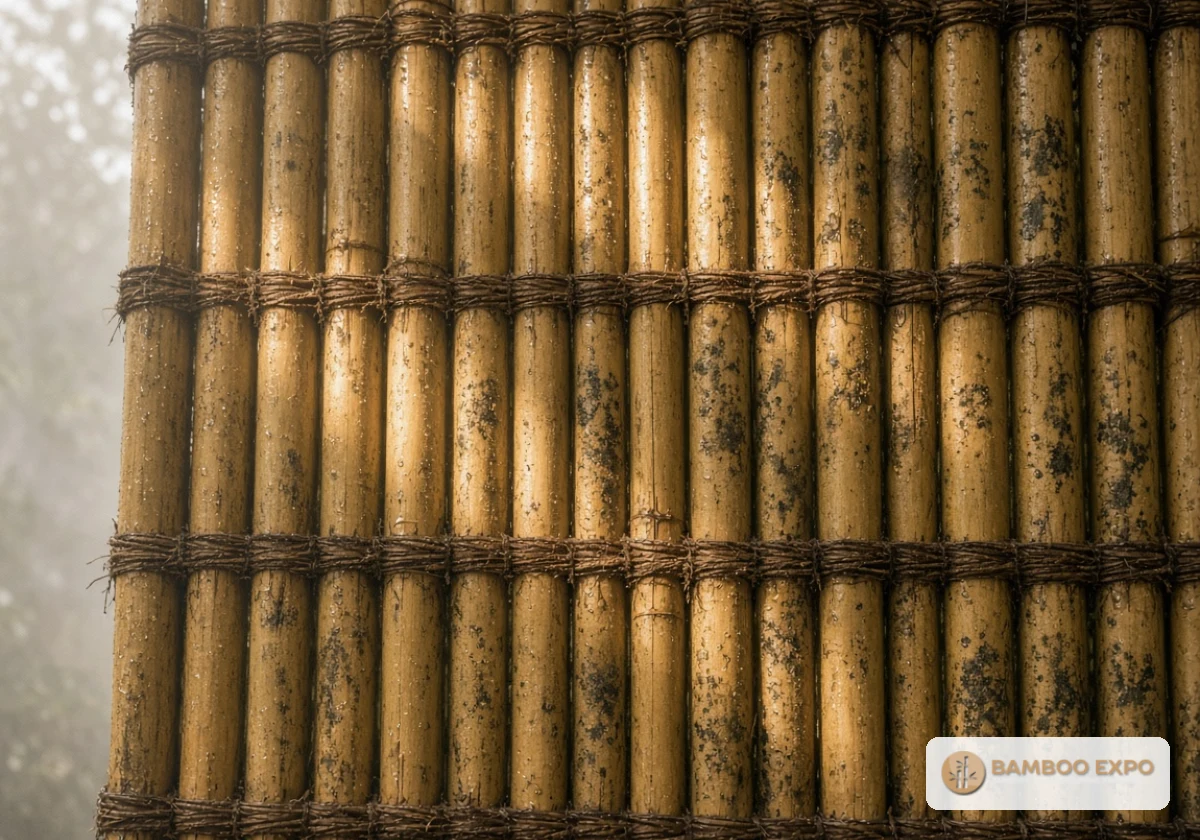
Mould commonly grows on outdoor bamboo screens because moisture, dust, and pollen collect on the poles. The problem gets worse when water enters through cut ends or cracks in the bamboo’s outer skin.
Humidity plays a part too, especially when the bamboo stays damp for days. The National Asthma Council Australia’s 2026 indoor humidity levels guide notes that mould grows above about 55% humidity and thrives near 70%. Since coastal and subtropical areas often experience humid weather, outdoor bamboo screens in these regions need regular checks, especially during wet spells.
Placement then decides how quickly moisture leaves the surface. Outdoor bamboo panels dry well on a sunny, breezy fence line, yet the same panels can stay damp longer behind hedges or in shaded passages. If you’ve ever noticed spots only on the lower half of a screen, you’re looking at ground splash and shade working together.
Along with humidity and placement, several other conditions encourage mould growth on bamboo fencing:
- Limited Sunlight: Morning shade leaves bamboo damp long after rain, especially along covered fence lines. If certain sections receive little sunlight, check them regularly for mould.
- Sprinkler Spray: Adjust the sprinkler heads so water reaches your plants without soaking the bamboo. Otherwise, repeated spray keeps the lower panels damp between rainfalls.
- Trapped Debris: After storms, check the base rail for fallen leaves and dirt. Clear any buildup before it holds moisture against the bamboo poles.
- Exposed Pole Ends: Rainwater enters bamboo through unsealed ends and cracks in the outer skin. Inspect these areas for damage and apply a suitable outdoor sealer once they’re completely dry.
- Dense Planting: Leave a gap between nearby shrubs and the screen to allow air to circulate. When branches touch the bamboo, trim them back so moisture doesn’t linger after rain.
After the next heavy rain, inspect your fencing for damp patches, especially near the base. Note any areas that remain wet, as they’ll need extra attention during cleaning.
Cleaning Solutions Compared: What Removes Mould Without Damaging Bamboo
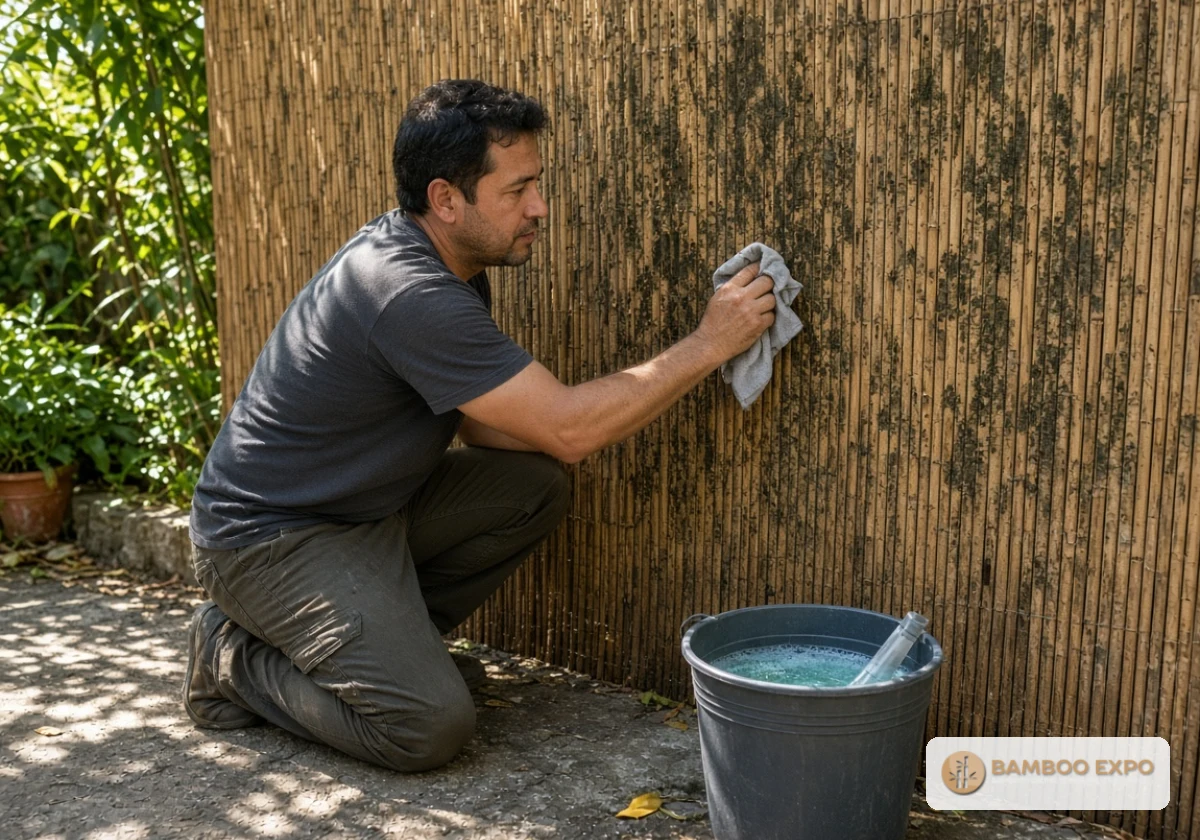
White vinegar, oxygen bleach, and mild dish soap are common cleaning options. However, the right choice depends on how much mould has developed and how badly the bamboo is stained.
The following comparison explains how each solution works and when you should use it:
| Solution | How It Works on Bamboo | When to Use It |
|---|---|---|
| White vinegar (three parts vinegar, two parts water) | Its mild acid kills surface mould without bleaching the colour | Light to moderate spotting on most screens |
| Oxygen bleach | Releases oxygen that lifts stains, then breaks down | Dark marks that vinegar leaves behind |
| Mild dish soap and water | Cuts the dirt and pollen that mould feeds on | Routine washes between deeper cleans |
| Chlorine bleach | Kills mould fast but fades and dries out the fibres | Avoid on natural bamboo |
| Pressure washer | Blasts growth off but splits the outer skin | Avoid, as cracks hold new moisture |
Before applying any solution, test it on a hidden section of bamboo and let the area dry. If the colour or finish changes, avoid using that cleaner on the rest of the screen.
Cleaning Outdoor Bamboo Panels Step by Step
Whichever mix you settle on, pick a dry, mild morning to clean outdoor bamboo panels so the screen has enough time to dry. Otherwise, moisture left on the poles overnight may encourage mould to return.
Follow the five steps in order to clean your outdoor bamboo panels without damaging their surface.
Step 1: Dry Brush the Loose Growth First
Start with a stiff hand brush and no water at all. Dry brushing removes loose spores, cobwebs, and dust before any liquid spreads them around. Work from the top rail down so debris falls onto areas you haven’t cleaned yet. A well-fitting P2 mask is also a sensible precaution, as brushing can release mould spores into the air.
After that, check the base and joints for packed dirt. Remove it with a plastic scraper, as a metal one can scratch the bamboo’s outer surface.
Step 2: Mix a Vinegar or Oxygen Bleach Solution
With the loose debris out of the way, mix your chosen solution in a bucket or spray bottle. Use the previously mentioned 3:2 vinegar-to-water ratio for light spotting, or follow the packet instructions for diluting oxygen bleach.
Before treating the whole panel, test the mixture on a hidden pole and let it dry. Check for any changes in colour or sheen, especially if your bamboo is older or unsealed. When the test spot looks fine, apply the solution evenly across the panel. Give it time to work on the mould, but rinse it off before it dries on the surface.
Step 3: Scrub Along the Grain With a Soft Brush
While the solution works on the mould, gently scrub each pole with a soft nylon brush. Keep your strokes lengthways along the bamboo’s grain.
Scrubbing across the grain damages the waxy outer skin, which then traps moisture and dirt. In our experience with natural bamboo panel, that damage is one of the quickest ways to bring mould back.
For stubborn spots, reapply the solution and gently scrub those areas again. There’s no need to press harder, as extra pressure can scratch the surface without removing stubborn stains.
Step 4: Rinse Gently and Avoid Soaking the Poles
Rinse the panel with a garden hose on a soft shower setting. The low pressure removes the cleaning solution and loosened mould without forcing water into cracks. As you rinse, keep the water moving so it doesn’t collect around joints or pole ends. These areas tend to stay damp longer, especially along the bottom rail.
Once you’re done, wipe off standing drips with an old towel. This also helps the bamboo dry sooner, especially in partially shaded areas.
Step 5: Let the Screen Dry Fully Before You Seal It
Finally, leave the screen to dry completely in sun and moving air. Sealing over damp fibres traps moisture underneath, where mould may develop again.
To check for remaining moisture, press a fingertip against a few poles near the base. If any feel cool or damp, give them more time to dry.
Chances are you’ll be tempted to seal straight away on a warm afternoon. Wait until every pole feels dry, then move on to the prevention habits below.
Bamboo Fence Mould Prevention: Sealing, Airflow and Garden Placement

The fingertip test from Step 5 can help you identify areas that need extra care. From working with natural bamboo, we’ve found the lower section of a screen needs the most care, since it collects splash, mulch, and shade at once.
Each habit targets one of those sources of damp:
- Reseal When Water Soaks In: A clear, water-based outdoor sealer forms a barrier that stops rain soaking into the fibres. Sprinkle a little water on the poles to test the finish. If the water soaks in rather than beading, check the manufacturer’s instructions before resealing.
- Lift the Base Clear: Ideally, panels sit just above the soil so the bottom rail never rests in wet mulch. Leave a small gap when you install or adjust your fence panels. Keep mulch away from the bottom rail as well.
- Airflow Around the Screen: Shrubs pressed against bamboo trap humid air right on the surface. Trim back any branches touching the poles, leaving enough room for air to circulate.
- Redirect Sprinklers: Adjust the sprinkler heads so water reaches your plants without soaking the bamboo. Regular sprinkler spray can leave the lower poles damp between watering sessions.
You won’t be able to keep every drop of rain off your bamboo fence. The aim is to prevent water from sitting against the poles for long periods, especially around the base.
Keep Your Bamboo Screens Mould-Free All Year
As we’ve discussed in this guide, mould on bamboo fencing develops when moisture lingers. Mild cleaning solutions and a gentle scrub usually remove surface growth, while thorough drying prevents it from returning.
To help you care for your bamboo screens, this guide has covered the causes of mould and suitable cleaning solutions. We’ve also discussed how to remove mould safely and how sealing, airflow and garden placement prevent it from returning.
For further advice, Bamboo Expo supplies quality bamboo screening and fencing for Australian homes and gardens. Contact our team to discuss care for your panels and get advice on suitable products for your yard.