
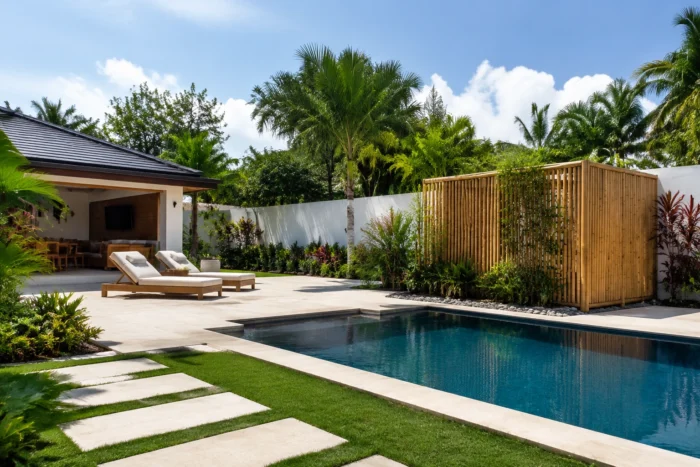
Pool pumps, filters, and chlorinators keep your water clean, but they’re noisy and not much to look at (nobody wants to stare at a pool pump while they’re trying to relax). Bamboo screening gives you a natural way to hide all of that without blocking the airflow your equipment needs.
The catch is, you can’t just fence it all in and forget about it. Your pump still needs ventilation to avoid overheating, and your pool technician still needs a clear path to filters and valves. On top of that, the bamboo panels themselves need to cope with moisture and chemical splashback.
We’ve handled plenty of these setups at Bamboo Expo across Australia. This guide covers panel placement, ventilation clearance, maintenance access, and long-term bamboo fence care so your screening stays functional and looks the part.
Why Bamboo Pool Screening Works for Equipment Enclosures
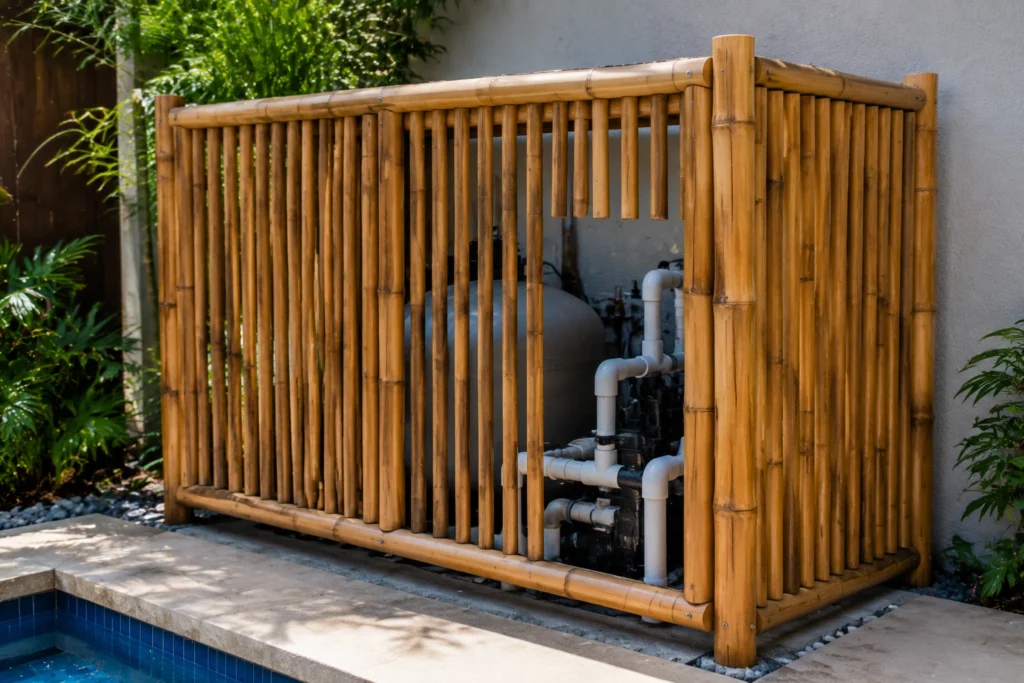
If you’re weighing up materials for a pool equipment screen, bamboo ticks a lot of boxes at once.
Unlike colorbond fence panels or solid timber, bamboo screening has natural gaps between the canes that let air pass through freely. Your pump and filter still stay hidden, but they won’t sit in a sealed box with no ventilation.
Bamboo panels also blend with poolside landscaping far better than corrugated steel or plastic utility screens. Pair them with a few tropical plants and the whole fence line looks like part of the garden. And honestly, it’s one of those upgrades that looks way more expensive than it is.
On top of that, bamboo grows to full height in around three to five years, which makes it one of the most renewable fencing materials on the market. So your new fence screens the equipment and goes easier on the planet.
Ventilation and Airflow Clearance You Need to Get Right
Your pool pump needs room to breathe, and if you box it in too tightly, you’ll find out the hard way when it overheats mid-summer. We’ve installed enough bamboo screens around pool gear to know that a cramped setup can burn out a motor in one season.
Even Queensland’s guidelines around pool chemical storage and safety flag ventilation wherever chemicals and equipment sit close together. So when you’re planning your bamboo fence layout, get these three things right:
- Clearance Around the Pump: Keep at least 300mm between your bamboo panels and the housing. Any tighter and trapped heat will cut the motor’s lifespan short.
- Airflow Through the Canes: Natural gaps between bamboo canes let air circulate without extra vents. Just position your screening so the breeze flows across the equipment.
- Leave the Top Open: Never cap your bamboo enclosure with a solid lid. Hot air rises, and an open top lets that heat escape year-round.
Sort this out early, and you won’t be dealing with pump replacements down the track. Once those clearances are in place, the next thing to plan is service access.
Keeping Service Access Open Behind Bamboo Panels
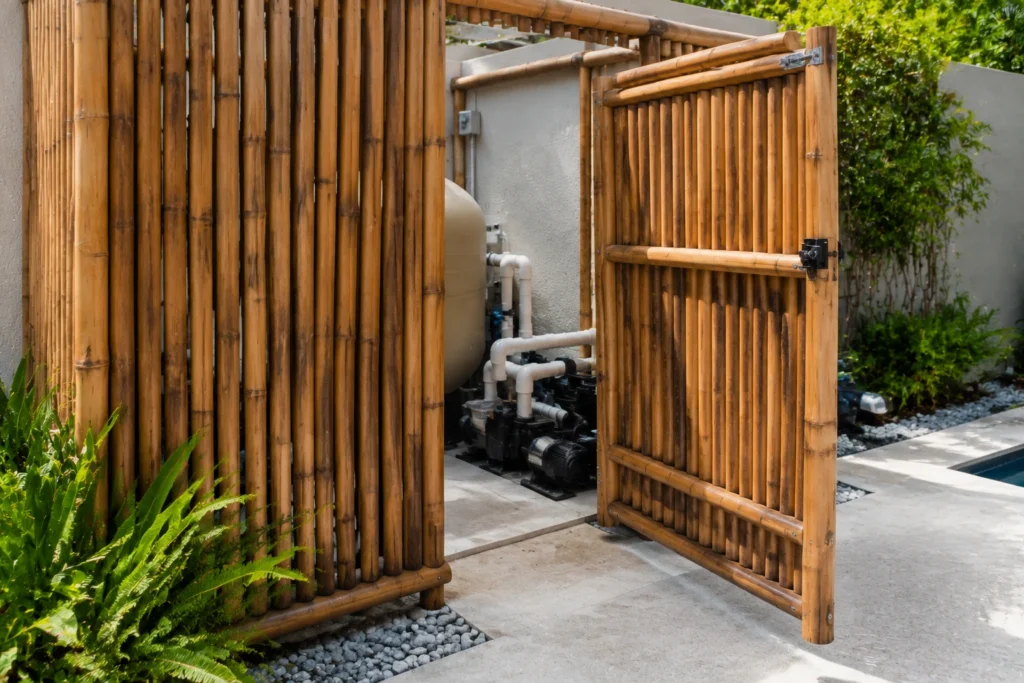
Believe it or not, access is the thing most people forget until their pool tech shows up and can’t reach the filter. Your bamboo screening might look great, but if panels have to come off every service visit, the whole setup becomes a hassle.
So, figure out which side of your equipment gets serviced most often. That’s usually wherever the multiport valve and filter basket sit, so place a hinged bamboo panel on that side. A gate-style section with stainless steel hinges lets you swing the screening open in seconds (your pool tech will appreciate not having to wrestle with screwed-on panels).
You’ll also want enough room for someone to keep your pool equipment properly maintained without squeezing past your bamboo fence. Aim for at least 600mm between the screening and any nearby walls so your technician can kneel down and actually see what they’re working on.
Of course, all that access won’t help much if the bamboo panels start breaking down from moisture.
Moisture, Splashback, and Caring for Your Bamboo Privacy Screen
Pool equipment zones cop a lot of splashback from backwash cycles and pump runoff, so your bamboo panels need to handle constant moisture.
We learned early on that sealing bamboo screening before installation prevents most of the damage we see on neglected fences (chlorine residue builds up way quicker than most people realise).
So, here are three steps that will keep your bamboo fence looking fresh for years:
- Seal Before You Install: Apply a quality outdoor sealant to your bamboo panels before they go up. The coating creates a natural barrier against water and helps prevent the canes from splitting.
- Rinse Off Chemical Residue: Hose your screening down with fresh water every couple of months. Chlorine and salt left sitting on the surface will speed up weathering and dull the natural colour.
- Check the Canes Each Season: Look for greying or small surface cracks along the bamboo. Catching these signs early and reapplying sealant will add years to the life of your fence.
Once your bamboo panels are sealed, rinsed, and checked regularly, they’ll hold up through wet seasons without giving you grief.
Now, let’s look at the fun part: making your screening look good.
Practical Pool Privacy Ideas to Tidy Up Your Outdoor Space
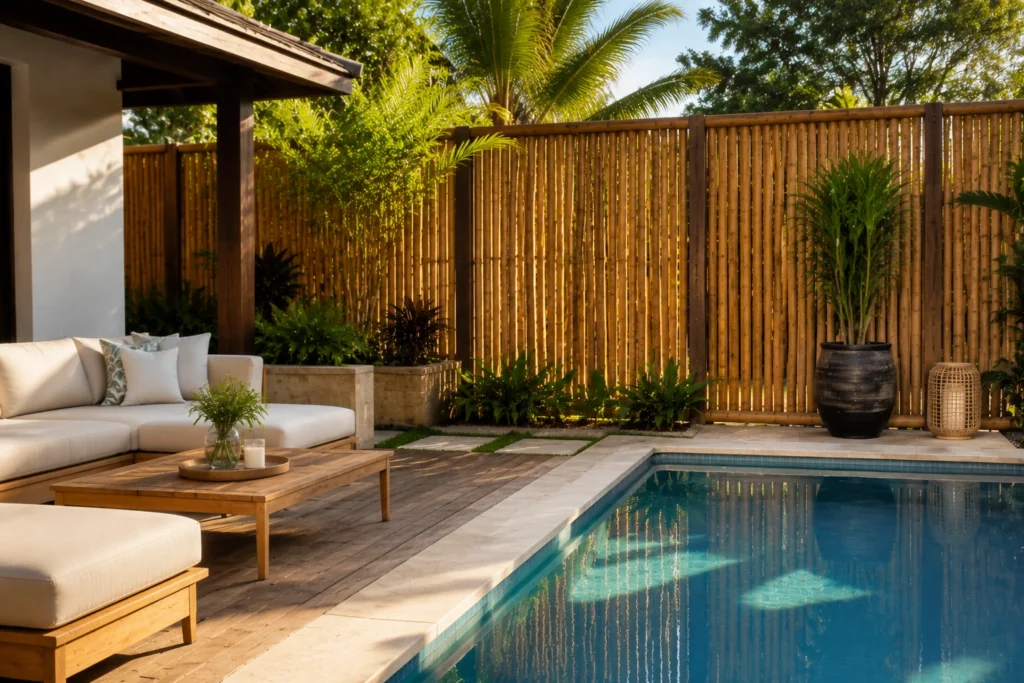
Mixing bamboo panel heights is one of the easiest ways to break up a flat fence line.
A taller section behind the equipment blocks the view completely, while a shorter run along the boundary lets in more light and opens up sightlines. NSW planning guidelines back this approach too, treating privacy screening and residential design as a practical response to overlooking and equipment noise.
You can take the look further by pairing your bamboo panels with potted palms or low hedging for a layered, natural tropical feel. And if you extend the screening past the equipment zone, you’ll carve out a private outdoor space for entertaining that your neighbours won’t be able to peek into.
Screen Your Pool Equipment the Right Way
Getting your bamboo screening right comes down to three things: airflow, access, and protection from moisture. Nail those and your new fence will hold up through years of sun, rain, and chemical exposure without extra costs.
When you’re ready to get started, Bamboo Expo carries natural bamboo products built for Australian heat and humidity. Browse our services, find the right size for your setup, and get moving on your project.
And if you’re also planning bamboo screening for gardens and outdoor spaces, we go deeper on that in a separate guide.