
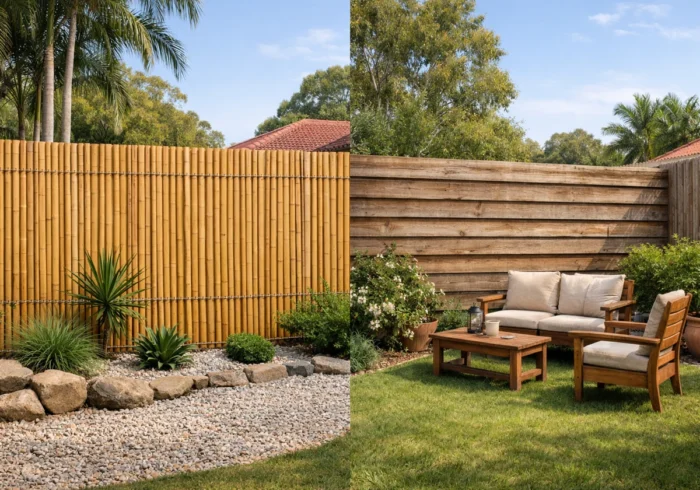
Choosing between bamboo fencing and timber often feels like a coin toss at first. Both materials look great, provide privacy, and come from natural sources. Yet the long-term costs, maintenance schedules, and how they handle our harsh Australian climate tell a completely different story.
We’ve installed hundreds of bamboo screens and timber fence panels across Brisbane backyards, and the same pattern keeps showing up. Homeowners seeking low-maintenance options go straight for bamboo, while others prefer the classic look of wood slats in their outdoor space.
This guide breaks down the real costs, appearance, and upkeep of these two fencing options. You’ll see which material suits your backyard and budget, and when glass pool fencing or PVC might work better for your garden design.
Let’s get started.
Cost Breakdown: Bamboo Fencing vs Timber Upfront and Long-Term
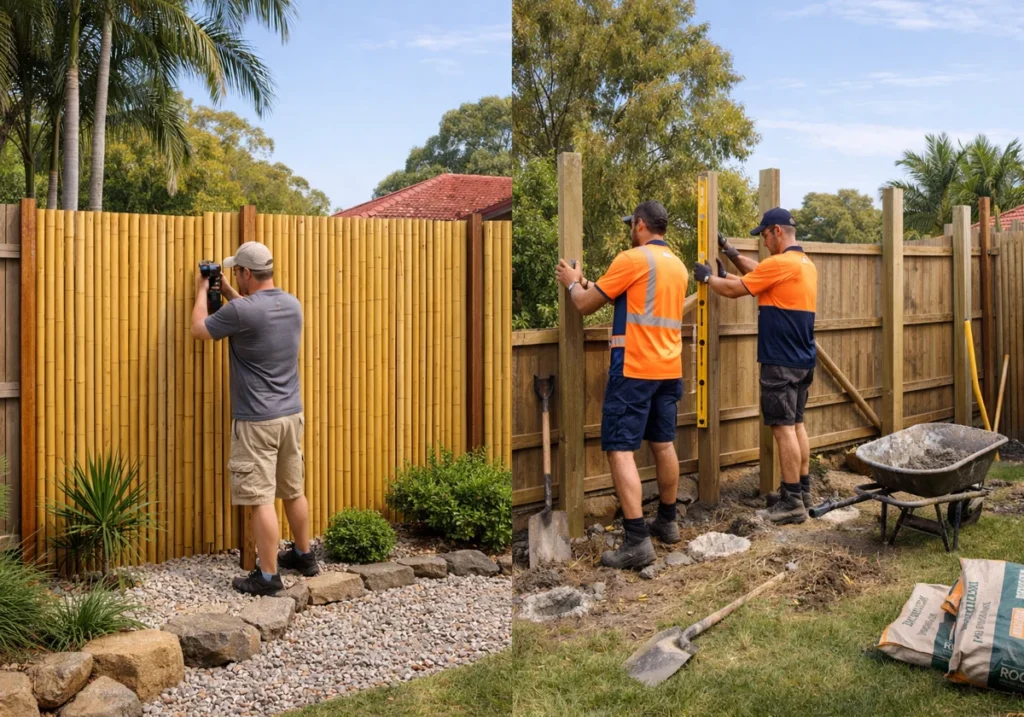
We’ve already mentioned that bamboo and timber sit in a similar price range upfront, but the long-term costs affect a few things. And after pricing out hundreds of fencing jobs, one pattern shows up every time: most people assume bamboo will cost far more than timber.
To understand the real cost, break down where your money goes:
Initial Purchase Price Comparison
Bamboo panels generally range from $32 to $52 per panel, depending on height. Since each panel is about 1 metre wide, that covers the material cost per metre. Once you factor in posts, labour, and installation, the total usually lands around $120 per metre in your backyard.
Besides, treated pine paling fence costs sit between $75-$120 per metre, while hardwood options like Merbau or Jarrah run $150-$250 per metre.
This way, your final price changes based on panel thickness, frame quality, and if you opt for powder-coated aluminium or galvanised steel wire; thicker bamboo slat screens with aluminium frames cost more than basic wire-tied versions.
The same applies to timber, where the wood type shifts the price range.
Installation Costs: DIY or Professional Help?
Bamboo screening panels are easy to install as DIY projects with basic tools and existing posts in your space. We’ve seen plenty of weekend warriors tackle bamboo successfully, while timber posts can convert into a two-day job with concrete setting times.
Meanwhile, timber fencing often requires professional installation for post setting and levelling. As a result, labour costs typically add $50-$90 per metre.
Verdict: Bamboo’s simpler mounting process reduces installation time, saving you money in the long run.
Replacement Costs Over 15-20 Years
Quality bamboo fencing lasts 15-20 years with minimal maintenance needs, mainly re-oiling or cleaning to protect against the elements. On the flip side, timber fence panels need board replacement every 8-12 years, especially at ground level, where moisture causes rot and decay near garden beds.
Timber replacement costs can exceed the initial investment in just over two decades. By contrast, bamboo holds its durability without major repairs, making it a cost-effective solution for homeowners seeking long-term value in their outdoor area.
Appearance and Garden Design Flexibility
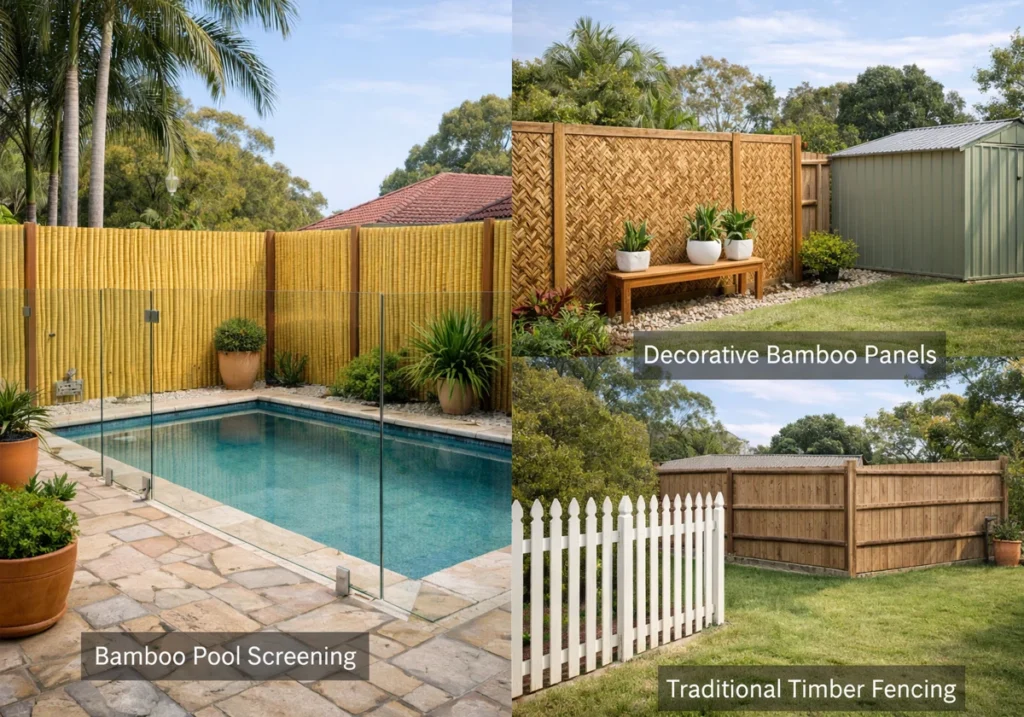
Both materials bring natural beauty to your yard, but they create completely different vibes depending on what look you’re after. For example, bamboo instantly gives spaces that resort-style feel, while timber keeps things classic Aussie.
Now, let’s have a look at what else sets these materials apart in your outdoor space:
Natural Look and Colour Options
Bamboo offers warm honey tones that fade to silver-grey patina over time, creating a tropical or Asian-inspired garden aesthetic. Plus, the natural colours complement contemporary design and modern pool areas beautifully.
Meanwhile, timber provides a traditional Australian fence appearance with a range of options from pale pine to rich jarrah or merbau hardwood tones. Both materials accept stains and oils, though bamboo’s natural colour fits contemporary garden design particularly well.
Style Versatility for Different Spaces
Bamboo screening works brilliantly around pools, as garden screening between properties, or as decorative screens on outdoor feature walls. Their weave pattern alone can change your whole backyard vibe, which is something timber can’t match without custom milling.
Besides, timber suits classic backyard fencing, picket styles, and rural properties where traditional aesthetics are a priority. Wood panels also work well for hiding sheds or creating secure fence lines around your property.
How They Age and Weather
Bamboo naturally silvers without compromising strength, and maintains its sleek appearance even as the colour changes in the sun. This weathering adds character to your outdoor area while keeping structural integrity.
By comparison, timber can warp, crack, or split in harsh Australian conditions with heavy rain and UV exposure.
Maintenance Requirements: Low Maintenance Truth
If you’re hoping for a genuinely low-maintenance fence, bamboo pulls ahead of timber by a fair margin. Once you’ve factored in the upfront cost and design possibilities, the maintenance schedule becomes the real deciding factor for most homeowners.
Here’s what the ongoing upkeep actually looks like:
- Bamboo Care Needs: Occasional rinse-down and annual oil treatment maintain colour, but the structure requires almost no intervention. This minimal maintenance approach saves you weekends of work in your garden.
- Timber Upkeep Schedule: Regular painting or staining every 2-3 years, plus inspections for termites, rot, and loose boards. Those treatments protect the wood from weather damage and pests in our harsh Australian climate.
- Wind and Impact Resistance: Bamboo’s flexibility handles storms better and reduces repair frequency compared to rigid timber boards. Brisbane storms have taught us this lesson repeatedly: bamboo bends and bounces back, timber snaps. After all, the natural durability of bamboo screens comes from how the individual slats move together.
- Coastal and Pool Area Performance: Salt air and pool chemicals affect timber more harshly than bamboo. From what we’ve seen with Gold Coast installations, salt air eats through untreated timber in half the expected lifespan. On the flip side, the natural oils in bamboo provide better protection against rust and decay near pools.
- Ground-Level Issues: Timber posts need checking and replacing where moisture accumulates in your garden beds. This adds ongoing maintenance costs beyond surface treatments. In this case, posts are usually the first thing to go, which means digging out concrete and starting fresh in your outdoor space.
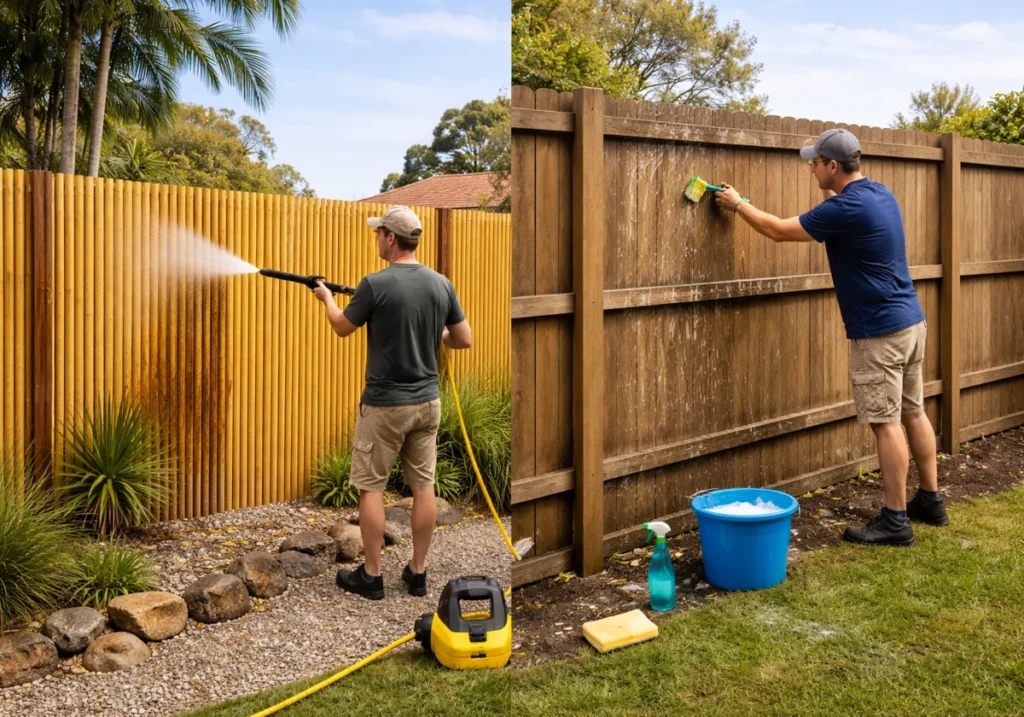
- Cleaning Methods: Bamboo panels can be pressure-washed safely to remove debris and restore appearance. Meanwhile, timber requires gentler cleaning to avoid damaging the wood surface or stripping protective coatings.
Pro tip: If you’re in a coastal area or near a pool, bamboo screens give you years of low-maintenance security without the constant care timber demands in those harsh Australian conditions.
Privacy Screens Performance: When PVC Fencing and Glass Pool Fencing Matter
Now that you’ve seen how bamboo and timber compare, let’s look at how other options perform for backyard privacy screens and garden screening:
| Material | Privacy Level | Best For | Maintenance | Durability in Australian Conditions |
| Bamboo Screens | Complete blockage | Garden screening, pool areas, decorative screens | Low – annual oil treatment | Excellent – handles coastal salt, sun, and wind |
| Timber Fence | Complete blockage | Traditional backyards, secure fence lines | High – staining every 2-3 years | Good with treatment – prone to rot and pests |
| PVC Fencing | Complete blockage | Quick fixes, temporary screening | None | Moderate – can look cheap, lightweight |
| Glass Pool Fencing | Zero privacy | Pool areas only | Moderate – cleaning required | Excellent – but offers no wind protection |
| Aluminium Slat | Partial screening | Contemporary design, outdoor area accents | Low – occasional wash | Excellent- rust-resistant |
Put simply, bamboo creates better noise reduction compared to solid timber because the flexible slats can move together. The screens filter sound from neighbours while letting air flow through your property. And for coastal properties, bamboo outlasts timber and looks better than PVC against your home’s exterior.
Bottom line: Different fencing options suit different needs, but bamboo screens and timber remain the perfect solution for most backyard privacy and garden screening.
Which Material Wins for Your Space?
Both bamboo screens and timber bring solid value to your backyard. Bamboo pulls ahead for homeowners seeking low-maintenance garden screening with contemporary style. The durability in harsh Australian conditions and minimal upkeep make it a perfect choice for most outdoor areas.
Your property deserves fencing that suits your lifestyle and garden design. The range of bamboo slat panels means you can create privacy screens that complement any backyard while keeping neighbours at bay.
Ready to see how bamboo could work in your outdoor space? Bamboo Expo offers quality screens with expert installation advice.
Visit our website for a free quote and explore the full range available for enhancing your garden.