
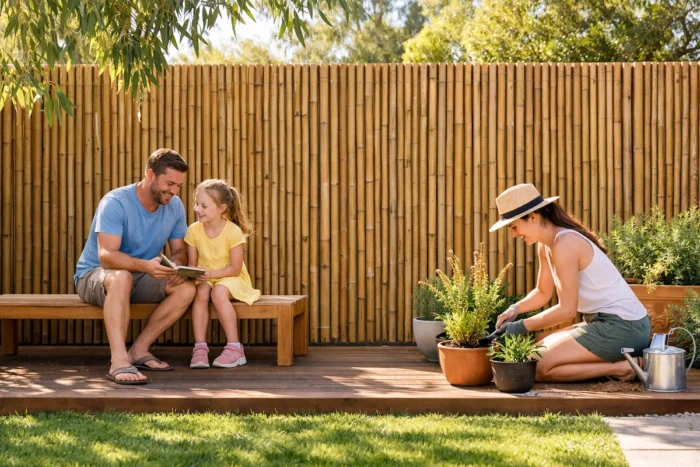
Bamboo panels are gaining serious traction in Australian backyards, and there’s good reason for it. This sustainable building material combines natural aesthetics with genuine durability, plus it’s lighter and easier to work with than traditional fence options. Whether you’re after privacy or a fresh design element, bamboo brings something different to your outdoor space.
If you’re considering bamboo screening for your property, we’ll cover what makes these eco-friendly materials stand apart from timber, metal, and recycled plastic. You’ll get the real story on how long they last, what maintenance looks like, and how costs compare against other fencing choices.
We understand that picking new fence materials means balancing looks, budget, and how well they’ll perform. So we’re here to give you straight information about bamboo panels based on actual Australian conditions. Keep reading to find out why 2026 might be the right time for making the switch.
What Makes Bamboo Panels Different from Traditional Fencing?
Bamboo panels stand out because they’re naturally flexible, renewable, and lighter than most traditional building materials used for fencing. Here’s what’s interesting about this sustainable fencing option compared to what you’re used to seeing.
Natural Flexibility Beats Rigid Materials
Bamboo canes bend and flex during storms instead of snapping like timber or cracking like rigid fence panels. The natural silica content in bamboo makes it harder than most wood species while still maintaining flexibility under pressure. What this flexibility does is let each bamboo cane move with the wind rather than fighting against it, spreading force across the entire panel structure.
You won’t see the same stress fractures that plague solid timber or steel walls. The reason bamboo handles weather so well comes down to how the canes work together. Each piece absorbs impact independently, so your fence stays intact even when conditions get rough.
Sustainable Fencing That Actually Grows Back
Bamboo regenerates from its root system after harvest, so there’s no replanting needed like traditional timber forestry requires. It absorbs more carbon during growth than hardwood trees, which helps reduce environmental impact. What’s more, the manufacturing process stays simpler because harvesting doesn’t actually kill the plant.
The thing is, the same bamboo grove keeps producing material for decades. Compare that to wood, which takes 20-30 years just to reach maturity for a single harvest. When you look at what goes into producing traditional fencing materials, bamboo wins on sustainability pretty easily. It’s one of those rare building materials that actually benefits nature while still giving you what you need.
Lighter Weight, Easier Installation
A single bamboo panel weighs roughly half what equivalent timber screening weighs, making handling much easier if you’re working solo. Less structural support is needed for posts and frames because these materials create less weight load on your fence. Transport costs drop when you’re moving lighter materials around, which saves money on delivery for bigger projects.
The reduced weight doesn’t mean less strength, though. Bamboo’s natural structure still provides solid screening for your yard while being far easier to manage than heavy wood or steel alternatives. If you’ve ever wrestled with timber panels, you’ll appreciate how much simpler bamboo makes the whole process.
The Eco-Friendly Appeal: Why Homeowners Are Ditching Recycled Plastic
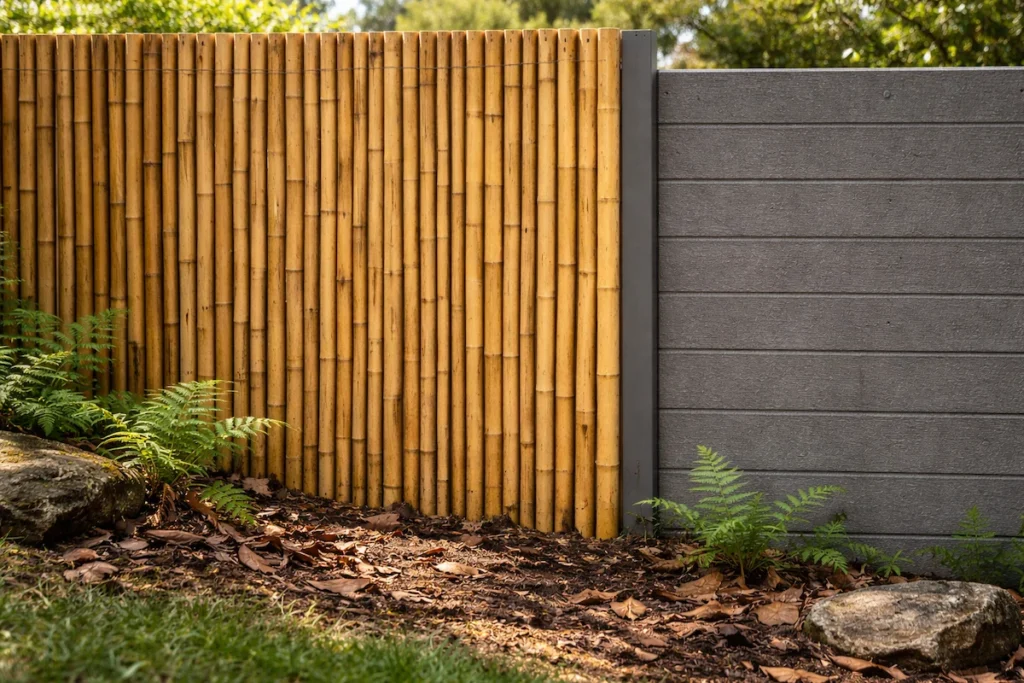
Recycled plastic sounds eco-friendly on paper, but more homeowners are asking: what happens when that “recycled” fence reaches the end of its life? And here’s the thing. Recycled plastic fencing still requires industrial manufacturing that consumes energy, while bamboo grows naturally with minimal intervention. Plastic panels don’t biodegrade when they’re done, creating waste disposal problems that bamboo avoids completely.
Bamboo provides natural aesthetic warmth that plastic alternatives struggle to replicate in outdoor spaces. The environmental impact difference becomes clear when you compare the two. Recycled materials like plastic need energy-intensive processing to turn them into fence panels, whereas bamboo just needs harvesting and basic treatment. Most Australian homeowners want materials that look organic rather than manufactured, which explains why bamboo’s popularity keeps growing.
The production process matters too. Recycled plastic might reduce some waste initially, but it doesn’t solve the bigger picture of environmentally friendly building practices. Bamboo, on the other hand, absorbs carbon while growing and breaks down naturally at the end of life without leaving toxic residue in the environment.
Durability Questions Answered
The best part about quality bamboo panels is that they can last 15-20 years with basic maintenance, matching treated pine without the chemical treatments. Fair warning, though. Most durability concerns come from people confusing quality bamboo with cheap imported screening that skips proper treatment. When you get properly treated panels, they’ll give you 15-20 years of solid performance with just basic upkeep, similar to treated pine but better for the environment.
How Long Does a Bamboo Panel Last Outdoors?
Properly treated bamboo panels maintain structural integrity for 15-20 years in typical Australian coastal and inland conditions. The natural oils in bamboo resist insect damage better than softwood timber, which cuts down replacement needs from pest problems. The surface colour fades to a silver-grey patina over time, but the strength stays unchanged. It’s similar to how weathered hardwood develops character without losing durability down the track.
Weather Resistance in Australian Conditions
Bamboo handles temperature swings from 5°C to 45°C without warping like timber boards commonly do here. The natural water resistance helps panels survive heavy rain and humidity without rotting, especially in Queensland’s climate, where moisture is constant. From what we’ve seen across coastal installations, salt air affects bamboo less than metal screening, making it suitable for properties around Australia. Winter cold and summer heat don’t phase this material the way they impact wood or steel fence options.
Design Versatility You Won’t Get with Straw Bales or Metal
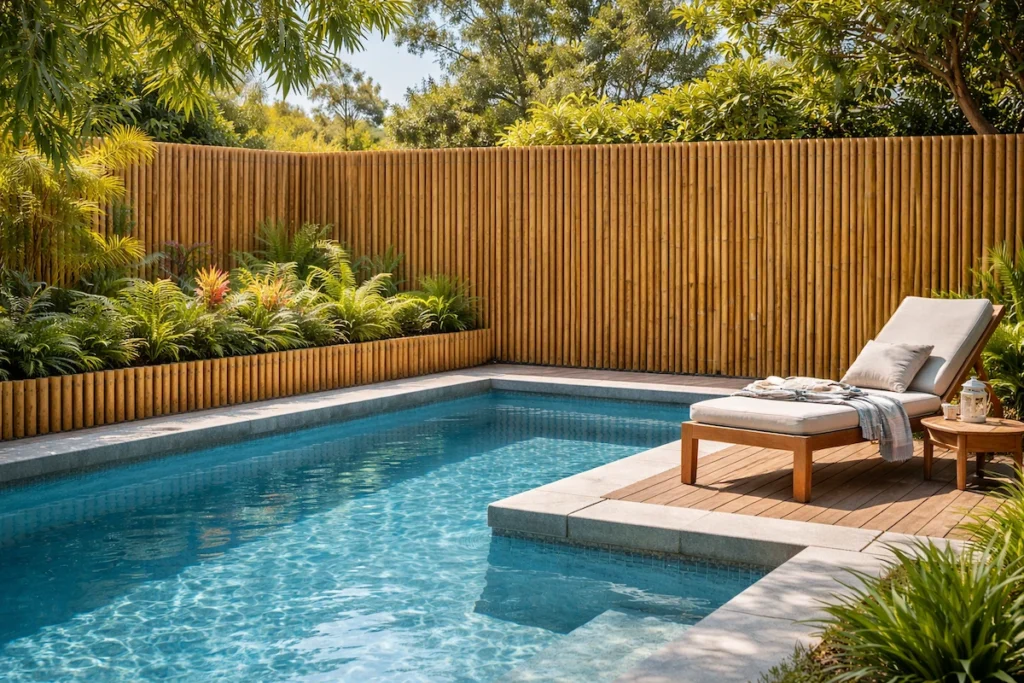
Ever tried using straw bales for a modern pool surround or metal screening in summer heat? Look, we get it. Those options sound eco-friendly on paper, but bamboo panels actually work for privacy screening, garden borders, pool surrounds, and decorative feature walls without the downsides. The natural golden-brown colour sits nicely with Australian native plants, whereas harsh metal or synthetic materials can feel out of place in your landscape.
Panel heights range from 1.2m to 2.4m, so you can pick what suits your privacy needs. Need full coverage for your yard? Sorted. Want partial screening to frame a garden bed? That works too. The thing is, horizontal and vertical cane orientations give you different visual effects, letting you match whatever aesthetic you’re going for.
The applications for bamboo fencing go well beyond basic boundaries. You can hide bins, create cosy seating areas, or build walls that separate different zones in your space. Planning the layout takes a bit of thought (not the most exciting task, admittedly), but the design flexibility makes it worthwhile. Metal heats up painfully in summer, and straw bales break down fast in our climate. Bamboo just makes more sense as a building choice for creating outdoor structures that’ll actually last.
Cost Comparison: Bamboo vs Other Eco-Friendly Fencing Options
Bamboo panels typically run $80-150 per metre, placing them between budget pine and premium hardwood. Bottom line? You’re getting solid value when you compare what these eco-friendly fencing options actually deliver.
Recycled plastic fencing runs $120-200 per metre, but it lacks the natural appearance that most Australian homeowners prefer for their house and yard. The thing is, plastic might be made from recycled materials, but it still looks manufactured. Traditional treated pine costs $60-100 per metre, which sounds cheap until you factor in more frequent replacement.
That significantly reduces any upfront savings when you look at the future and long-term expenses. When timber needs replacing every 10-12 years, compared to bamboo’s 15-20 year lifespan, those costs add up. You’re essentially building a new fence twice in the time bamboo to last once.
Metal screening costs $150-300 per metre and conducts heat terribly in summer. Steel might be durable as a building material, but it’s not exactly pleasant to be near when the sun’s beating down on your yard. And here’s the thing about metal. It gets hot enough to burn skin during the peak summer months.
When you compare bamboo against these options, you’re getting better bang for your buck. The fence lasts just as long as timber or steel, costs less than metal, and doesn’t have the aesthetic problems that come with recycled plastic. You’re also investing in something better for the environment without paying a premium for sustainable construction materials.
Installation Made Simple
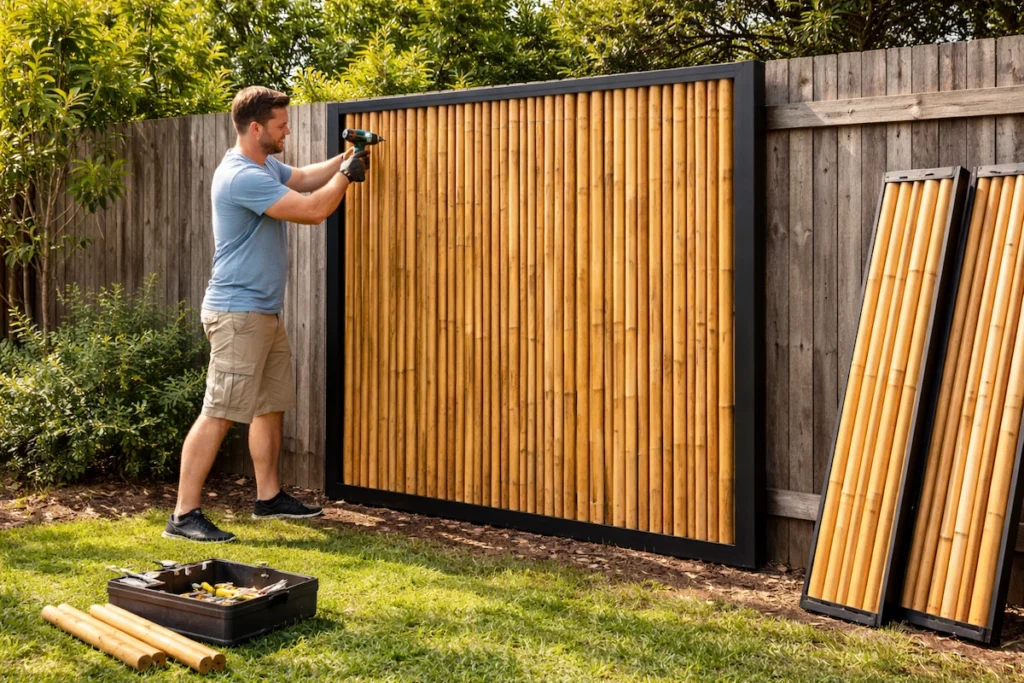
The easiest part about bamboo panels is that they come pre-assembled and ready to mount on your existing posts. Most bamboo panels arrive with galvanised wire cores already built in, so you just need to attach them to your fence structure. The building process is straightforward compared to traditional construction materials.
Standard installation takes 2-3 hours for an average 6-metre run, making it manageable as a weekend DIY project for most homeowners (it’s more common than you think). You don’t need specialised equipment either. Panels attach using basic tools like a drill and screws, unlike some alternatives that need professional help for proper installation.
The beauty of this simple setup is how it saves you money. Powder-coated aluminium frames on quality panels clip together easily, so you can create professional-looking walls and screening without paying contractor costs.
The lightweight materials make the whole process less physically demanding than working with heavy timber or steel. If you’ve got basic DIY skills and can handle a drill, you can tackle this project yourself and keep more cash in your pocket for other house improvements.
What About Maintenance?
Now that you know bamboo lasts 15-20 years, let’s talk about what upkeep looks like for this sustainable building material. Bamboo panels need occasional rinsing to remove dust and debris, similar to cleaning any outdoor surface around your house. Natural weathering occurs over the first 12-18 months, changing the colour but not affecting structural performance.
In our experience with hundreds of bamboo installs across different environments, this weathering process is totally normal. The panels shift from golden-brown to silver-grey as they settle into your yard’s natural conditions. The wood maintains its strength throughout this process, which puts it ahead of timber that can rot or steel that rusts when moisture builds up.
Sealing and Treatment Options
Applying outdoor timber oil annually helps maintain the original golden colour if you prefer that over the natural grey patina. Choosing the right bamboo finish makes a difference in how your fence weathers and how much maintenance you’ll need down the track (annoying, but necessary). Treatment products designed for bamboo penetrate better than standard timber sealers used on traditional wood fencing.
The process protects the natural materials while keeping your fence looking fresh. Some homeowners skip sealing entirely and let bamboo weather naturally while maintaining full durability. Both approaches work fine for outdoor construction projects. It really comes down to whether you want to preserve that fresh look or embrace the natural ageing that happens with sustainable materials in the environment.
Why 2026 Is the Year for New Fence Materials
What’s changed in outdoor design this year that makes bamboo panels suddenly everywhere? Rising awareness about sustainable building materials is pushing more Australians toward renewable options for construction projects. Supply chains for quality bamboo have improved across the country, making these eco-friendly materials more accessible and affordable for homeowners.
At the end of the day, people want outdoor spaces that reflect environmental values without sacrificing quality. Design trends are shifting toward natural textures and organic building materials, making bamboo perfect for current preferences. The future looks bright for environmentally friendly fencing as the industry adopts better practices and homeowners prioritise the planet in their construction choices.
Ready to Try Bamboo Panels in Your Space?
Bamboo panels offer a practical combination of sustainability, durability, and natural beauty for Australian outdoor spaces. This eco-friendly building material handles our climate well while providing the privacy and design flexibility that traditional fence options struggle with.
Whether you’re planning a new fence for your house or updating your existing yard, bamboo gives you a sustainable choice that actually performs. The material works with the environment instead of against it, making it a smart pick for homeowners who care about both aesthetics and the planet.
Contact Bamboo Expo to explore our services and find quality bamboo screening options that suit your property’s specific needs and style. We’re here to help you create outdoor spaces that feel great and last for years to come.