
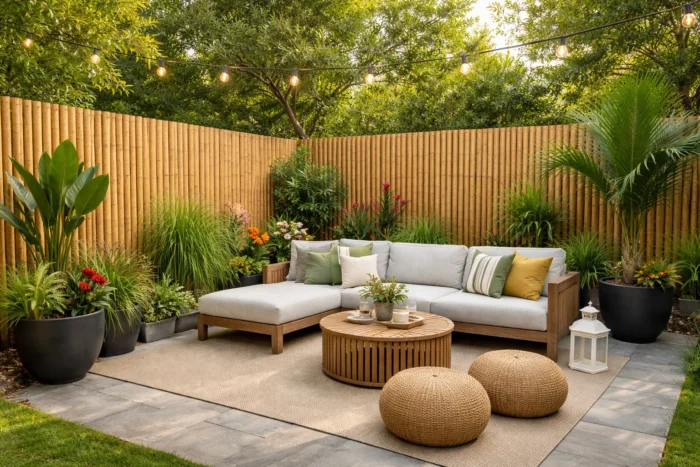
Most DIY renovation projects drag on for weeks when you’re tackling them solo on the weekends. You spend Saturdays digging post holes, Sundays waiting for concrete to cure, and the next weekend fixing your mistakes.
However, bamboo screening works differently because the panels attach to existing structures or simple timber frames you can build in hours. And the whole backyard makeover is done between Saturday morning and Sunday afternoon.
In this article, we’ll show you how you can measure your outdoor space. You’ll also learn which one to choose between rolls and panels, ways you can install bamboo fencing around garden beds, and style the finished space to make it look like a resort.
Let’s start with how you can plan your garden’s upgrade.
Why Bamboo: The Fastest Garden Idea
Bamboo can be better than every other screening material when you’re racing against the clock for a backyard transformation. We’re not going to sugarcoat this, but traditional timber fencing means days of cutting, treating, and painting before you even get to installation.
On the other hand, bamboo panels arrive ready to install. That’s why most people can finish in a weekend rather than spreading the project across multiple months.
Plus, the natural material handles Brisbane’s heat and sudden summer storms better than a lot of the synthetic screening products on the market. It’s because each cane flexes independently during strong winds instead of creating rigid pressure points that snap or crack.
The result is a durable privacy screen that lets the breeze flow through while blocking sightlines from your neighbours. Unlike solid timber barriers, bamboo doesn’t trap stale air and turn your backyard into an oven during summer.
Fun Fact: Bamboo has one of the highest growth rates of all tropical plants, according to research published in the National Library of Medicine. This attribute contributes to its sustainability and rapid availability for home projects.
Planning Your Backyard Makeover
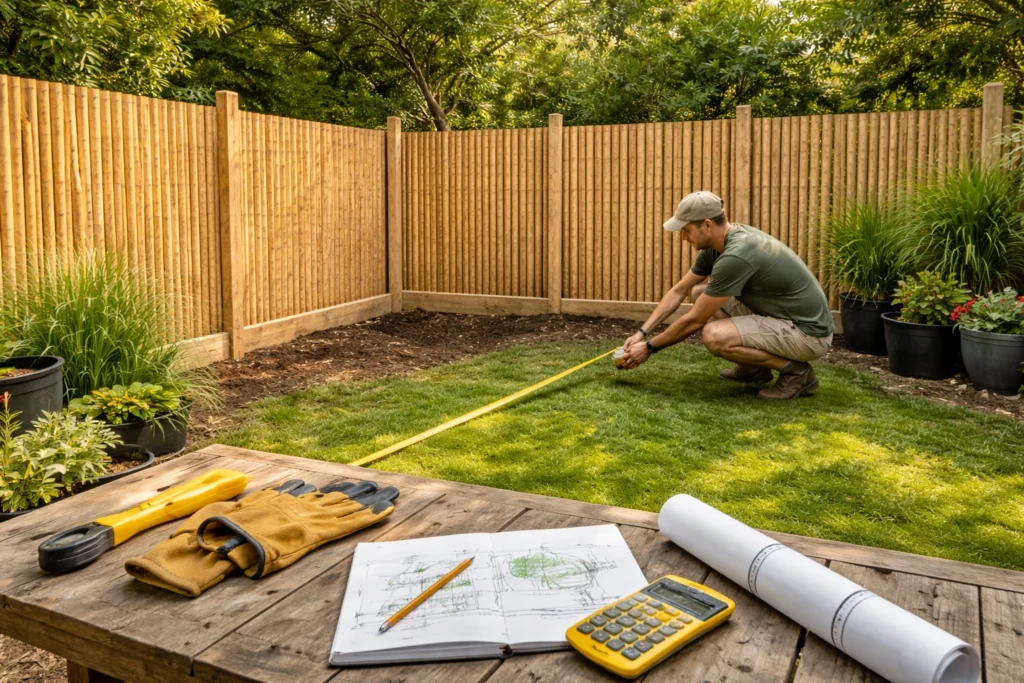
Ever started a DIY project only to realise halfway through you’re missing some supplies? That’s where planning can save your weekends. When your planning is ready before Saturday morning, it helps you stay focused and finish the job within a weekend.
Here’s what you need to sort out first.
Measuring Your Outdoor Space
Getting measurements right the first time saves you money, frustration, and trips back to Bunnings. Begin by measuring fence lines twice and add 10% extra for cuts, mistakes, and those awkward corner sections that never quite work out.
After that, check existing posts for stability before buying materials because wobbly ones need fixing first. We’ve all done the walk of shame back to the ute for forgotten measurements.
Pro Tip: Mark where gates, taps, and power points sit so your panels don’t block access to things you use daily.
Rolls vs Panels: Which Suits Your Raised Garden Bed
The choice between rolls and panels depends on what you’re screening and how permanent you want it.
For instance, bamboo rolls flex around curves and uneven ground, which is perfect for garden beds and informal borders. Contrastingly, panels with aluminium frames stay straight, ideal for full-height fencing and permanent privacy screens.
Also note that rolls cost less per metre but need more support structure, while panels include the framework built in.
Tools and Materials Checklist
Having all the materials ready before you start will let you finish Saturday’s work without annoying delays. For most bamboo installations, these should cover everything you need:
- A Basic Drill
- Level
- Tape Measure
- Wire Cutters
- Galvanised Screws
Solid support is just as important as the tools themselves. Timber posts made from 90×90 mm treated pine that are spaced every 2.4 metres keep the panels stable even in windy conditions. The post depth is also important because shallow footings move over time.
Finally, don’t overlook safety gear. Some basic ones like gloves protect against splinters, protective glasses are essential when drilling, and sunscreen is a must since you’ll be working outdoors for hours.
Installing Bamboo Fencing for Instant Privacy
You can start your project on Saturday morning, coffee in hand. The entire installation will move faster than you expect because you’ll be working with pre-made panels instead of building from scratch.
Take a look at the process step by step.
Setting Up Posts and Framework
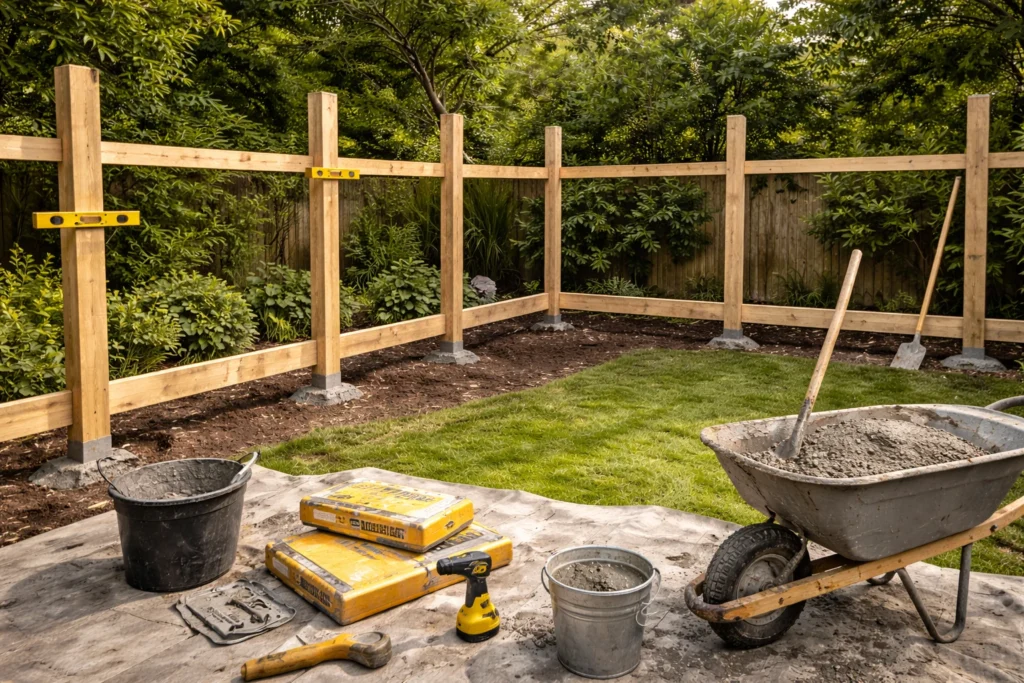
Posts are the backbone of any bamboo fence, and getting them level makes everything else straightforward.
First, you need to dig post holes 600mm deep using a post hole shovel or hire an auger if your soil is rock-hard and fighting back. Then, set posts in concrete or use metal stirrups for faster installation that still hold strong in the weather.
After installing bamboo screens across 200 Melbourne and Brisbane properties, we’ve learned that letting concrete cure for 24 hours before attaching panels can improve the results. On the other hand, rushing this step causes wobbly fences months down the track when you’re trying to enjoy the space.
Attaching Bamboo to Existing Fences and Walls
The beauty of bamboo screening is that you can upgrade the old, ugly fences without ripping them out completely. You can screw bamboo screening directly onto old timber fences and give them fresh life without the cost of complete replacement work.
Pro Tip: Use stainless steel or galvanised fixings every 300mm along top and bottom rails for proper wind resistance in coastal areas. Also, check the existing fence strength first because rotten palings need replacing before you add the extra weight of bamboo panels.
Fixing Common Installation Hiccups
Even straightforward projects can sometimes throw curveballs, but most of these fixes take only a few minutes. For instance, if you have uneven ground, you’ll need to adapt the panels by trimming their bases to follow the terrain, or raising low areas with horizontal timber rails fixed between posts.
If you notice panels starting to bow outward, it’s usually a sign that they need extra support through the middle. Adding a simple horizontal timber batten is often all it takes to fix the problem completely.
Another thing is, gaps between panels can look messy and defeat the whole point of privacy. So it’s worth overlapping the edges by about 50 mm or using trim pieces to cover the joins neatly. This is one of those details that catches out even experienced tradies, especially on sloped blocks.
Now that your main fencing is up, Sunday’s booked for the finishing touches that make your backyard project special.
Garden Design Ideas That Instantly Lift Your Space
Finishing touches are what separate amateur jobs from professional-looking results. Most of these updates take an hour or less to complete, and they don’t require concrete or complicated measurements either.
These are some easy ideas you can execute:
- Zoning Your Outdoor Space: Use 1.2m high bamboo rolls to separate your veggie patch from the lawn. This will also keep the entertaining area distinct from where the kids play without blocking sightlines completely.
- Garden Bed Edging: Low 600mm screening frames raised garden beds beautifully while stopping grass from creeping into vegetables and herbs. They help contain weeds between planting areas, too (which means less maintenance to deal with later on).
- Hiding Utilities: You can also build simple three-sided boxes around air conditioners and wheelie bins. We suggest positioning them about 300mm away to maintain airflow while blocking eyesores from view when you’re sitting outside.
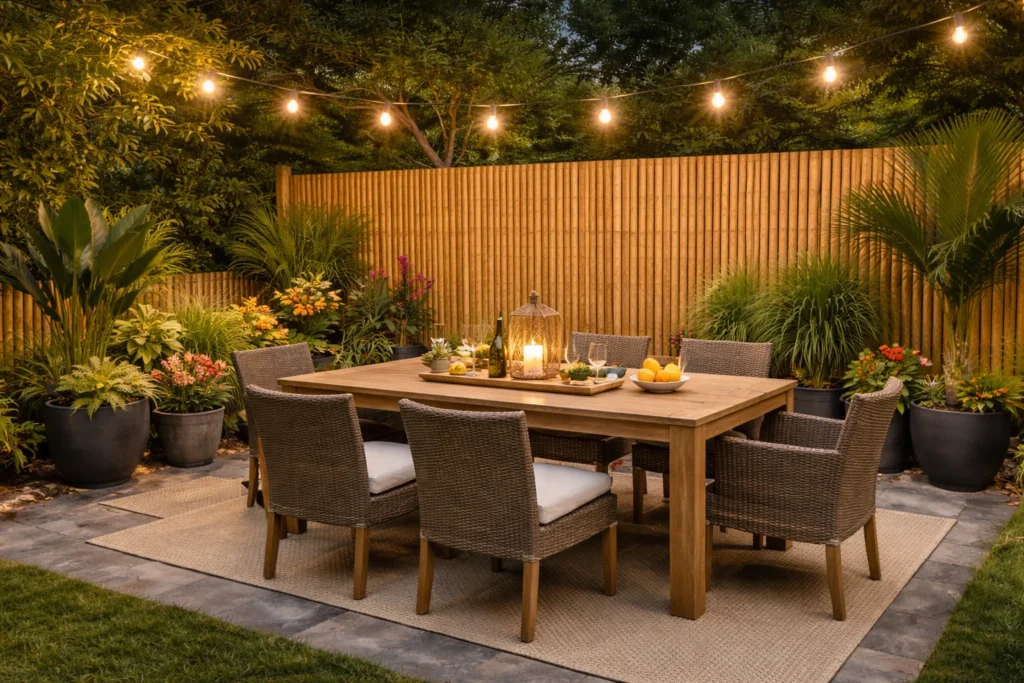
- Feature Walls For Dining Areas: Installing full 1.8 m panels behind your outdoor table adds warmth and upgrades a basic patio into a more welcoming space. A backdrop helps highlight string lights and plants. It creates a cosy focal point when you’re entertaining friends after dark.
Each of these projects adds function while improving how your garden looks. So pick two or three design ideas that suit your space rather than trying to complete everything in one afternoon.
Build Your Dream Backyard This Weekend
Most people underestimate how much a simple bamboo fence changes how they use their backyard. You’ll actually sit outside more often because the space feels like somewhere you want to be rather than just another bit of yard.
Your quick weekend project can also enhance your privacy, style, and that permanent holiday feeling. That too, without months of construction headaches or watching your budget disappear. The bamboo screening you install now will last 15-20 years with basic maintenance.
If you’re ready to start your own backyard makeover, browse the bamboo screening range at Bamboo Expo to see panels, rolls, and complete kits that suit your specific project.