
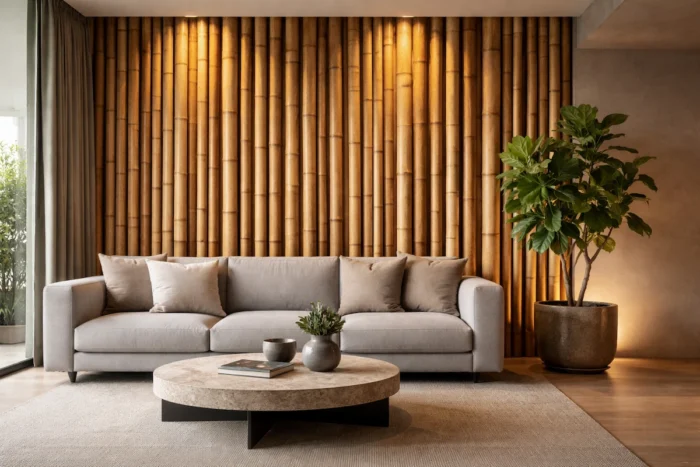
Most people think bamboo belongs outside. Fencing, screening, maybe some garden edging if you’re feeling adventurous. But here’s what’s interesting: designers use indoor bamboo panels in ways that’d surprise most homeowners.
We’re talking feature walls, room dividers, even ceiling treatments that completely change how a space feels. The applications go way beyond what you’d expect from a material typically associated with outdoor areas.
If you’re after real visual impact without the cost of stone or timber cladding, bamboo panels deliver it. And we’ll show you how.
In this article, we’ll walk through the unexpected indoor uses designers actually prefer, from creating depth with feature walls to the ceiling trick most people never consider. We’ll also cover what your interior styling team checks before installation and how bamboo adapts to different home styles.
Keep reading to learn the creative bamboo ideas that could completely change how your rooms feel.
Indoor Bamboo Panels vs Regular Bamboo Products: What’s the Difference?
Indoor bamboo panels are permanent architectural features, while regular bamboo products are movable decorative items. Unlike furniture or accessories, panels are installed on walls, ceilings, or partitions and form part of the room itself.
Because of this, panels influence the overall atmosphere of a space, while bamboo furniture and accessories function mainly as visual accents.
Our interior styling team typically recommends panels when you want to change how an entire room feels. It’s because they add texture, depth, and warmth across whole walls or ceilings, which shifts the atmosphere in ways a few bamboo accent pieces never will.
But if you just want some natural touches without committing to installation, products like baskets or small furniture work fine. The right choice depends on whether you’re decorating a space or actually redesigning how it looks and functions.
Feature Walls That Add Depth Without Overwhelming Space
The best part about bamboo feature walls is that they give you serious visual impact without the weight or expense of stone or timber cladding. You’re getting texture and interest that makes rooms feel designed without overwhelming the space or your budget.
See how this works in your home:
Living Room and Dining Applications
Living rooms handle bamboo panels best on the wall behind your TV or sofa, where they add warmth without distracting from daily activities. Panels behind entertainment units create a subtle texture that complements your screen or artwork. The natural grain catches light differently throughout the day, which adds movement to the room.
Meanwhile, dining areas work well with bamboo on one feature wall. However, going overboard and covering multiple walls makes the space feel closed in. So stick to one accent wall and let it do the work.
Bedroom Accent Ideas Your Interior Styling Team Suggests
Want a headboard that doesn’t eat floor space or cost a fortune in upholstered furniture? Then, bamboo panels are a smart alternative.
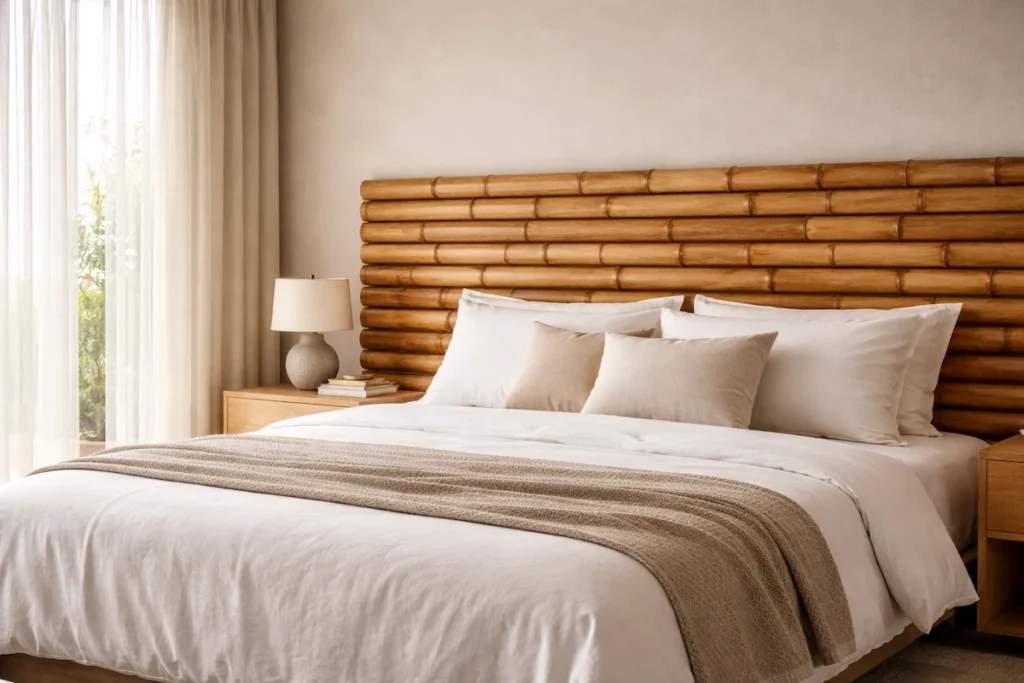
Installing panels behind the bed creates a natural headboard effect that adds warmth and anchors the sleeping area. You’re getting the visual anchor of a traditional headboard without the bulk or the price tag.
Our tests with different panel orientations showed that horizontal mounting makes bedrooms feel wider, while vertical panels draw your eye upward in rooms with standard ceiling heights. The difference in how the space feels is pretty noticeable.
The natural tones work particularly well in bedrooms because they create a calming atmosphere. It’s one of those interior tricks that helps with relaxation without feeling too styled or fussy.
Room Dividers: Separating Space While Keeping Light Flow
Room dividers made from bamboo panels solve the main problem with open-plan living: creating zones without blocking sunlight or making spaces feel cramped.
Here’s how different heights work:
- Full Height Panels: This type keeps rooms feeling bright and open instead of chopped up. They divide open-plan living areas while still letting natural light filter through the bamboo’s gaps and texture.
- Partial Height Dividers: Partial-height dividers work brilliantly for separating home office zones from living spaces. You get the visual separation you need for work without feeling boxed in or isolated from the rest of the house.
If you’re in a studio apartment, bamboo dividers define your bedroom area without permanent walls that lock you into one layout. This gives you flexibility to rearrange as your needs change.
After sorting out your walls and room divisions, it’s time to look at the one surface most people completely forget about.
Ceiling Panels: The Designer Trick Most Homeowners Miss
Most people spend thousands on feature walls and flooring, but completely ignore the ceiling. What they don’t realise is that bamboo panels overhead create serious visual interest without taking up any floor space. When you’re working with smaller rooms or tight budgets, that’s a smart move.
Two applications work particularly well:
1. Flat Ceiling Treatments
Panels across flat ceilings draw your attention upward and add architectural interest to rooms that feel too plain. You’re creating a focal point that most homeowners never even consider.
The natural material (bamboo) absorbs sound due to its fibrous structure, which reduces echo in open-plan kitchens and living areas. This makes a noticeable difference in how comfortable the space feels for everyday use.
Worth Noting: Ceiling panels work especially well in covered outdoor areas where they connect your indoors with alfresco spaces. The bamboo softens the transition between inside and outside, making patios and verandahs feel like natural extensions of your living room rather than separate zones.
2. Working With Sloped Ceilings
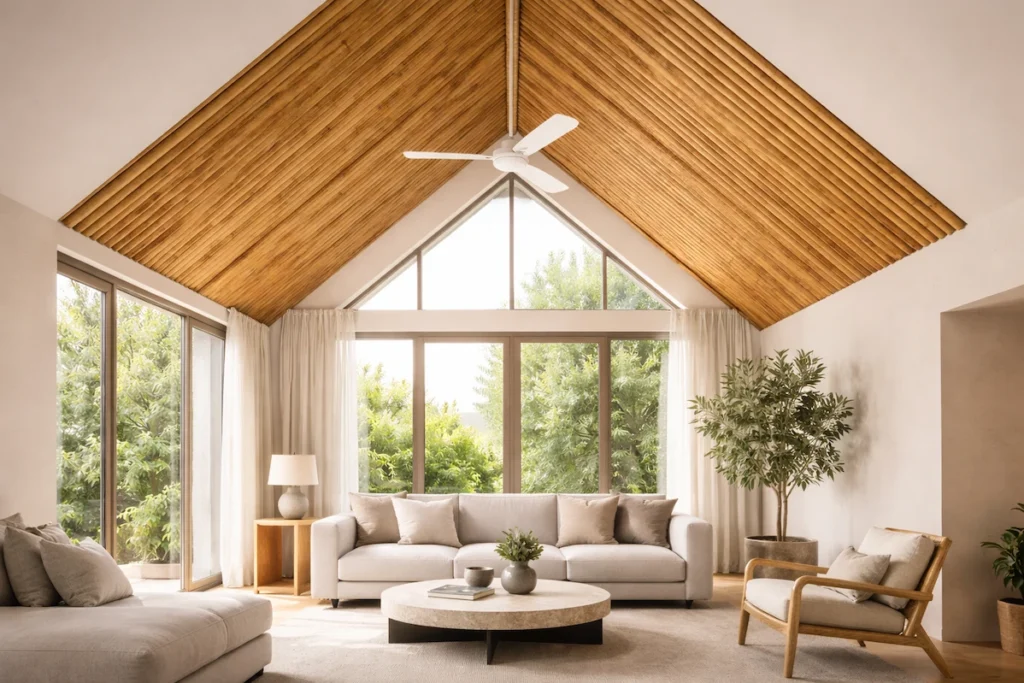
Based on our experience, sloped ceilings are actually easier to work with than flat ones because bamboo panels naturally follow angles and create interest without extra framing work.
Angled ceilings in loft conversions or renovated Queenslanders suit bamboo panels that follow the roofline. The panels add warmth without looking forced or awkward, which is tough to pull off with other materials.
And if you have vaulted spaces with predominantly white colour schemes, the natural tone of bamboo prevents those high ceilings from feeling stark or cold.
Now that you’ve seen where panels work best, let’s look at how they adapt to different home styles.
How Indoor Bamboo Adapts to Different Style Preferences
Indoor bamboo panels work across modern, coastal, and minimalist interiors because the natural material adapts to surrounding colours and furniture rather than forcing one specific aesthetic.
Modern interiors pair bamboo panels with clean lines and minimal furniture, using the natural texture as the main visual element. The panels add warmth without competing with the streamlined style or sense of space.
In coastal homes, bamboo layers easily with whites and blues, reinforcing a relaxed, beach-inspired atmosphere. You’ve got it right when the bamboo feels like part of the vibe instead of screaming “tropical resort.” Your focus should be on adding gentle texture instead of overpowering the room.
Meanwhile, minimalist spaces use bamboo sparingly on single accent walls (not the most exciting task, admittedly, but worth getting right). What makes this effective is that the natural material provides just enough warmth without cluttering the visual simplicity.
What Your Interior Styling Service Checks Before Installing Panels
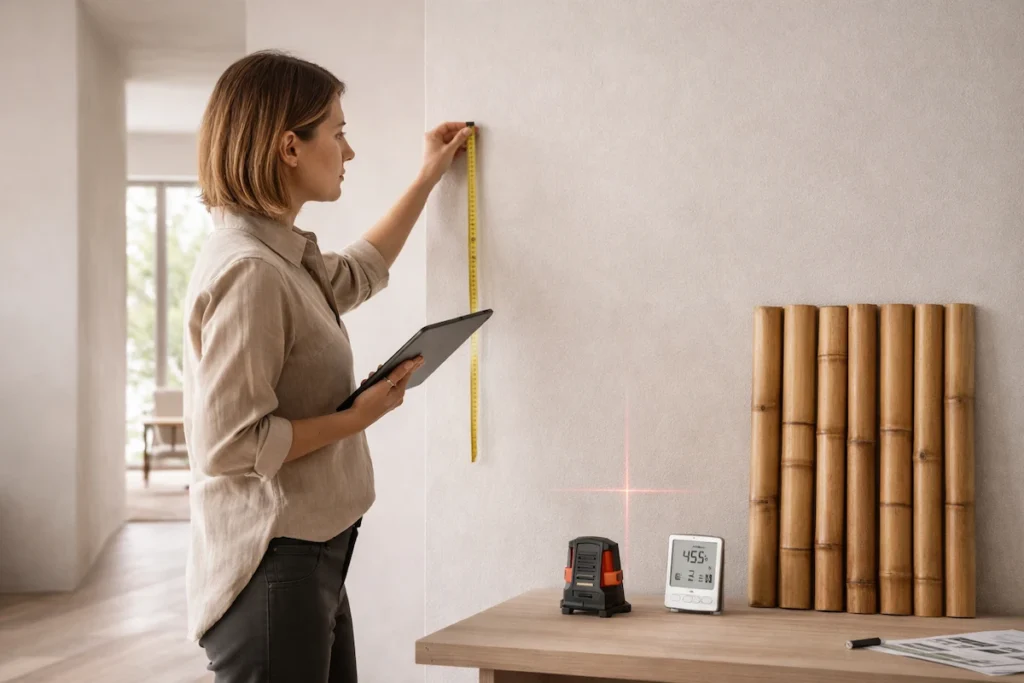
Interior styling teams check four main things before installing bamboo panels: humidity levels, wall structure, lighting placement, and room acoustics. These checks ensure the installation works properly and lasts without issues.
Here’s what they look at:
- Moisture Considerations: Humidity levels count because bathrooms and laundry areas require treated panels, while living rooms handle standard untreated bamboo screening. The moisture in wet areas will damage untreated panels over time, so getting this right from the start saves you hassle down the track.
- Wall Support: Overall, floor-to-ceiling applications carry more weight as these panels span larger areas. That’s why your wall mounting points need solid backing for secure installation (yep, those sneaky bits everyone forgets). Your team will check the wall structure to make sure everything’s properly supported.
- Light Direction: Lighting placement affects how bamboo grain shows up, so designers position downlights or spotlights to bring out the natural texture and patterns. The right lighting can make the difference between panels that look flat and ones that create real depth and attention in the space.
- Sound Absorption: Your interior styling service will advise whether the absorption level suits your needs or if the space already sounds balanced. If you’re working on projects in open-plan areas where echo is an issue, they might add more panels to improve the acoustics and overall comfort.
Useful Tip: Get a review of your wall type before you order panels. Plasterboard walls need different mounting hardware than brick or timber frames, and knowing this early helps your stylist plan the installation process without delays.
Time to Think Beyond the Expected
Bamboo panels give you design options that most homeowners never consider. Feature walls add depth, ceiling treatments change how a room feels, and dividers separate spaces without blocking light. The applications go way beyond standard outdoor screening.
If you’re ready to bring some unexpected style into your home, Bamboo Expo can help. We work with clients across Australia, from Melbourne to Queensland, helping people create spaces that reflect their vision without the fuss.
Visit our range of bamboo panels to see what works for your project, or get in touch if you’d love some guidance on the best options for your place. We’re here to make it easy.