
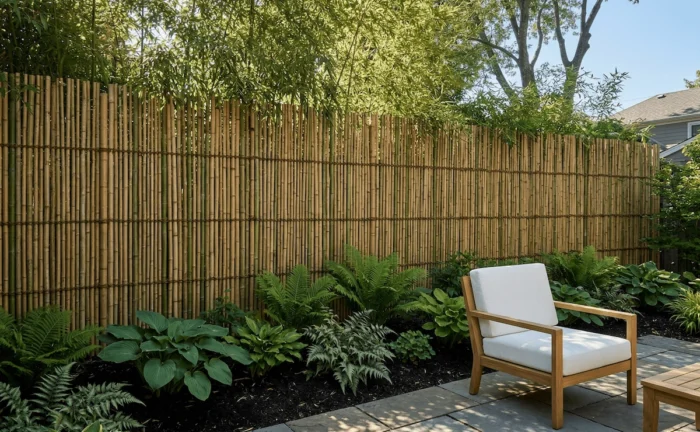
If your backyard feels a bit too exposed, a lot of homeowners across Australia are right there with you.
Pools, balconies, and entertaining areas tend to be the worst spots for it. Bamboo panels are one of the easiest ways to fix that because they add privacy without making your outdoor space feel boxed in. And because bamboo is a natural material, it blends into just about any home style from coastal to suburban.
We’ve worked with bamboo screening and privacy screens for years across Melbourne and around Australia, so we know firsthand what works in different setups. This guide puts all of that into one place.
You’ll find layout ideas for pool areas, balconies, and backyards, along with tips on avoiding common installation mistakes and picking the right bamboo protector for your space.
Why Bamboo Panels Make Great Outdoor Privacy Screens
Bamboo panels give you solid outdoor privacy while keeping your space looking open and relaxed. The natural density of bamboo means each panel blocks sightlines on its own, so you don’t need to double up or add extra layers. And because bamboo is one of the fastest-growing renewable materials on the planet, it can be harvested frequently without damaging the source (bamboo is one of the fastest-growing plants on the planet, after all).
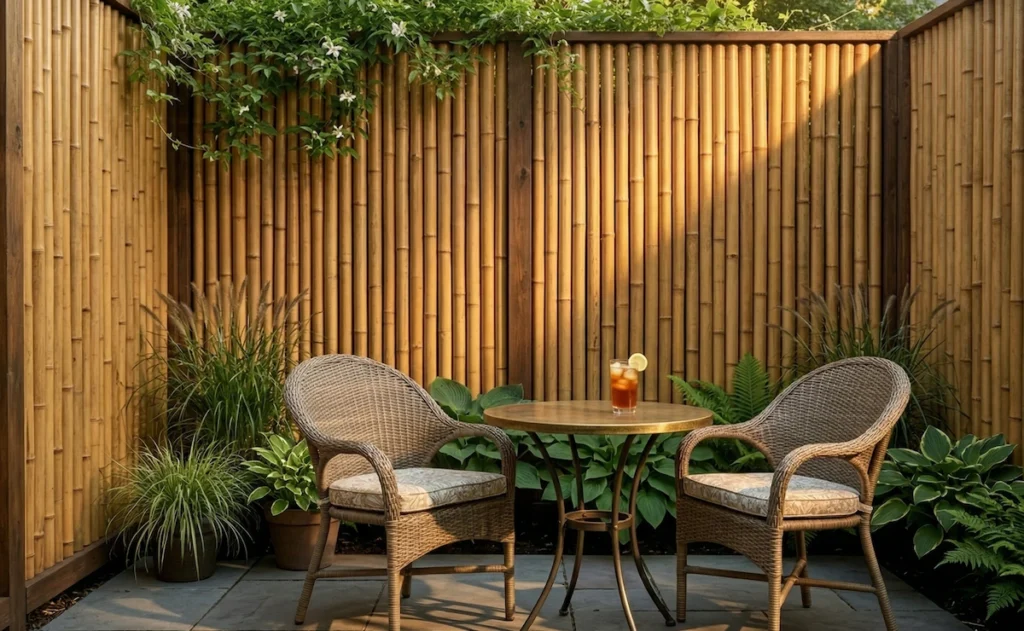
That durability stacks up well against timber and other fencing materials, too. Timber panels tend to warp or crack after a few seasons of rain and sun, but quality bamboo screens are designed to withstand those conditions without losing their shape.
They’re also a popular choice for homeowners across Australia because they suit everything from coastal setups to suburban backyards in Melbourne.
Now, let’s look at one of the most common spots people add bamboo screening first.
Bamboo Screening Ideas for Your Pool Area
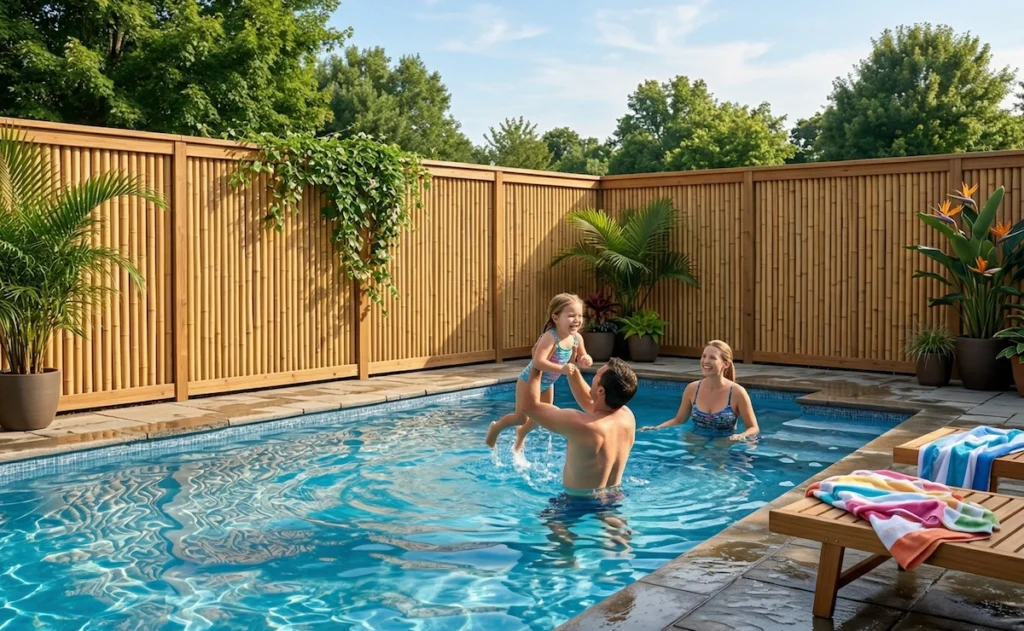
To be honest, most pool privacy setups don’t need to be complicated. All you really need is bamboo screening near your pool area, and you’ll get both privacy and wind protection in one go. That alone makes bamboo fencing a great choice for pool surrounds across Melbourne and other parts of Australia.
But here’s something worth knowing before you set anything up, though. There’s actually no legal right to privacy in NSW, so if you want to block your neighbour’s sightline, it’s on you to put up the right screens. And bamboo privacy screens handle that job well because the natural density of the panels filters views without creating a boxed-in feel around your pool.
Beyond the privacy side of things, staggered panel heights can give your pool a layered, resort-style look that still feels open. And if your pool area cops a lot of wind, bamboo fencing panels double as a sturdy wind buffer that helps keep leaves and debris out of the water.
Pool Fencing Screens That Actually Work
Simply put, the bamboo fencing that lasts is built with the right materials from the start. For instance, panels with a galvanised wire core (the internal metal framework that holds the bamboo canes together) are designed to handle wet pool environments without rusting or buckling. When you pair that with a powder-coated aluminium frame, you end up with pool fencing screens that are both long-lasting and easy to maintain.
Most people get the materials right and then forget about compliance. Remember, your screens need to meet local council height and gap requirements, or you could fail an inspection (that’s a risk no homeowner wants to take twice).
And under the exempt development rules in NSW, side and rear boundary fencing can’t exceed 1.8 metres, and road-facing fences are capped at 1.2 metres. So before you install anything, measure your panels against these limits.
Once that’s sorted, let’s look at another spot where bamboo privacy screens work well.
Balcony Privacy Ideas With Bamboo Screening
Bamboo screening is one of the easiest and most effective ways to add privacy to any balcony. When you mount bamboo panels along your balcony railing, they block direct sightlines from neighbours without cutting off airflow or natural light. That’s a big deal for apartment living, where you want more privacy but can’t afford to lose the breeze or the view.
Bamboo is also lighter than timber or metal screening options, which makes the installation process a lot simpler on balconies. You won’t need heavy-duty brackets or extra support in most cases.
And beyond the practical side, bamboo panels bring a natural, relaxed feel that softens the look of concrete and steel surroundings. For units across Australia, that kind of warmth can completely change how your balcony feels day to day.
Getting the Height and Spacing Right
Getting your panel height and spacing right means better coverage without sacrificing airflow or light.
Fortunately, there are a few quick guidelines to help you avoid the most common sizing mistakes.
- Panel Height: Bamboo panels between 1.5m and 1.8m tall give you enough privacy to block most sightlines while still letting natural light in from above.
- Airflow Gaps: Leave a small gap at the bottom of each panel so air can still circulate freely. If you seal the panels flush to the ground, moisture will build up underneath, and that speeds up wear on the bamboo over time.
- Strata Restrictions: Check your building’s strata rules before you install anything on your balcony. We’ve come across plenty of cases where homeowners bought their panels first and then found out their building had restrictions on balcony fixtures and modifications.
Getting these three things right from the start will save you from costly do-overs down the line.
Screening Layouts for Gardens and Backyards
Most homeowners underestimate how much a simple screening layout can change the feel of a backyard. A single row of bamboo panels along your back fence creates a clean, green backdrop that makes garden beds and outdoor seating areas look more intentional. It’s one of those upgrades that pulls everything together visually.
And believe it or not, even shorter bamboo fencing panels can have a big impact. You can use them to separate different zones in your yard, like dining areas, veggie patches, or kids’ play spaces. Because the panels are designed with natural bamboo canes, they blend in with the surrounding greenery rather than standing out as timber or metal dividers would.
For larger backyards, on the other hand, angled panel placement adds visual interest and breaks up long, straight fence lines. The result feels more like a designed landscape than a standard fencing job.
So how do you actually set up these zones? Let’s get into the details.
Using Bamboo Panels to Create Separate Zones
A single row of bamboo panels between your entertaining area and garden beds gives you a clear separation without putting up a hard wall. The panels create a visual boundary that feels open and natural, which is why this setup works so well in suburban backyards.
If you want to soften the look even further, pair your bamboo screening with potted plants or climbing vines along the base. Over time, the greenery grows into the panels, and the whole thing starts to feel like part of the garden rather than something you installed. It’s low maintenance and adds a layered depth that plain fencing can’t offer.
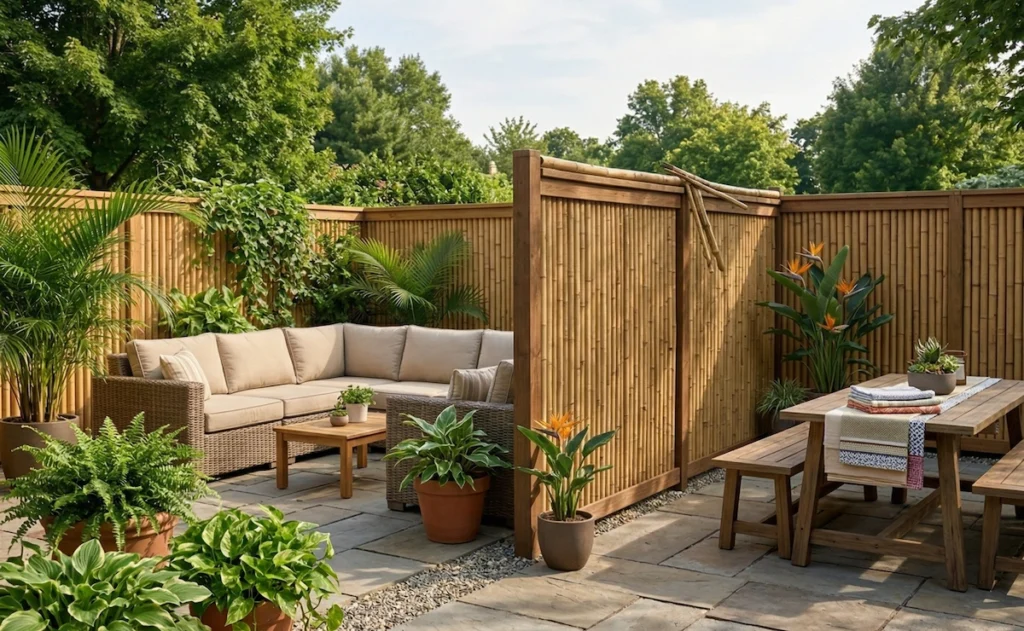
From that foundation, you can position panels to frame a seating nook or fire pit area. That kind of setup gives the space a cosy, tucked-away feel where you can actually relax and enjoy your backyard.
Common Installation Mistakes With Outdoor Privacy Screens
Putting up bamboo screening sounds simple enough, but a few common slip-ups can cost you time and money. We’ve helped with enough installs by now to spot the usual culprits (and we’ve pulled down more wobbly fence jobs than we can count).
If you’re a DIY enthusiast tackling this yourself, these are the mistakes worth avoiding.
- Post Anchoring: If your posts aren’t secured into the ground with concrete or sturdy brackets, the fencing panels won’t survive the first strong wind. Always ensure your posts are set deep enough to support your bamboo screens.
- Expansion Gaps: Bamboo naturally expands and contracts with temperature changes, so your panels require a small gap on each side to move freely. If you cut corners here, the panels will buckle, and you’ll end up replacing them far sooner than expected.
- Airflow Behind Panels: Mounting bamboo fencing screens directly against a wall traps moisture and speeds up wear. Even a 20 to 30mm gap between the panels and the wall keeps airflow moving and helps your screens last longer. Once that moisture builds up, the damage is hard to reverse.
Avoiding these three mistakes will keep your fencing panels standing strong and looking good for years, no matter where you install them.
Make Your Pool Area the Private Retreat It Deserves
A well-placed bamboo setup can turn an exposed pool area into the most used spot in your home. If you want to hit the ground running, start with one section and build from there. Most homeowners we work with end up adding more bamboo panels once they see the difference even a single screen makes.
Bamboo Expo stocks a wide range of quality bamboo fencing panels, privacy screens, and bamboo protector options designed for Australian homes. Explore our full collection to check availability, add your preferred panels to your cart, and find the perfect fit for your space.