
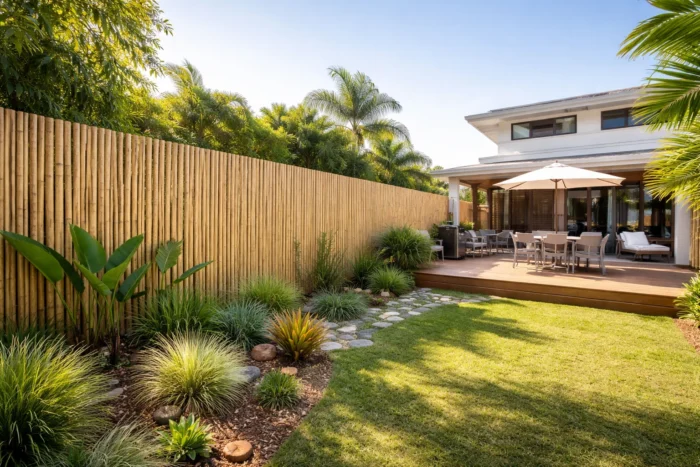
Cyclone Alfred hit Queensland and northeastern New South Wales in early 2025. The year before, Zelia slammed parts of Western Australia. With severe weather becoming more frequent, traditional fencing just isn’t cutting it anymore.
Of course, timber can handle most situations, but when intense storms and extreme heat become the norm, bamboo is the better choice. It bends instead of breaks, dries quickly after heavy rain, and withstands the punishment that leaves timber cracked and rotting.
This article breaks down why bamboo outperforms traditional fencing in Australian conditions, from heat resistance to long-term durability and costs. Let’s get into it.
What Makes Bamboo Different from Timber Fencing?
Bamboo fencing outperforms timber because of its hollow, flexible structure that responds differently to moisture, heat, and wind pressure. The differences come down to three key structural advantages bamboo has over traditional wood materials.
Natural Flexibility vs Rigid Structure
Bamboo canes bend and flex during strong winds instead of resisting pressure like rigid timber posts. This movement spreads force across the entire fence rather than creating stress points that snap. Think of it like a shock absorber. Each cane moves slightly without compromising the overall structure.
Wood’s solid build means it’s more likely to crack when hit with sudden wind changes. This becomes worse after months of sun exposure have made timber brittle and less able to handle stress.
Water Absorption and Drying Patterns
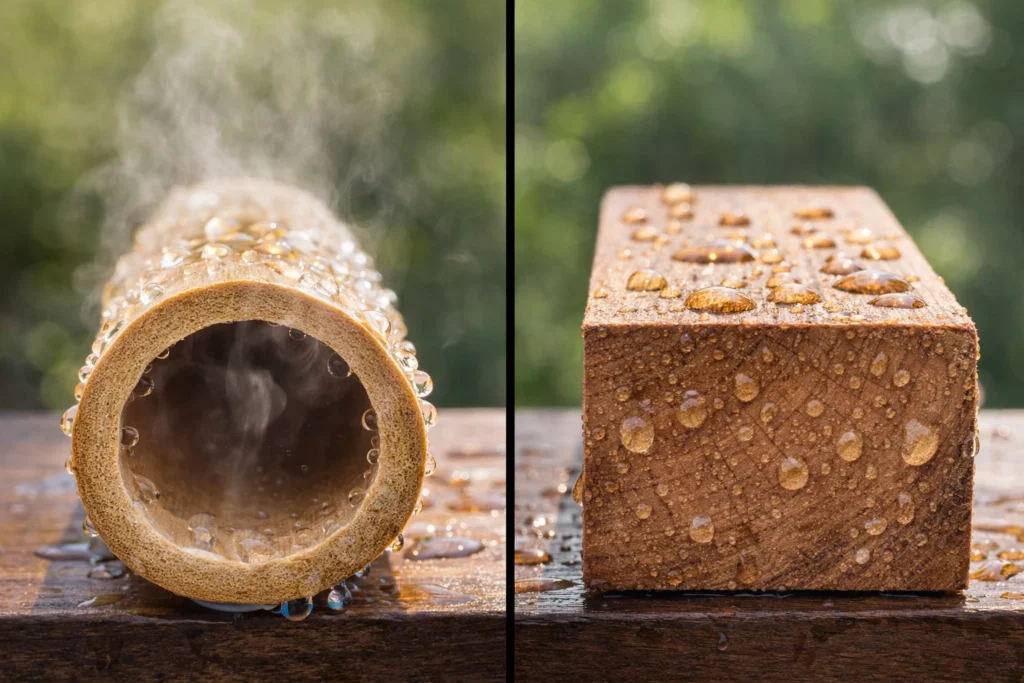
Bamboo’s hollow structure lets moisture evaporate faster than dense timber after heavy rain. On top of that, the natural silica coating repels water better than untreated hardwood surfaces. After a typical Sydney downpour, bamboo panels will be mostly dry within hours, while timber fencing can stay damp for days depending on humidity levels.
Pest and Rot Resistance
The density and silica content make bamboo less appealing to termites than softwood timber. The material doesn’t offer the same food source that attracts wood-boring insects to traditional fencing. This built-in protection means pest control becomes far less of a headache compared to what timber requires.
Plus, you won’t need as many chemical treatments, which makes it a more sustainable choice for outdoor applications.
Heat Resistance: Bamboo in Australia’s Scorching Summers
The best part about bamboo in our harsh summers is that it doesn’t crack and split like timber does under relentless sun. Its hollow structure retains less heat than solid wood, staying cooler to touch during 40-degree days.
Temperature swings are another area where bamboo outperforms most outdoor materials. When days hit extreme heat and nights cool down, bamboo adjusts gradually while timber splits from the stress. The material expands and contracts without developing the deep cracks that weaken wood fencing over time.
What really separates the two is how they handle prolonged UV exposure. Wood doesn’t cope well with constant sun and becomes brittle after a full summer season. Bamboo, on the other hand, keeps its structural integrity because the silica acts like a protective layer against UV radiation. This means your fence won’t need replacing as quickly, even in spots that get full sun most of the day.
Wind and Storm Performance Across New South Wales
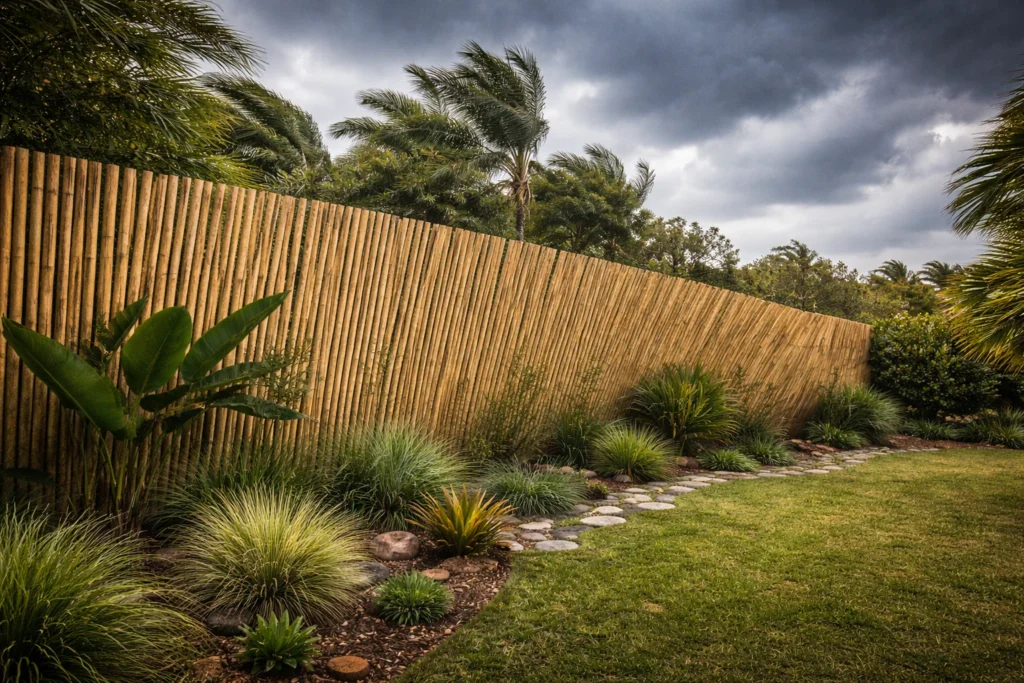
You might wonder why we’re focusing on New South Wales specifically. It’s because this region faces some of Australia’s most intense wind conditions, from coastal gales to severe inland squalls. If a fence can’t handle these conditions, you’ll be looking at repairs every season.
That’s where bamboo stands apart. It responds to wind pressure in ways rigid timber simply can’t:
- Flexes Rather Than Resists: Individual bamboo canes move independently during gusts, working with the wind instead of fighting against it. Drawing from our experience with coastal installations, bamboo distributes wind force across the entire fence rather than creating stress points that eventually fail.
- Salt-Air Tolerance: Coastal properties benefit from bamboo’s ability to tolerate salt-laden winds without corroding like metal or degrading like treated pine. Homes within a few kilometres of the ocean tend to see the biggest durability gap between bamboo and timber fencing.
- Reduced Weight Load: Bamboo panels are lighter than traditional timber fencing, which means less pressure on posts during severe weather. When storms hit, reduced mass and flexibility help minimise structural stress.
This combination explains why bamboo fencing withstands the kind of weather that leaves timber installations needing repairs or complete replacement.
Maintenance Requirements in Outdoor Conditions
Bamboo fencing saves you hours of work because it needs far less upkeep than timber to stay functional. You don’t need complicated routines either. Just three simple maintenance areas keep your fence in good shape for years.
Treating Bamboo for Weather Conditions
Applying oil yearly keeps bamboo protected from moisture and sun damage without the heavy sealing timber demands. In fact, our tests with various oil treatments showed that a single coat each year provides enough protection against the heat, rain, and UV exposure our climate delivers.
If salt or debris builds up, a simple rinse can wash them away and make your fence look fresh again. The whole process takes just a few minutes.
Expected Lifespan with Minimal Care
Quality bamboo fencing can last between 15-20 years with proper care in Australian weather. This lifespan matches or exceeds treated pine in coastal areas where salt wears down timber faster.
And don’t panic if you see a silvery patina developing. This forms over time as surface weathering, not the rot you’d see with timber. It’s purely cosmetic and doesn’t affect how well your fence performs.
When to Replace vs Repair
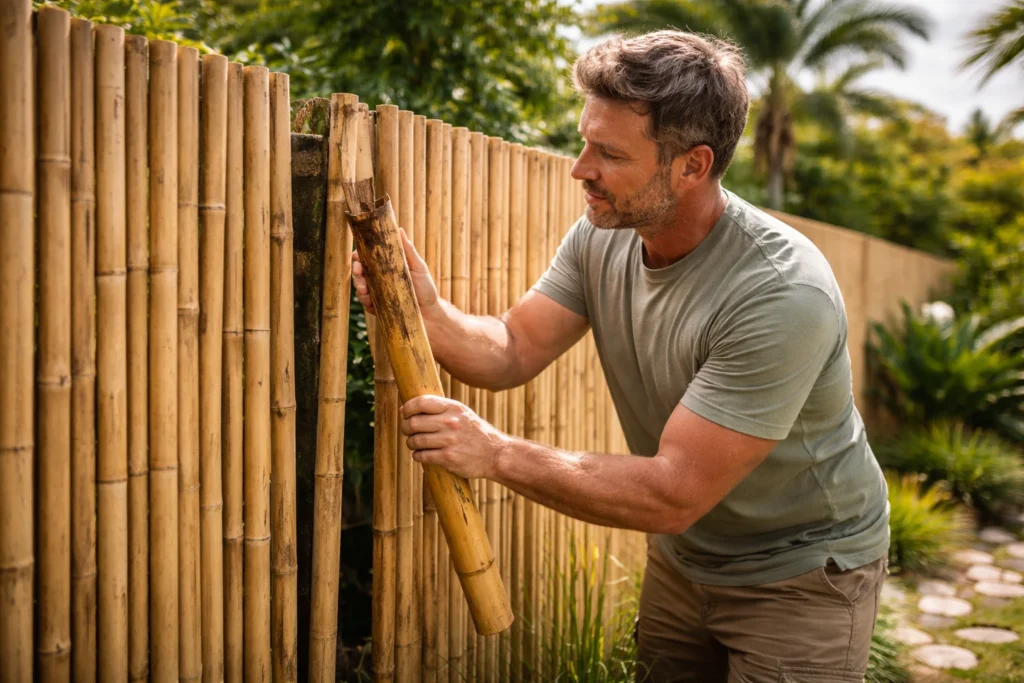
You can easily tell whether your bamboo needs maintenance or replacement by looking at the colour and texture. Yellowing or greying means it’s weathering naturally, but soft spots tell you it’s time for replacement.
The advantage here is that you can swap out individual damaged canes without replacing entire sections. With timber panels, one broken board often means replacing the whole panel. Bamboo lets you fix just what’s broken.
Bamboo vs Timber: Long-Term Cost Breakdown
Both bamboo and timber come with upfront costs and ongoing maintenance, but the numbers tell different stories over time. Here’s a quick breakdown of what you’ll actually spend across 10 years.
| Cost Factor | Bamboo Fencing | Timber Fencing |
| Initial Installation | $150-200/metre | $100-150/metre |
| Annual Maintenance | $50-80 (oil treatment) | $150-250 (staining/sealing) |
| Repairs (10 years) | $200-400 (individual canes) | $800-1,200 (panel replacements) |
| Total 10-Year Cost | $2,000-2,800/10m | $3,300-4,700/10m |
The numbers show bamboo’s advantage clearly. While bamboo typically costs more to install than basic treated pine, lower maintenance requirements help balance that difference over time. Fewer treatments and simpler upkeep mean ongoing costs stay predictable rather than compounding year after year.
Repair costs tell an even bigger story. You can fix bamboo fences by replacing individual canes, while timber damage usually forces you to swap out entire panels. This is especially valuable for areas prone to storms or high winds, where repairs happen more frequently.
Making the Switch to Bamboo Fencing
Bamboo fencing handles Australian weather conditions better than timber in nearly every measurable way. From flexibility during storms to heat resistance in summer, the material proves itself season after season. The upfront cost might be slightly higher, but lower maintenance and repair expenses make it a smarter long-term investment for most properties.
If you’re dealing with coastal winds, extreme temperatures, or just want fencing that doesn’t demand constant attention, bamboo offers a practical solution. The durability speaks for itself once you see how it performs through a full year of Australian climate conditions.
Ready to upgrade your outdoor space with sustainable materials that actually last? Get in touch to discuss what works best for your property’s specific needs.